Autumn in Slovenia: colors, harvest, and the quietest weeks of the year
Slovenian autumn begins in mid-September and runs until the end of November: color, harvest, and tranquility all at once. This guide outlines when the forests change color, where to go, and what closes down.
Why autumn might just be the best season in Slovenia
Autumn in Slovenia runs from mid-September to the end of November and offers three things at once: color in the forests, harvest in the wine regions, and trails where you'll barely encounter a soul. The price you pay is rain and a country that gradually shuts down. The latter is exactly what most travel guides leave out. They tell you that October is quiet and cheap, but not that the mountain hut where you wanted to sleep has been closed for three weeks. Here, you can read more about what to do in autumn and what is still possible.
It helps to view autumn as two seasons. Until mid-October, it still feels like a mild late summer: the valleys are green, terraces are open, and you can hike in short sleeves. After that, it becomes a different country. Shorter days, morning mist in the basins, and attractions switching to winter hours. Both are worth it, but you approach them differently.
If you want to know which month suits you best, it's in our guide on the best time to visit Slovenia, with all twelve months listed.
In autumn, Slovenia empties out, even though the country is at its most beautiful. You just need to know what is still open.
When do the forests change color?
The color change moves from top to bottom; roughly speaking, this is what happens:
- Late September to early October: the high-altitude valleys and the tree line change color. The larches in the Julian Alps turn golden yellow, which is the most photogenic moment of the entire season.
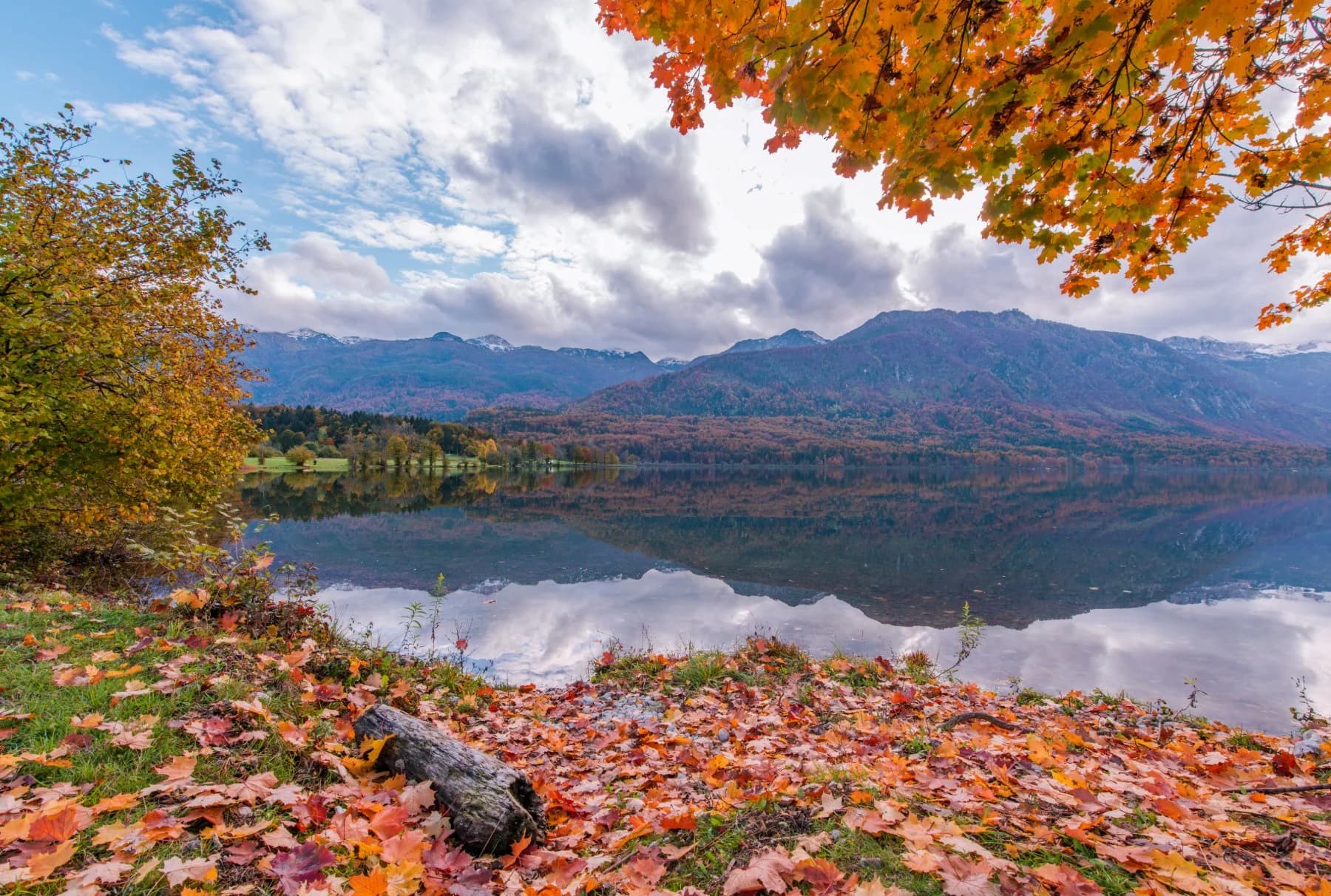
- Mid-October: the lakes and the mid-mountain regions of Bohinj, the Logar Valley, and the Kamnik-Savinja Alps are at their most beautiful.
- Late October to early November: the wine hills in the east and the lower deciduous forests. Brda, Prlekija, and Bela Krajina lag behind the mountains.
Keep in mind: this is a pattern, not a calendar. The timing can vary slightly each year, depending on how warm the late summer has been and when the first night frost occurs. If you want to go during a specific week, check the ski resort webcams and recent social media photos just before you leave.

Where can you see the most beautiful autumn colors?
Five places, with the reason why you should visit each one specifically in autumn.
Logar Valley
A glacial valley over seven kilometers long with mountain walls on three sides. In October, the beech forests stand against gray rock faces, a contrast that doesn't exist in summer. Quiet even in high season, and virtually empty in autumn. Drive to the end of the valley and walk the final stretch to the Rinka Waterfall: it is less voluminous in autumn than in spring, but the surrounding forest more than makes up for it.
Bohinj
The larger, quieter sibling of Bled. The lake reflects the colors, and the walk around it is flat enough for children. Our favorite of the five, and not just for the view: this is the only one on the list you can reach without a car, by bus from Ljubljana via Bled. You can find out how that works in our guide to traveling by public transport.
Kamnik-Savinja Alps
Less well-known than the Julian Alps and therefore even quieter in autumn. Velika planina, a high plateau with wooden shepherd huts, is accessible by cable car, making it an option even if your group doesn't want to hike. Please note: the cable car closes for a few days in autumn for maintenance, usually around the turn of September to October, and the exact dates vary each year. Check the schedule on the Velika planina website before planning your day.
Bela Krajina
The southeast turns color later and more softly. Birch forests instead of beech, which creates a lighter, yellower landscape. Combine it with the Kolpa River, where the water stays pleasantly warm until September.
The wine hills of Brda
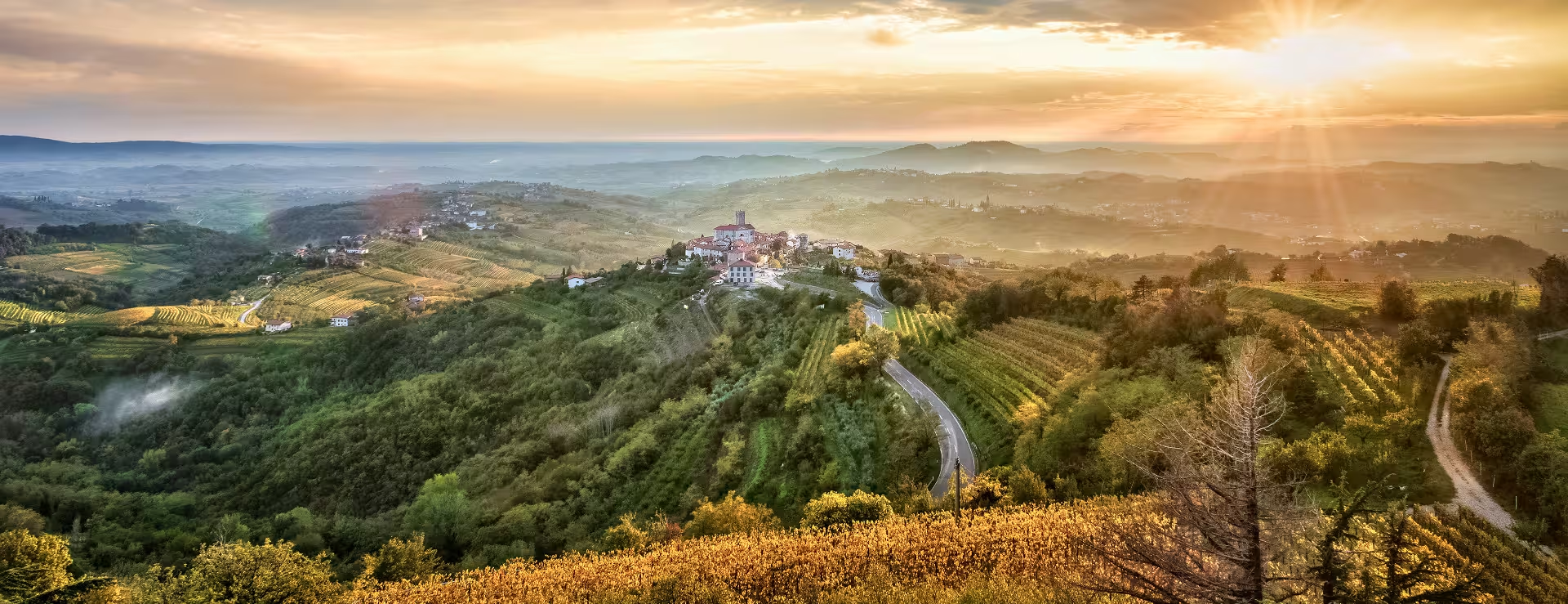
Terraces that turn reddish-brown in late October, dotted with villages like Šmartno and Gonjače. This is where color and harvest coincide. Climb the observation tower at Gonjače for the view: on one side, the wine hills; on the other, the Julian Alps with snow on their peaks. That contrast in a single glance is exactly what makes autumn here so beautiful.
What to do during the autumn break with children?
The Dutch autumn break in 2026 falls from October 10–18 for the North region, and October 17–25 for the Central and South regions. These are recommended dates, so check your own school's calendar. The risk during these weeks is rain. Count on at least two wet days and plan for them in advance, so you don't have to scramble once you're there.
When it's dry
- Visit the gorges. Vintgar is open until the end of the season, with late September, October, and November being its quietest period. The Mostnica Gorge near Bohinj is easier and shorter, and until November 30th, you need to purchase an entrance ticket for €4 for adults and €2 for children aged 7 to 14.
- Velika planina with the cable car if you want to see the mountains without climbing. Be sure to check the schedule first, as the cable car has a maintenance break in the autumn.
- The walk around Lake Bohinj, flat and with plenty of places to stop.
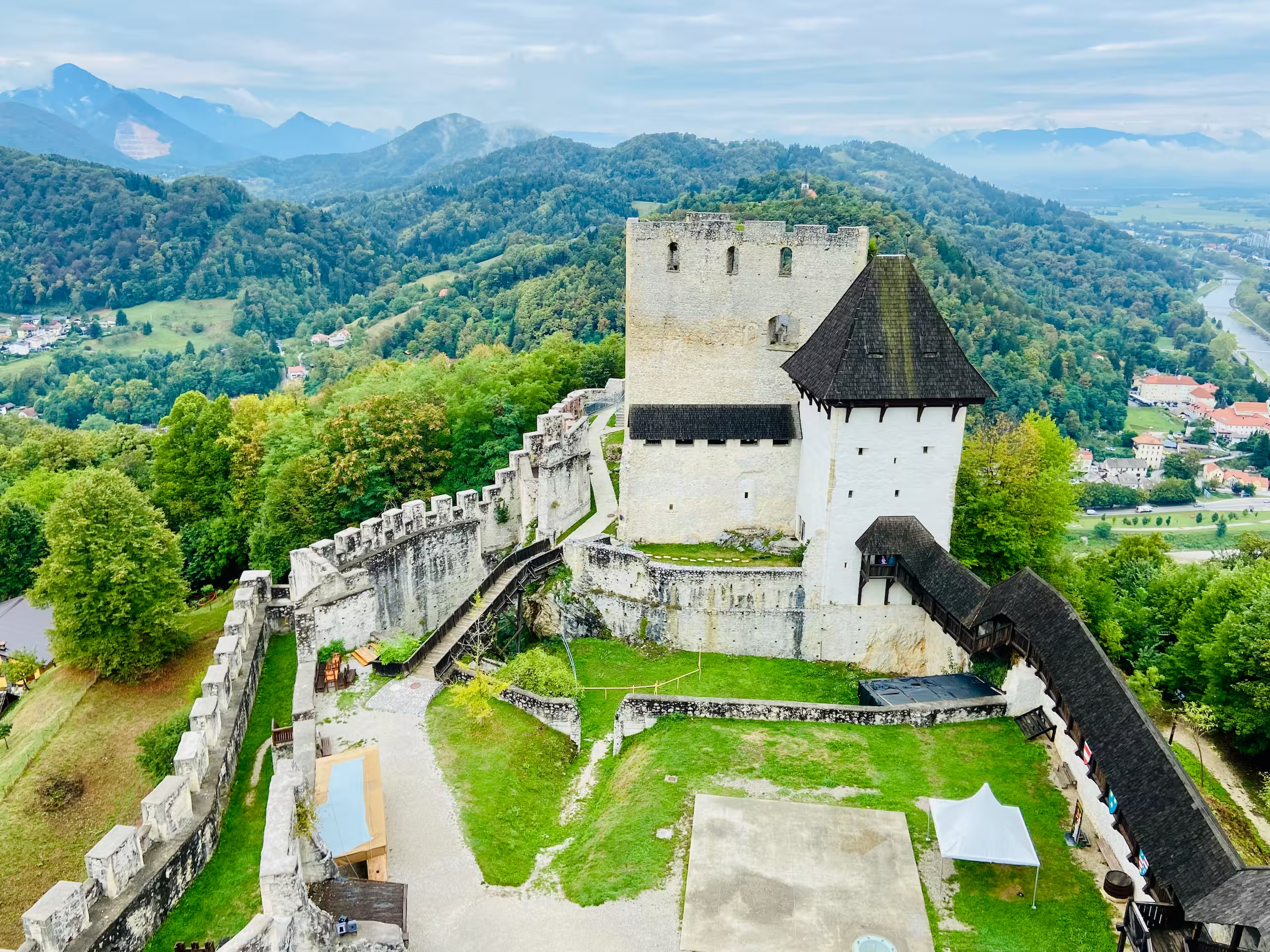
- The Stari grad (castle) above Celje, the largest fortress in Slovenia at nearly 5,500 square meters. It is a ruin and primarily outdoors, but the climb up and the view over the Savinja Valley make up for it. In October, it is open from 9:00 AM to 6:00 PM, and in November until 5:00 PM.
- Lipica, if the children love horses. The tour lasts an hour and includes the stables, the carriage collection, the Lipikum Museum, and the church, so you can easily survive a rain shower there.
If it rains
- The Postojna Caves. Inside, it is 10 degrees Celsius all year round, and it is open every day of the year, including holidays. Of the five kilometers, you only walk one. The rest is covered by underground trains.
- Škocjan Cave: perhaps the most impressive in Slovenia. Here, you walk through an underground gorge and over a bridge high above the Reka River. This cave is a UNESCO World Heritage site. It is a real hike: the full route is five kilometers with about 1,000 steps, with a shorter three-kilometer exit halfway through. Inside, it is 12 degrees Celsius.
- Thermal baths, but the right ones. With children, you aren't looking for wellness, but a water park. Terme Čatež has over 6,500 square meters of indoor water at the Zimska Termalna Riviera, featuring a children's pool, a pirate ship, and the 77-meter Kong slide with light effects. Terme Olimia has slides, a climbing wall, and water cannons at Termalija Family Fun, plus a separate sand area for the little ones. Thermana Laško is located under a 2,000-square-meter glass dome with a wave pool and a lazy river.
- The castles, and not just Predjama. Ptuj Castle is a true indoor museum: weapons, a collection of musical instruments, historic living quarters, and a collection of traditional carnival masks including the kurenti. Ljubljana Castle also fills an afternoon, with the cable car ride up and the puppet theater museum inside.
In any case, bring boots. Slovenian forest paths become slippery and muddy after rain, and with children, that is the difference between a fun afternoon or a long walk.
The harvest: wine, chestnuts, and pumpkin seed oil
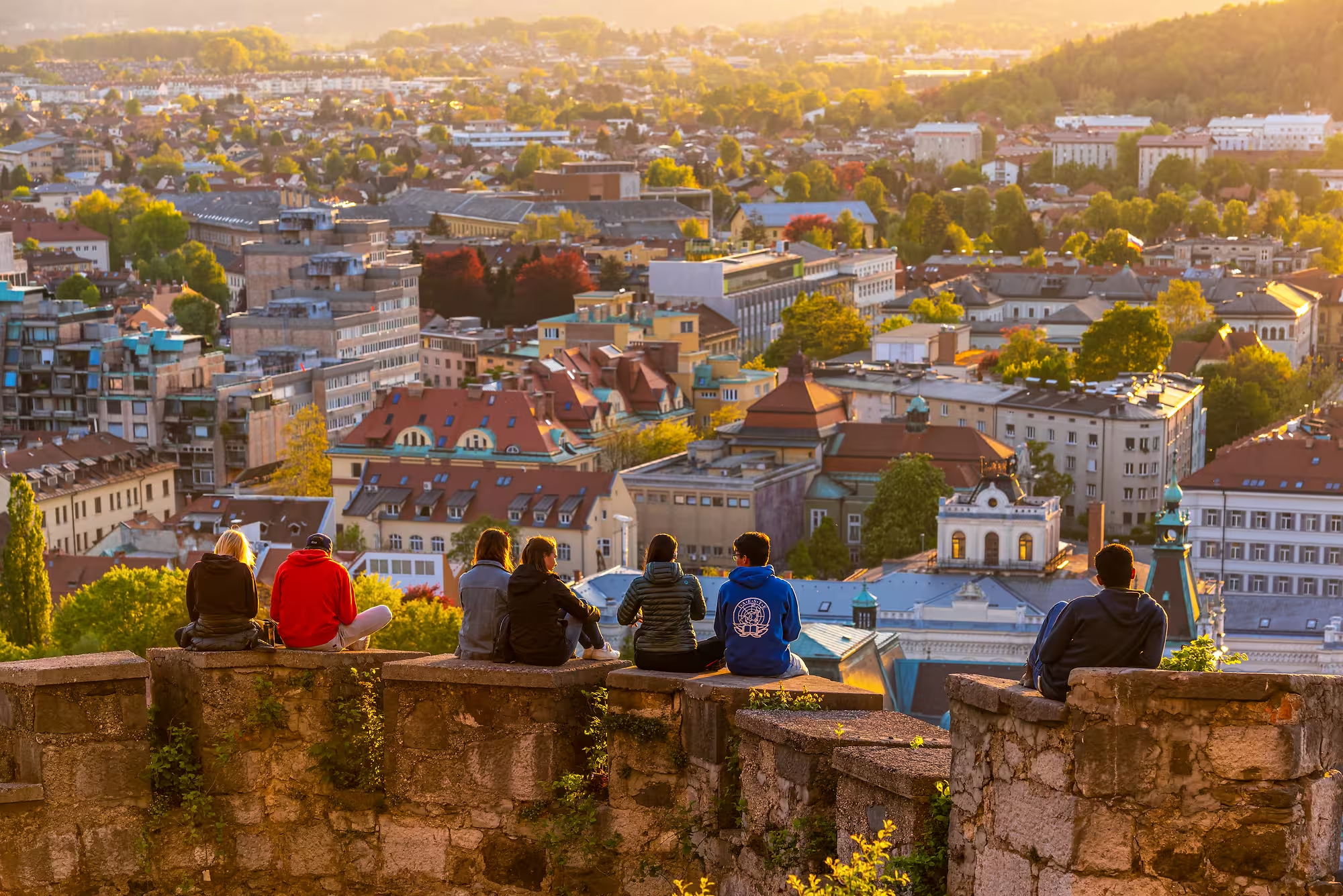
The harvest in Slovenia is not just a backdrop, but a schedule. The trgatev, or grape harvest, begins in the Vipava Valley in the first days of September, and sometimes as early as late August. As you head further east and higher up, it shifts to late September and early October. Three regions are worth visiting, each for a different reason.
- Brda, near the Italian border: rebula and merlot, small cellars, and a landscape that comes closest to Tuscany without the price tag.
- Prlekija and Jeruzalem in the east: white wine, ridges lined with wine routes, and by far the least touristy of the three.
- The Karst: teran, a dark red wine grown on iron-rich red soil, and pršut from the same region.
One practical warning: during the harvest weeks, winemakers are busy. Small cellars are often family businesses where the same people who pick the grapes also press them and lead the tours. Call or email ahead instead of showing up unannounced, and expect that in September, you are more likely to have a conversation in the barn than a formal tasting. That is not a downside; it is exactly why you come in the autumn.
In Maribor stands the oldest grapevine in the world, which gets its own harvest festival in late September with a ceremonial trgatev. The dates for the festival vary by year, so be sure to check them annually.
Besides wine, there are two things you will encounter everywhere in the autumn. Chestnuts are roasted on the street starting in October and appear in soups and desserts. And pumpkin seed oil, the dark green bučno olje from Štajerska and Prekmurje, is pressed after the harvest; and it is less strange than it sounds when drizzled over vanilla ice cream.
November 11th is Martinovo, the day when the must officially becomes wine.
Can you still go hiking in the autumn?
Yes, but not everywhere, and this is the part where most travelers miscalculate. The high mountain huts usually close at the end of September, some in early October. A multi-day hut-to-hut hike above 2,000 meters is therefore no longer an option in October. Check each hut on pzs.si to see if it is still open before planning your route. The Vršič Pass, the country's highest road with fifty hairpin bends at 1,611 meters, closes as soon as there is snow or a risk of avalanches. There is no fixed closing date. Check promet.si before you set off.
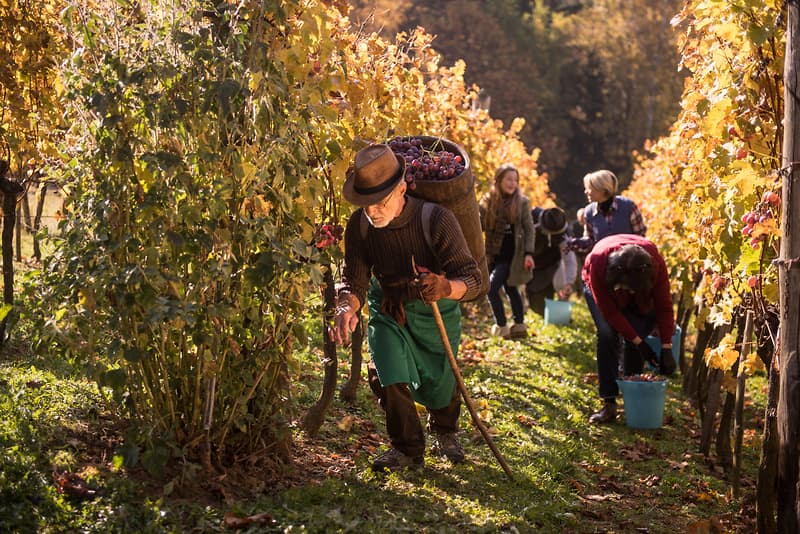
What does remain open: the valley walks, the gorges, the forest trails below a thousand meters, and the wine routes. That is more than enough for a week, and it is also exactly where the autumn colors are.
An autumn day that almost always works: start at Lake Bohinj, walk into the Mostnica Gorge as far as the Voje Valley, and return along the opposite bank. It is flat enough for a mixed group, takes about four hours with stops, and you are surrounded by deciduous forest where all the color is. If you want to go higher, Vogel is not an option this autumn: the cable car is closed for maintenance from September 21 until the end of November 2026. The Pokljuka plateau above Bohinj is the alternative that requires no climbing.
Above the tree line, the weather changes more quickly in October than in September. Bring an extra layer more than you think you will need and start earlier than you are used to, as the days are short.
Practical information: clothing, crowds, and prices
You can find most of the information in our blog about the best time to visit Slovenia, but keep the following in mind:
- Clothing: layers, a rain jacket, and waterproof shoes. It is pleasant in the valley during the day, but it can be cold in the mountains and early in the morning.
- Crowds: the coast and Bled remain busy in September, but after that, things quiet down everywhere. The second half of October is much calmer.
- Prices: accommodation is noticeably cheaper outside of the Dutch autumn holidays than in the summer. Prices rise again during the holiday weeks.
- Opening hours: many attractions switch to winter hours in the autumn. For example, Vintgar closes at 3:00 PM starting September 21st.

Frequently asked questions
- When are the autumn colors at their best?
Mid-October around the lakes and in the mid-mountain ranges, late September higher up in the mountains, and late October in the wine hills of the east. This shifts by a week or two each year. - Is it still warm enough in October?
In the valley, yes; in the mountains, no. It is still pleasant on the coast during the day and bearable in Ljubljana, but you will need a winter coat above 1,000 meters. Swimming in the lakes is over. - Can you still go hiking during the autumn holidays?
Yes, in the valleys and gorges. The high-altitude huts are closed by then and the Vršič Pass may be closed, so multi-day hut-to-hut hikes are not an option. Valley walks and gorges are at their most beautiful during this time. - Is Slovenia cheaper in the autumn?
Often yes, outside of the Dutch autumn holidays, but less so during the holiday weeks. The savings are mainly on accommodation in the mountains and on the coast. - What do you do if it rains?
The Postojna and Škocjan caves are open all year round and stay at a constant ten to twelve degrees. The water parks at the thermal spas remain open during the off-season as well. Castles and museums in Ljubljana, Ptuj, and Maribor can easily fill an afternoon. - When is the grape harvest?
In the Vipava Valley from the beginning of September, in Brda mid-September, and in the east from the end of September to the beginning of October. St. Martin's Day on November 11th marks the end of the season.
Last verified: September 2026 | Last updated: September 2026 | Author: Mijn Slovenië Editorial Team
Sources: Rijksoverheid.nl, vintgar.si, vogel.si, postojnska-jama.eu, psz.si, kranjska-gora.si, promet.si, vipavskadolina.si, brda.si, visitmaribor.si, velikaplanina.si, Mijn Slovenië
Header photo: Brda