South East Slovenia

South East Slovenia is the part most travellers skip. A mistake: this is where you find the country’s warmest swimming river, UNESCO old-growth forest full of bears, castles on the Krka and Cviček country.
South East Slovenia is the area between Ljubljana and the Croatian border, made up of five distinct parts: the valley of the Kolpa, the wine country of Bela krajina, the forests of Kočevsko, the castle landscape of Dolenjska along the Krka, and the wine and spa country of Posavje and Kozjansko. This is the corner where the tour buses do not go: vineyard hills, a little wine house on every slope, and two rivers setting the pace.
Skipping it is a mistake, and this guide shows why: the warmest swimming river in the country, old-growth forest on the UNESCO World Heritage list, a bear population of almost a thousand animals, and a wine that may not legally be made this way anywhere else on earth. Part by part, what there is to see and how to do it.
Slovenia's best swimming river is not in the mountains but on the Croatian border, and hardly anyone drives there.
South East Slovenia at a glance
Five areas, each with its own character:
- Kolpa & Bela krajina: Slovenia's warmest river, birch meadows and three wine towns on the Croatian border.
- Kočevsko: the largest unbroken forest in the country, with UNESCO old-growth woodland and one of Europe's densest bear populations.
- Dolenjska: the Krka valley, with Novo Mesto, castles and the Cviček vineyards.
- Posavje and Kozjansko: vineyard hills, Rajhenburg Castle, the monastery at Olimje, and Brežice. Slovenia's most popular spa municipality.
- The spas: Dolenjske Toplice, Šmarješke Toplice, Terme Čatež and Terme Olimia are all in this region.
From Ljubljana, count on 45 minutes to Novo Mesto and about an hour and a half to the Kolpa.
Kolpa and Bela krajina: the river and three towns
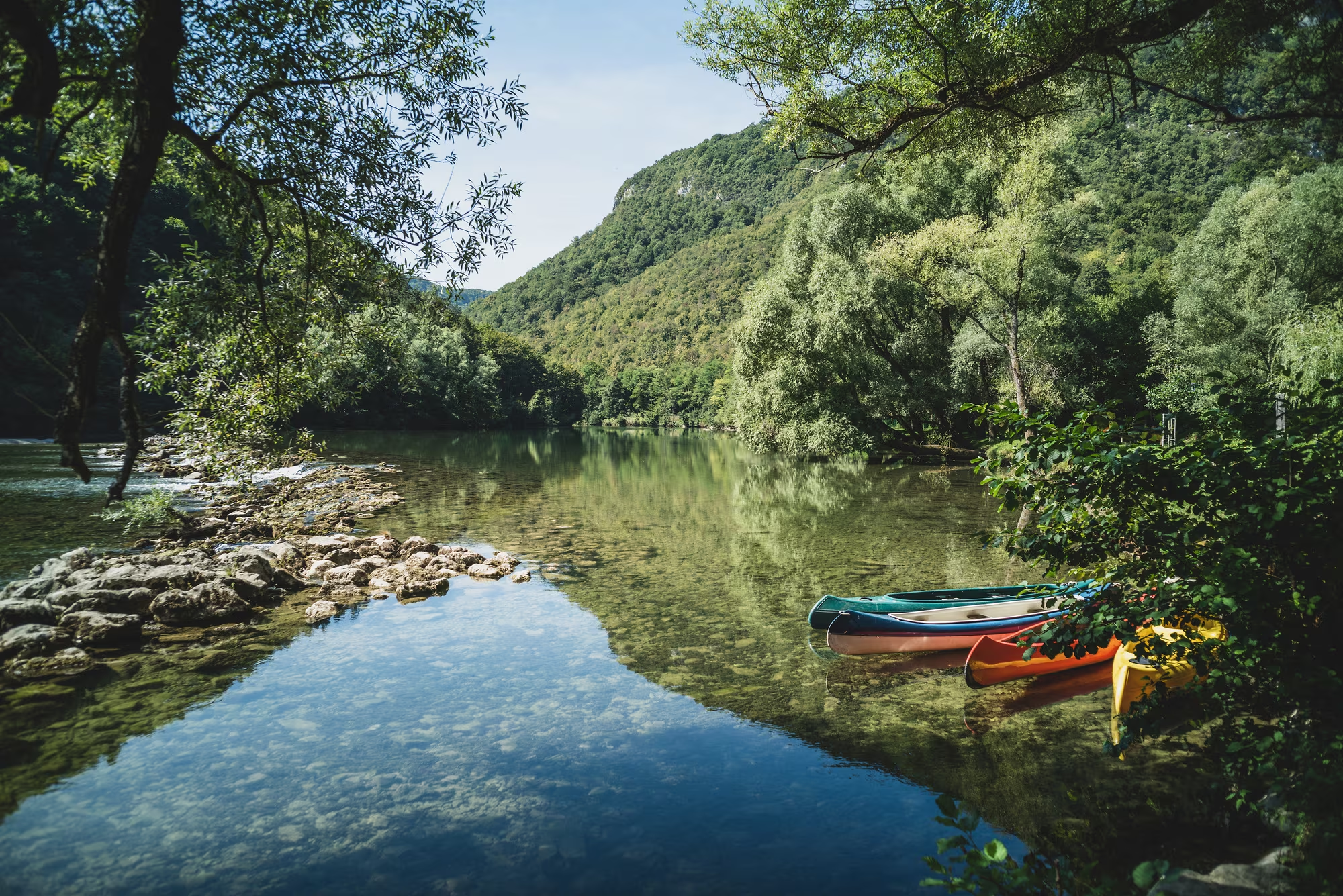
The Kolpa is considered the warmest river in Slovenia. Exactly how warm depends on where you get in: downstream at Metlika, ARSO measured 29.0 °C, while upstream at Petrina the water stays some four degrees cooler.The river forms 118 kilometres of the border with Croatia, so swimming here means swimming between two countries. Bela krajina, the land north of the river, is steljniki country: open meadows of silver birch you will not see like this anywhere else in Slovenia.
On the upper Kolpa, near the village of Osilnica, stands the statue of Peter Klepec, the shepherd boy who according to legend was given superhuman strength and used it to drive off Ottoman raiders.The statue is the work of sculptor Marijan Leš and marks the start of the valley.
Swimming and camping along the Kolpa
The river is why families settle in here. ARSO designates eleven official bathing areas along the Slovenian Kolpa, among them Podzemelj, Adlešiči, Vinica and Radenci, and the water there is shallow and slow enough for children. Campsites and river beaches line the banks; canoes and SUPs are hired on the spot. Between Stari trg and Dragoši runs the Kolpa Landscape Park, more than 4,300 hectares of protected riverbank.
Do watch the season. Official bathing water monitoring for inland waters runs from 15 June to 31 August. In September the water at Metlika has historically been around 20 °C, so swimming is often still fine, but you are judging it yourself at that point.
Črnomelj, Metlika and Semič
The three towns of Bela krajina are small, but each is worth a stop. Črnomelj is the main town and the setting for Jurjevanje, the oldest folklore festival in Slovenia, held here every June and the first major Slovenian festival to earn a Zero Waste certificate. Metlika has a wine museum and a compact old centre. Everywhere you will find belokranjska pogača, the flat bread with caraway and coarse salt, served warm and torn apart at the table.

Kočevsko: old-growth forest and bears
West of Bela krajina lies Kočevsko, the largest unbroken forest area in Slovenia. Part of it has never been logged: the Krokar old-growth forest, 75 hectares of untouched beech, has been on the UNESCO World Heritage list since 2017. These forests hold most of Slovenia’s brown bears, a population of almost a thousand animals and one of the densest in Europe.
You do not see bears from the road here, but from a hide, with a guide, in silence. How that works, what it costs and why the odds of a sighting are so high is in our guide to bear watching in Slovenia. Even without bears Kočevsko is worth it: the Krokar trail runs along the edge of the old-growth forest, and the town of Kočevje itself is a good base.
Dolenjska: Novo Mesto and the Krka
The Krka is the river that strings Dolenjska together. It rises in the Krka cave near the village of the same name in the municipality of Ivančna Gorica and joins the Sava at Brežice. On the way it passes vineyards, castles and the zidanice: the small wine houses among thevines that define the Dolenjska landscape and where Cviček matures.
Novo Mesto
Novo Mesto was granted town rights on 7 April 1365 by Duke Rudolf IV and sits in a sharp bend of the Krka. It is called the town of the situlae: richly decoratedIron Age bronze buckets found here rank among the most important archaeological finds in Europe. You can see them in the Dolenjski muzej. A modern footnote: Novo Mesto is also the factory town of Adria caravans and Renault, though you would hardly know it in the old centre. Walk the Breg riverfront for the town’s best-known view.
Castles along the Krka: Žužemberk,Soteska and Otočec
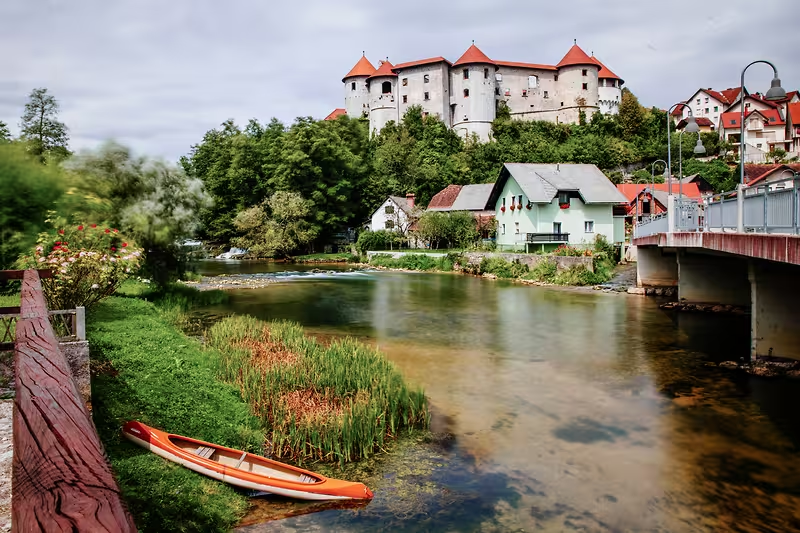
Upstream, the fortress of Žužemberk stands above the river, first mentioned in writing in 1246. The year 1000 said to be carved into the tower gate is tradition, not a document. At Soteska you find the remains of an estate with the Hudičev turn, the Devil’s Tower: a 17th-century garden pavilion whose interior was painted by the workshop of the Dutch master Almanach, with the abduction of Ganymede as its most famous scene. Downstream lies Otočec, Slovenia’s only water castle: a fortress from 1252 on an islet in the middle of the Krka, now a castle hotel. If you would rather visit a town than a castle, Kostanjevica na Krki, the smallest town in Slovenia, sits entirely on an island in the river.

Which spas are in South East Slovenia?
Dolenjska is officially spa country: the resorts of Dolenjske Toplice and Šmarješke Toplice have been running on the hot springs along the Krka for centuries. In Kozjansko, near Podčetrtek, lies Terme Olimia. And on the Sava is Terme Čatež, the largest thermal resort in the country, covered in the Brežice section below. Which spa suits which kind of trip is in our wellness guide.
Posavje and Kozjansko: wine, castles and a monastery
The south-eastern corner towards the Sava is wine country. Bizeljsko is known for its white wines and its castle above the vineyards; around Radeče the region’s knightly past lives on. Above Brestanica, in the municipality of Krško, stands Rajhenburg Castle, now a museum covering among other things the Trappist monks who had their monastery here and the Slovenian deportees of the Second World War. Behind it the Kozjansko regional park protects the hill country. At Olimje the monastery is worth the detour: its tower holds the third-oldest monastery pharmacy in Europe, painted in 1780 and still in business with its own herbal products. Buy honey there; ithas been the local product for centuries.
The wine of this whole area is Cviček, and it is genuinely unusual: the only wine in the world whose composition is legally protected as a blend of red and white grapes, at a maximum of 10 percent alcohol. Light, fresh and slightly tart; drink it young and preferably in a zidanica. More on Slovenia’s wine regions is in our wine guide.
Brežice: the place Slovenians book themselves
Where Dutch travellers drive past Brežice, Slovenians put it near the top of the list. The engine behind those numbers is Terme Čatež, the largest thermal resort in Slovenia, fed by eleven springs and open all year. In summer there is ten thousand square metres of outdoor water, in winter more than 6,500 square metres under domes, at 31 to 36 °C. An adult day ticket is 27 euros in summer and 19 euros in winter. Check the prices before you go.
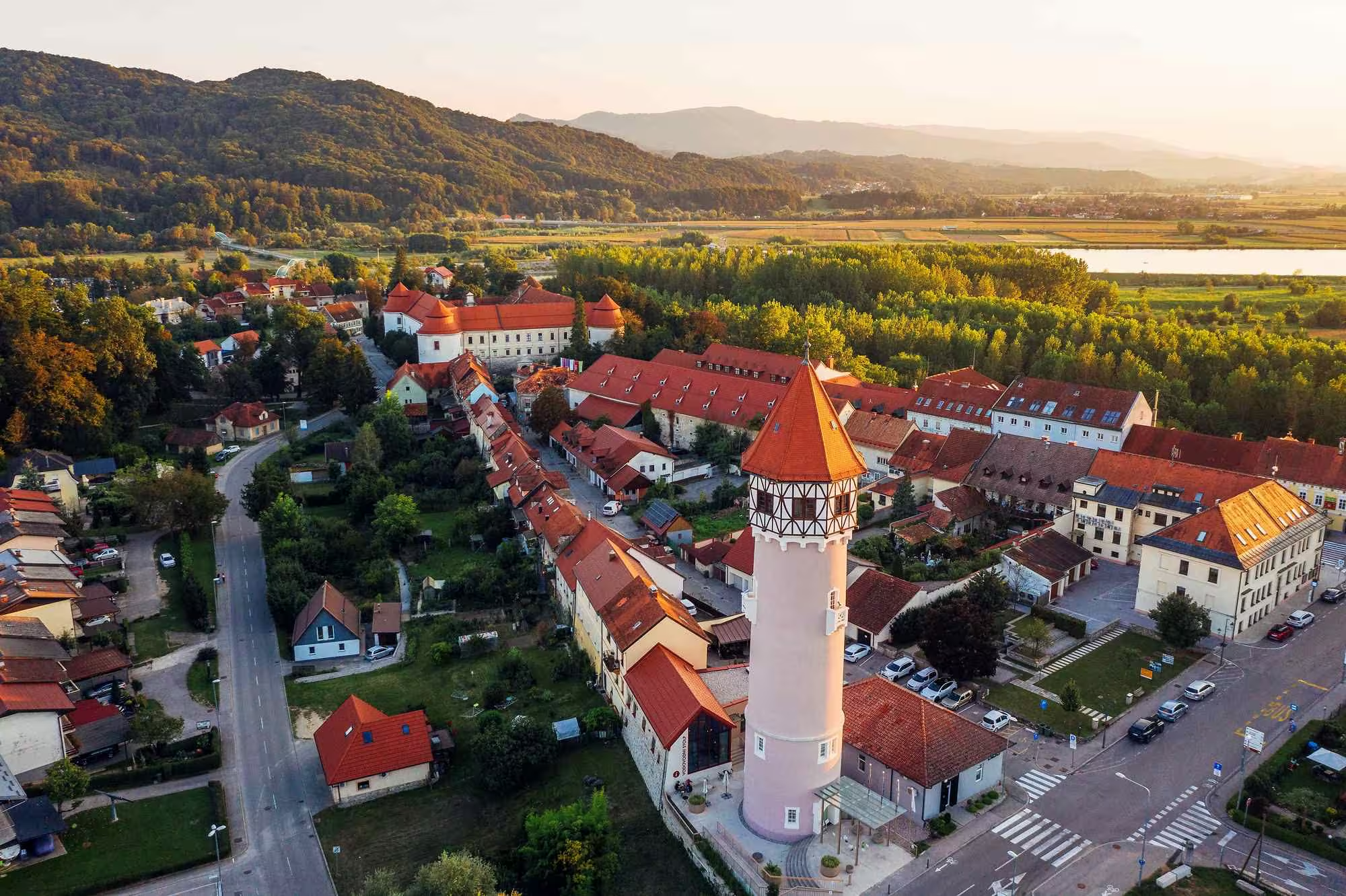
The town itself deserves more than a fuel stop. Brežice Castle, a mid-16th-century Renaissance fortress, houses the Posavje Museum. Its centre piece is the Viteška dvorana, the Knights’ Hall: 350 square metres of fully painted Baroque hall, the largest of its kind inSlovenia, painted around 1700 by Frančišek Karel Remb with scenes from Ovid’s Metamorphoses. Entry is 6 euros. A short walk away stands the water tower of 1914, 46 metres high, with 167 steps or a lift to a viewing platform inside the old reservoir; it is the only water tower in Slovenia you can go all the way up.
Brežice sits where the Krka runs into the Sava, ten kilometres from the Obrežje border crossing on the A2 and about an hour’s drive from Ljubljana. Combine it with the zidanice of Bizeljsko and with the repnice: wine cellars dug by hand into quartz sand, a steady eight degrees year-round,six of which are open to visitors.
How do you get there and when do you go?
How do you get there?
By car, take the A2 from Ljubljana towards Novo Mesto and Zagreb; Novo Mesto is about 45 minutes away, the Kolpa about an hour and a half. The train works too: the Ljubljana - Novo Mesto - Metlika line runs several times a day and ends at Rosalnice, walking distance from the Kolpa. How public transport in Slovenia works will becovered soon in our transport guide.
When do you go?
For the Kolpa: July and August, when the water is warmest and bathing water monitoring is running. For wine and colour: September and October, harvest season. The spas are a reason to come outside summer, and Terme Čatež runs all year. Bears are visible on tours that run from April to October.
How long do you stay?
As an addition to a road trip: two nights, one day for the Kolpa and one for Dolenjska. If you take the south-east as a destination in itself, with a riverside campsite as a base, a week fills easily.
Where do you sleep?
On the Kolpa: campsites and glamping near Podzemelj or Vinica. In Dolenjska: the castle hotel at Otočec for a special night, or a tourist farm among the vineyards. At the spas you book the resort itself.
Latst verified: August 2026 | Latst updated: August 2026 | Author: Editorial team Mijn Slovenië
Sources: slovenia.info, ARSO, kp-kolpa.si, kocevsko.com, kraji.eu, visitkrsko.com, grad-otocec.com, wineanorak.com, terme-catez.si, pmb.si, Slovenian Times, Mijn Slovenië
Cover image: Bela krajina, Vidošiči, church of Saint Ana ©Vid Rotar, slovenia.info