Visiting Postojna Cave: tickets, the train and tips for families
Twenty-four kilometres of passages and halls, much of it explored by underground train: Postojna makes the world beneath the Karst accessible to the whole family. Including current ticket prices and the Predjama Castle combo.
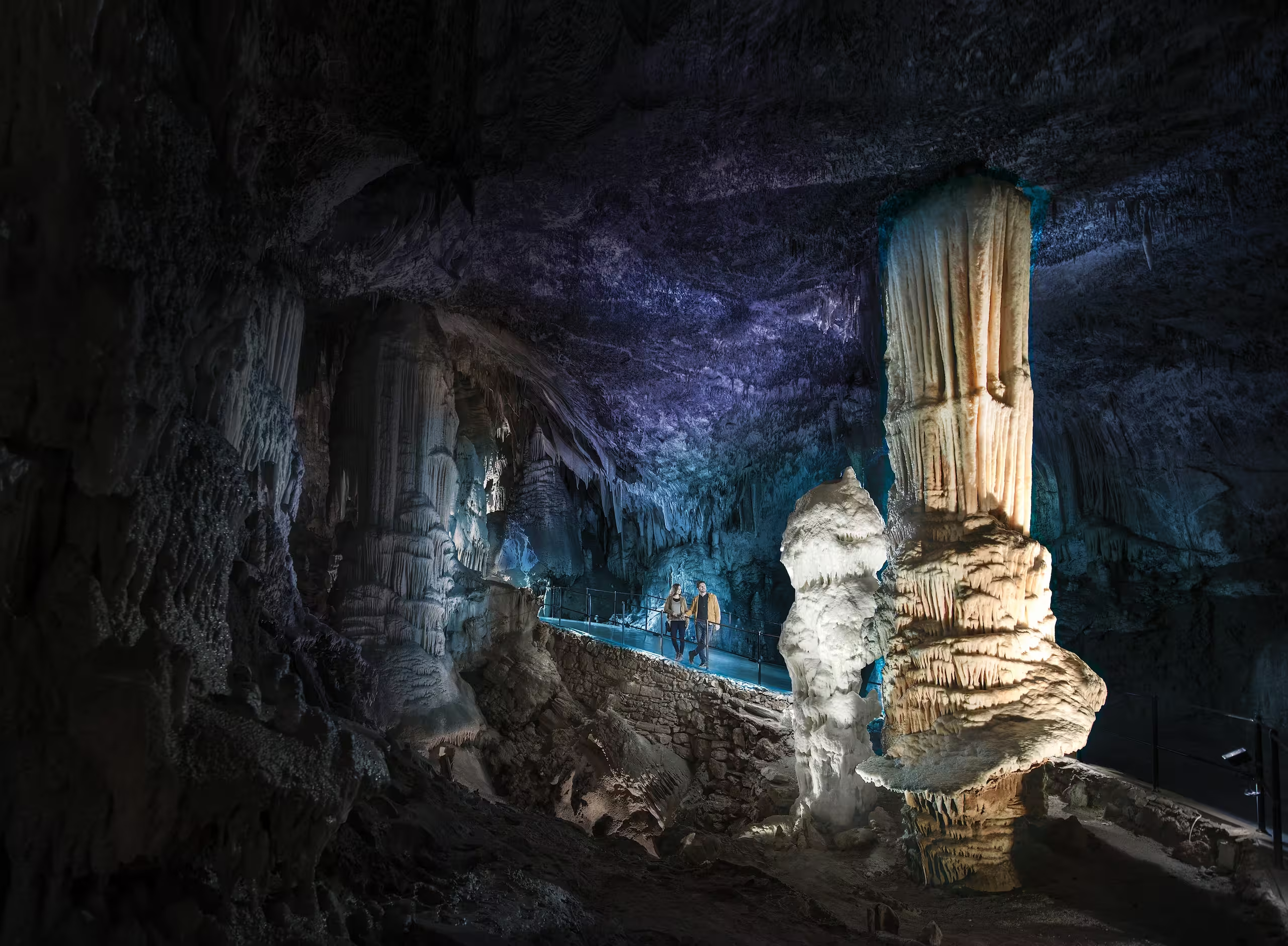
Postojna Cave is one of Europe's largest cave systems: 24 kilometres of passages, galleries and halls carved into the limestone of the Karst, less than an hour from Ljubljana. It is Slovenia's best-known attraction by far, and the only cave where you cover most of the distance on an underground train. That train is exactly what makes Postojna so good with children: no long climb, no endless walk, but a world of dripstone within five minutes.
This guide covers what a visit costs, how the train and the tour work, why your kids should not miss the 'human fish', and how to combine Postojna smartly with Predjama Castle.
What makes Postojna cave so special?
Postojna is not the world's biggest cave, nor its quietest, but it is the most accessible one of this scale. The system was carved by the Pivka river, which disappears into the limestone here, and it has been welcoming visitors for more than two hundred years; over 39 million people have passed through in that time. The train has been running since 1872, the first cave railway in the world, and the 3.7-kilometre ride on the only double track inside a cave has become the cave's trademark.
The discovery is a story in itself. In April 1818, lamplighter Luka Čeč was preparing the cave for an imperial visit when he climbed over a rock, disappeared, and came back with the words: 'Here is a new world, here is paradise!' For decades the credit went to a senior official; only in 1854 did the humble Čeč get the recognition he deserved. The same Čeč later discovered the first cave beetle ever recorded, proving that life in caves does exist. The region even gave the world its word for this landscape: karst comes from the Kras, the Slovenian plateau where rainwater has been dissolving limestone into caves, sinkholes and disappearing rivers for millions of years.
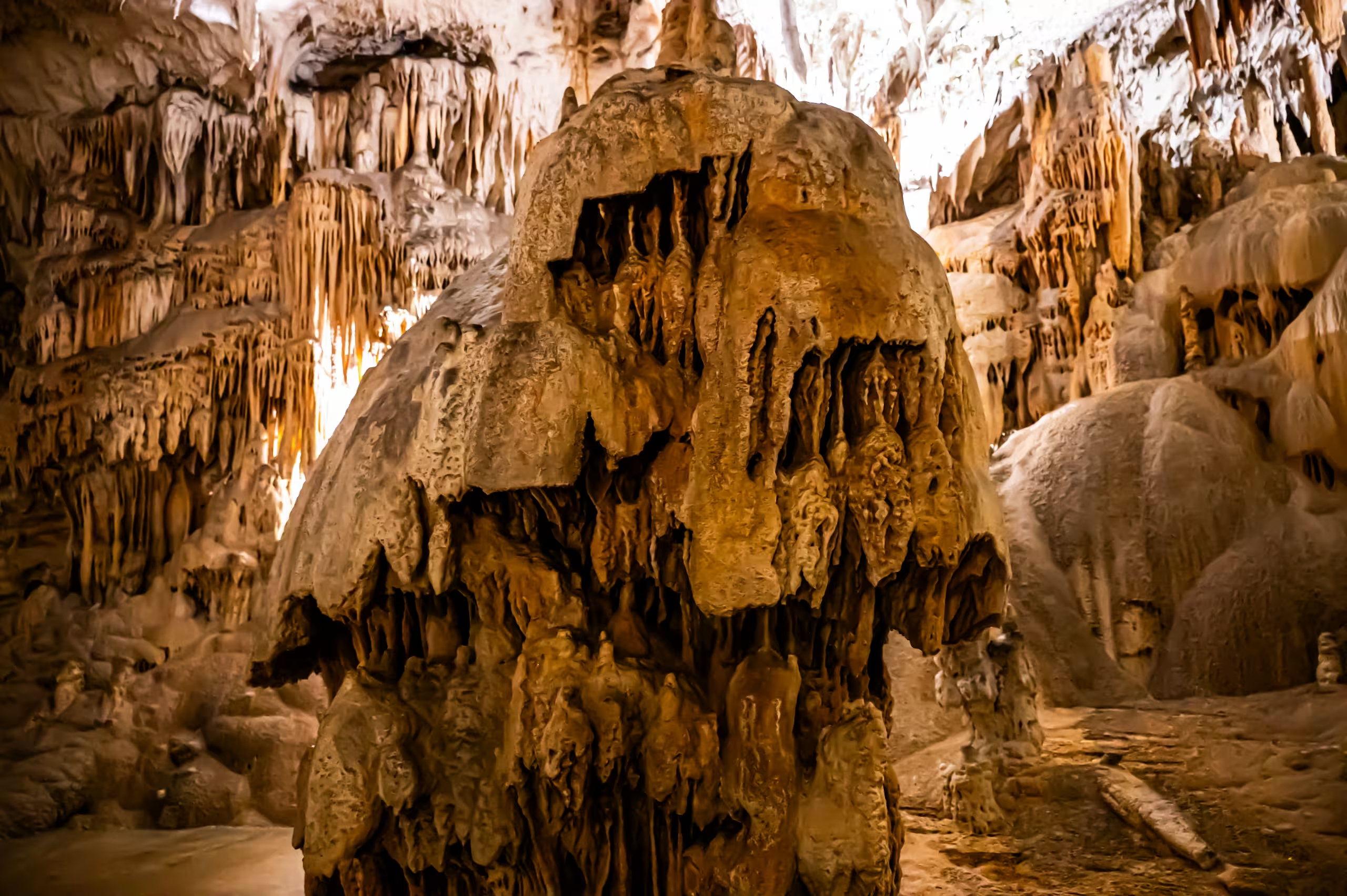
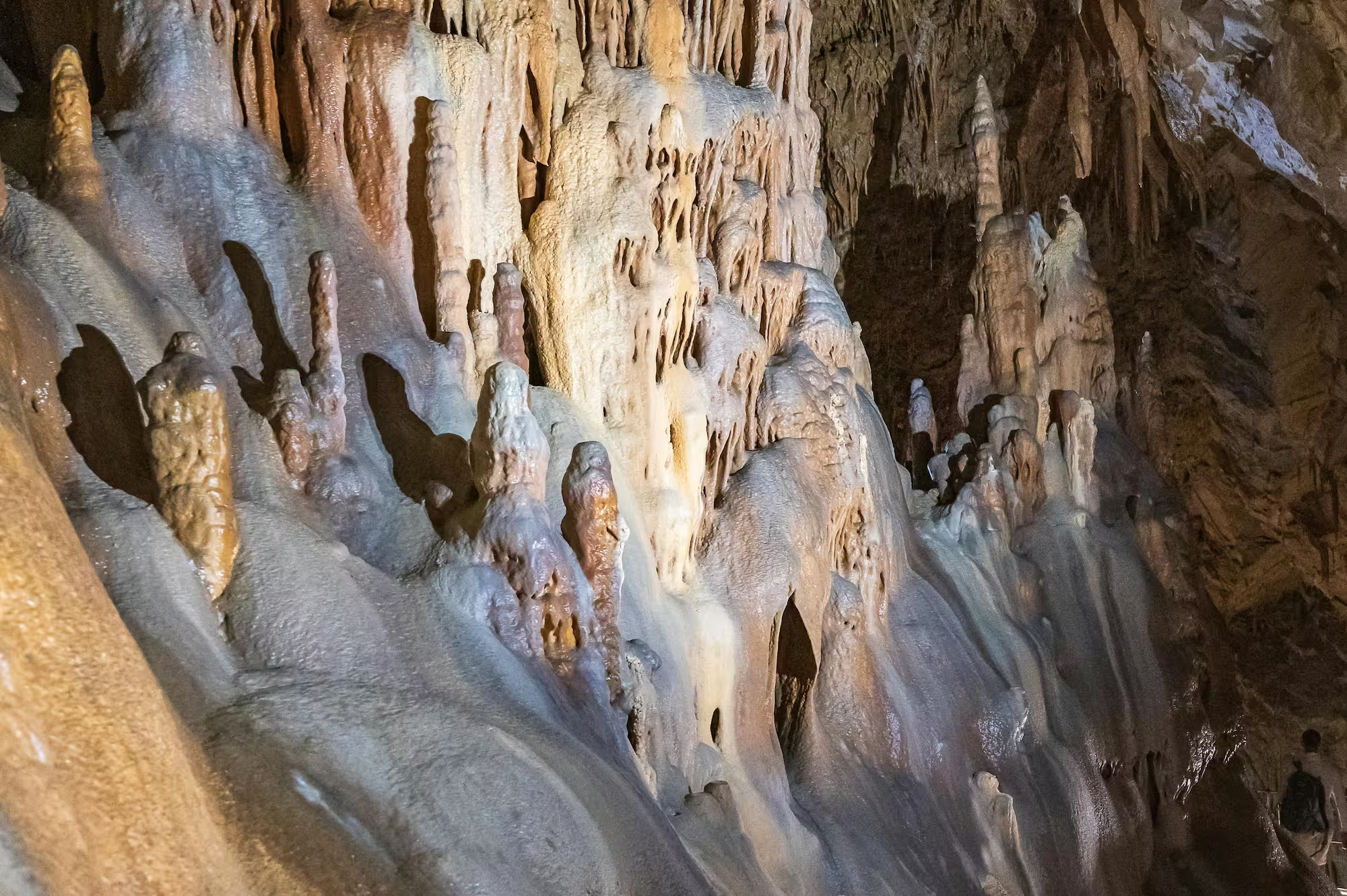
Inside wait halls with names like the Spaghetti Hall, after the thin dripstone strands on its ceiling, and the Concert Hall, where actual concerts are held. The star is Brilliant: a five-metre, snow-white stalagmite that has become the symbol of the cave.
How does a visit work: the train and the tour?
A standard visit takes about an hour and a half, in two parts. First you board the open train, which takes you 3.7 kilometres into the mountain, past lit halls and under curtains of dripstone. Then comes a walking section of roughly a kilometre and a half on wide, paved paths, with a guide or an audio guide available in seventeen languages. The train brings you back out at the end.
For children this is a golden formula. The train ride feels like an attraction in itself, the walking section is short enough to manage, and there is something new to see every few minutes. From around age four, kids walk it comfortably; younger ones simply ride on a lap.
Practical: tours leave at set times and two simple rules are worth repeating with children. Touch nothing (dripstone grows about a centimetre per century, and the grease on our fingers stops it), and no flash around the animals.
The human fish: Postojna's baby dragon
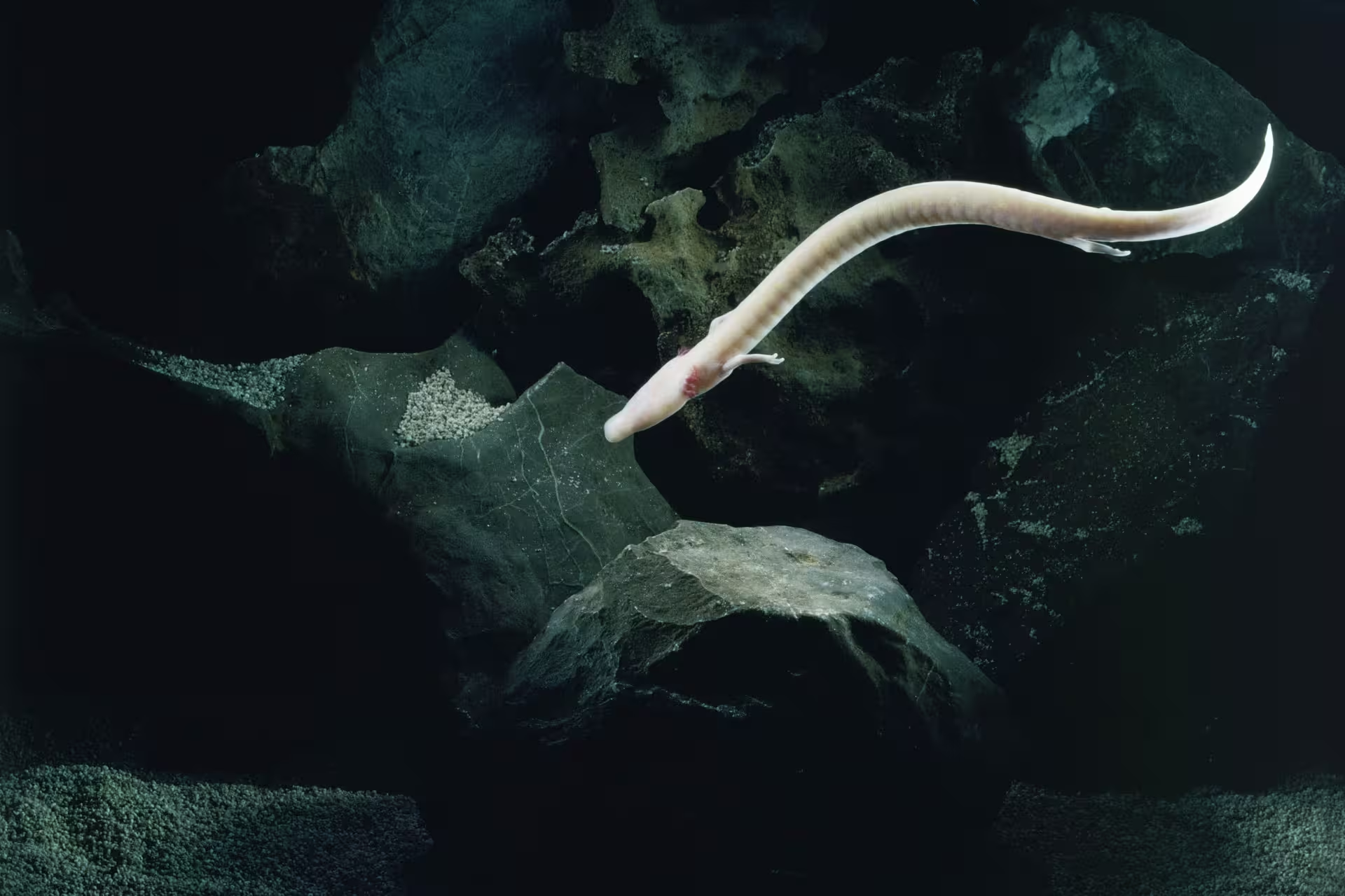
The cave's most famous resident is the olm, in Slovenian človeška ribica: literally 'human fish', for its pink,skin-coloured complexion. The animal is blind, lives for decades and exists nowhere in the world except the underground waters of the Dinaric Karst. When heavy rains used to flush them out of the cave, locals believed they were baby dragons, and the guides still love telling that story.
In 2016 Postojna made world news when a guide spotted an egg in the large aquarium and 22 'baby dragons' hatched in the months that followed, watchable live for the first time in history. In 2026 those 22 turn ten: they are growing up in a screened-off part of the cave, monitored by biologists from the University of Ljubljana. One of them, Viktor, even regrew a complete leg after an injury, a regeneration process that made international scientific news. The olm is a biological outlier anyway: it can go years without food.
You can meet the olm in the Vivarium next to the cave, which covers the other cave dwellers too. With children it is the logical second stop: the dragon story does the rest.
What does is cost? Tickets and prices
Current prices from the official ticket shop (July 2026):
- Postojna Cave (single ticket): € 34.90 per adult.
- Predjama Castle (single ticket): € 24.
- Two Adventures (cave + Predjama): € 49.90 instead of € 58.90; the usual choice for a full day.
- Full Park Experience (cave, Predjama, Vivarium, EXPO): € 59.90 instead of € 84.50.
- Vivarium (single): € 12.80.
Good to know: with a package ticket you pick a fixed date and time for the cave tour, and visit the other attractions freely within 30 days. Booking online is close to essential in high season: you skip the queue, and the popular time slots fill up fast. Children get discounted rates per age group; the exact amounts are listed per ticket in the official shop.

Practical info: opening hours, temperature and what to bring?
The cave is open every day of the year; tour times vary by season, with the most departures per day in July and August. Check current times on postojnska-jama.eu before you go.
- Bring a jacket, even in summer: it is a constant 10 degrees Celsius inside. Thirty degrees outside still means goosebumps within.
- Sturdy shoes: the paths are paved but damp and slippery in places.
- Come early or book the first slot: July and August are busy; morning tours are the quietest.
- Push chairs: welcome, including inside the cave: paths and ramps are adapted (maximum 80 cm width) and a foldable push chair can go on the train. Only Predjama Castle cannot be visited with a push chair.
More than the cave: what else is in the park?
Postojna Cave Park is built as a full-day destination, and it shows. Besides the cave and the Vivarium there is EXPO Cave Karst, an interactive exhibition on how karst and caves are formed; slightly too school-like for toddlers, but gold for eight-year-olds who leave the cave full of questions.
You can eat in the park itself, but for a nicer break, pack a picnic and drive to Predjama: the meadow below the castle is one of the loveliest lunch spots in the region. You can even stay the night right next to the entrance at Hotel Jama, with discounted park tickets included in hotel packages.
How to get to Postojna Cave?
By car, Postojna is under an hour from Ljubljana: A1 towards Koper, exit 41 (Postojna), then two kilometres to the park. You need an e-vignette for the motorway; a full-day parking ticket at the park costs €6.
It works without a car too. Hourly buses run from Ljubljana to Postojna, and the town sits on the Vienna-Venice railway line; from the station it is a 25-minute walk or a short ride on the local bus to the park.
Postojna also makes a smart stopover: the cave sits practically on the A1 between Ljubljana and the coast, so if you are heading for Piran or Istria, plan the visit en route. And if you have an evening to spare: the cave lies in the Notranjska region, half an hour from the Lož Valley, where you can watch wild brown bears from a hide. How that works is in our bear watching guide.

Combining with Predjama Castle (and Škocjan if you prefer quiet)
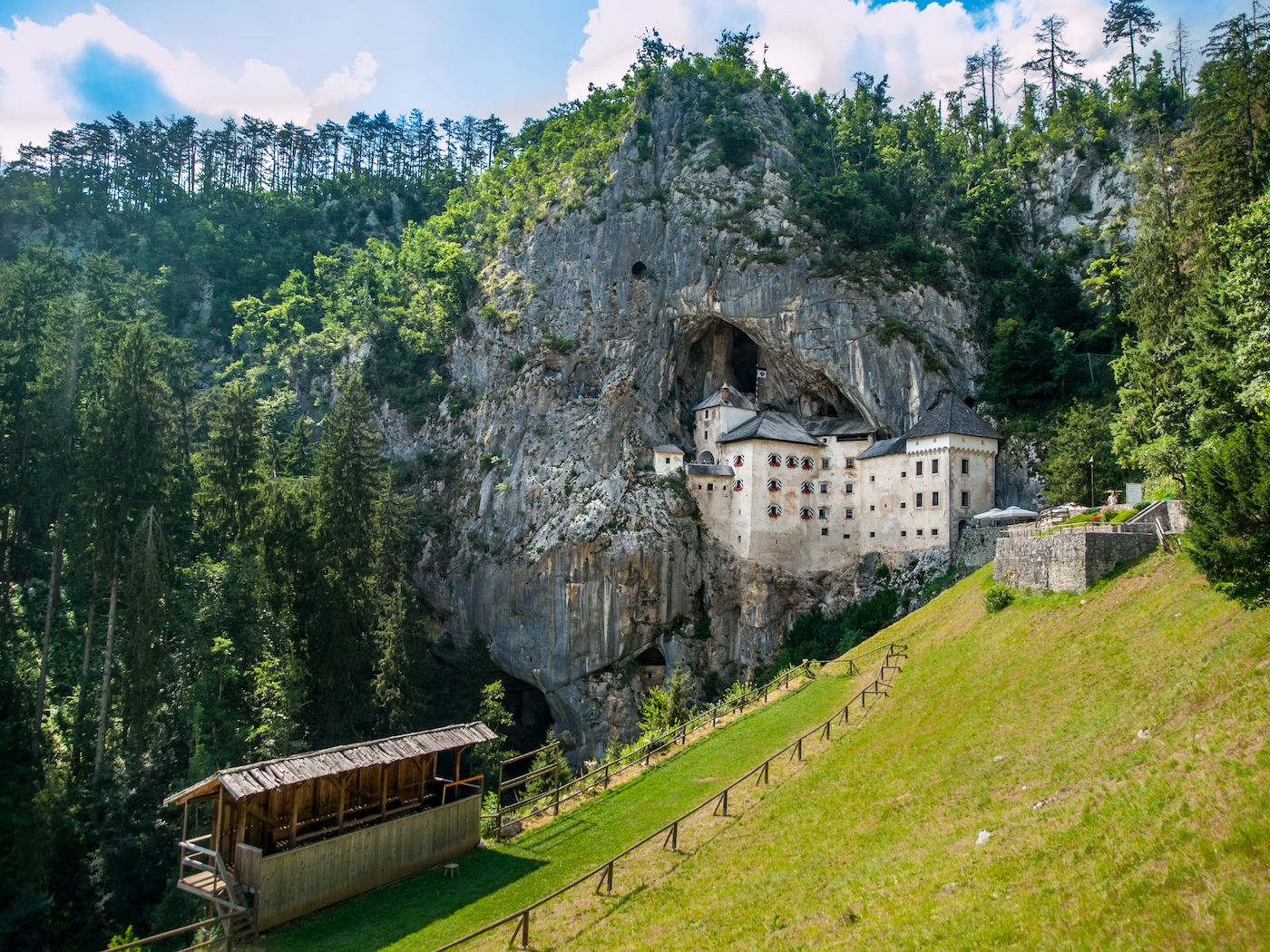
Nine kilometres away, Predjama Castle has been wedged into a 123-metre cliff face for more than 800 years, half building, half cave. It is the kind of place children draw when you ask them to imagine a knight's castle, and the combo ticket makes the choice easy: cave in the morning, castle in the afternoon, picnic in between.
The castle comes with a story you only need to tell your kids once. The robber baron Erazem of Predjama held out against a months-long siege because a secret cave tunnel kept him supplied with fresh food; he taunted his besiegers with fresh cherries. His end was less heroic: betrayed, he was struck down in the toilet, the castle's only weak spot. Erazem has been Slovenia's Robin Hood ever since. In summer you can also visit the cave under the castle, tunnel included.
In fairness: Postojna is grand, but also busy and commercial, with souvenir shops right up to the entrance. If you would rather have silence and raw nature, drive half an hour further to the Škocjan Caves: UNESCO World Heritage, with an underground gorge where you cross a narrow bridge 45 metres above the river. With young children, Postojna remains the more sensible choice; Škocjan demands more stairs and more stamina.
Frequently Asked Questions
- How long does a visit to Postojna Cave take?
The standard tour takes about an hour and a half. Add the Vivarium and lunch and Postojna easily fills half a day; add Predjama Castle and it is a full one. - Is Postojna suitable for children?
Yes, more so than most caves: the train does the heavy lifting and the walking section is about a kilometre and a half. From around age four children manage it themselves, and even push chairs can come along: the paths are adapted for them. Children up to and including 14 visit the cave accompanied by an adult. - How much is a Postojna Cave ticket?
A single ticket costs €34.90 per adult; the combo ticket with Predjama Castle is €49.90. Children get discounted rates. - Do you need to book in advance?
In July and August, yes: the cave tour works with time slots and the popular hours fill up quickly. Booking online also saves you the queue at the ticket office. - How cold is it inside the cave?
A constant 10 degrees Celsius, all year round. A jacket or thick jumper is no luxury, even on a hot summer day. - Postojna or Škocjan, which cave should you choose?
With children or limited time: Postojna, for the train and the comfort. For quiet, rugged nature and UNESCO status: Škocjan. If you have a few days in the Karst, simply do both
Slovenia's most famous has its own railway, and a resident that, according to the old tales, descends from dragons.
Last verified: July 2026 | Last updated: July 2026 | Author: Editorial TeamMijn Slovenië
Sources: Postojnska Jama, Dars, Slovenia.info, Mijn Slovenië
Cover photo: Arhiv Postojnska jama, Iztok Medja

.avif)