Lipica Stud Farm: Visit Slovenia's Lipizzaner Horses
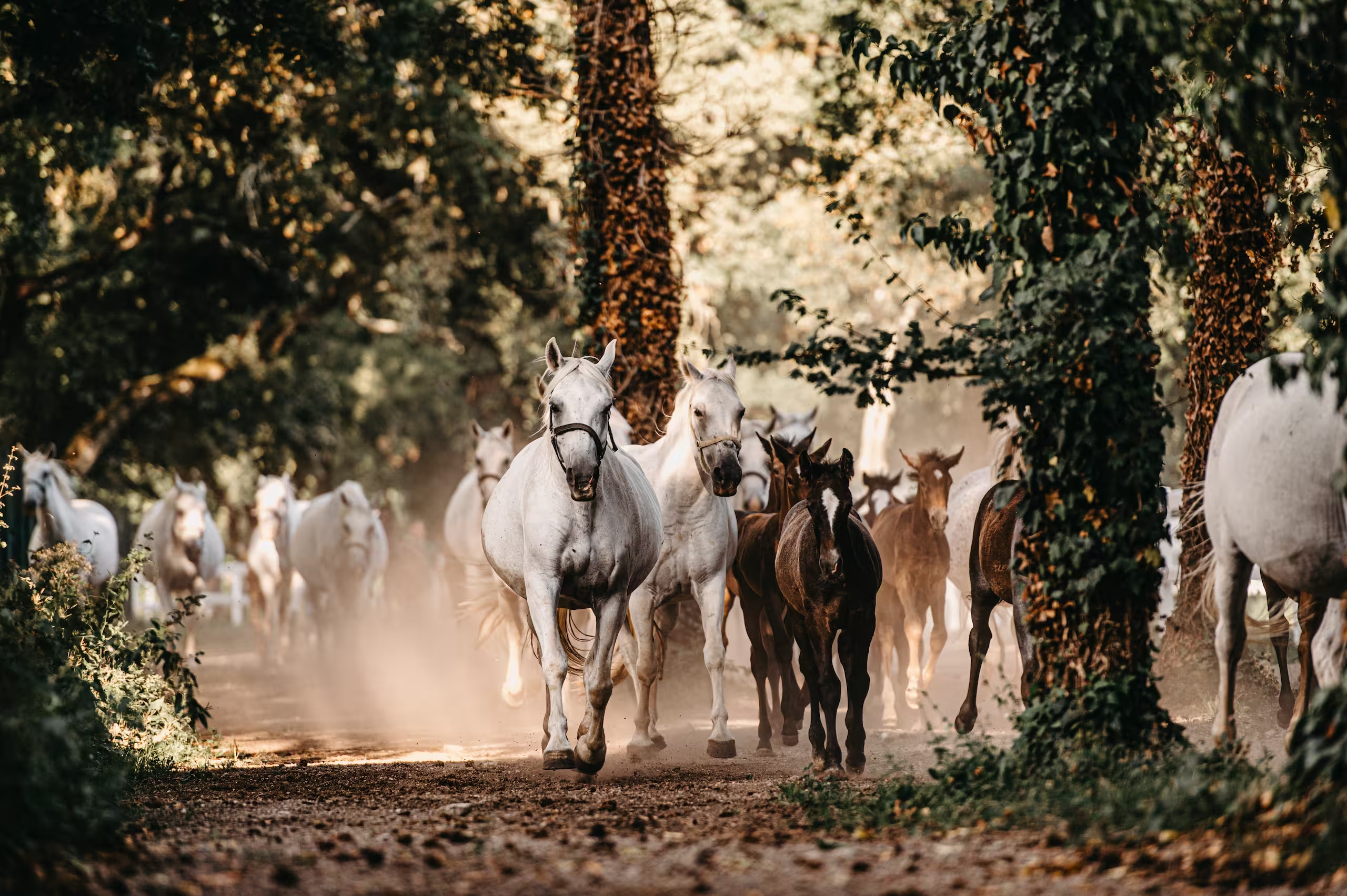
Lipica has bred the white horses of Vienna’s Spanish Riding School since 1580. On the Karst plateau you visit the stables, watch the training sessions and can now stay at Hotel Maestoso, right on the estate.
Lipica: Europe's oldest Stud Farm
The first time I visited Lipica, what struck me was the quiet. No busy ticket hall, no queue. Just a long tree-lined drive, old oaks, and beyond them field after field of white horses. Lipica is the oldest stud farm in Europe. In 1580, Archduke Charles II signed the founding document, and horses have been bred here without interruption ever since. That makes Lipica not just old but exceptional: four and a half centuries of unbroken breeding work in one place, on the same Karst soil.

That Karst soil is not a detail. The Karst is a region of limestone, underground rivers, and lean, mineral-rich pastures. It was on this ground that the Lipizzaner horse came into being, and the region's name still lives on in the name of the breed. Today more than 300 white Lipizzaners live here, spread across more than 300 hectares. In 2022, the tradition of Lipizzaner breeding was added to UNESCO's list of Intangible Cultural Heritage. And since 2026, Slovenia has tied an official holiday to it: 19 May, the date the founding document was signed in 1580.
This is not a museum where you follow a rope. It is a working stud farm, and you feel it from the moment you drive onto the grounds.
What makes the Lipizzaner Horses so special?
The best-known fact about Lipizzaners is only half true: they are white, but they are not born white. Foals come into the world dark, brown or almost black, and lighten only slowly over years. A Lipizzaner is usually not fully grey-white until somewhere between its sixth and tenth year. So if you see a dark foal standing next to a snow-white mare at Lipica, you are looking at the same horse in two stages of life.
The Lipizzaner is a breed in its own right, developed at Lipica itself from a cross of Spanish, Italian, and local Karst horses. They are not large horses, but they are strong, intelligent, and strikingly quick to learn. Those exact qualities make them suited to classical dressage, the riding art Lipica is known for.
The link between Lipica and classical riding goes back centuries. The Spanish Riding School in Vienna, world-famous for its dancing white stallions, has worked with Lipizzaners for generations, and many of those bloodlines trace back to Lipica. Watch a training session here and you are not seeing folklore staged for tourists, but the living foundation of a riding tradition recognised across Europe.
That the breeding work is UNESCO-listed is not about the horses alone. It is about the knowledge: which lines to cross, how to raise a foal, how to keep a breed in balance across generations. That knowledge is still passed on at Lipica.

What can you do at Lipica?
A visit to Lipica is more than watching horses, though that alone is enough. These are the main things to do:
- Visit the herd: a guide takes you past the stables and pastures. You come close to the horses, and the guide tells you which bloodline you are looking at.
- Classical riding: Lipica is home to one of the oldest riding schools in Europe. During training sessions and performances you see the horses carry out the difficult figures, set to music. Performances and training are not held every day, so check ahead what is on during your visit.
- Carriage and horseback rides: from May to September you can take a ride in a historic carriage, or get in the saddle yourself. The carriage ride loops across the grounds and along the pastures.
- The museums: the Lipikum is a modern, interactive museum that tells the story of the Lipizzaner, from breeding to riding. There is also a carriage museum with historic coaches and a culinary museum. Step into the Velbanca too, the old stable with its striking vaulted ceiling.
Budget half a day if you do the guided tour and one museum. Add a performance or a carriage ride and a full morning or afternoon fills up quickly.

Is Lipica appropriate for children?
Short answer: yes, but know what you are visiting. Lipica is a working stud farm, not a petting zoo. You cannot simply stroke the horses, and part of the visit is a guided tour with explanation. That said, children often find Lipica wonderful. There are horses as far as you can see, plenty of room to walk, and the Lipikum museum is interactive enough to hold younger children's attention too. The carriage ride is almost always a hit.
Practically: children from around seven get the most out of the guided tour, because they can follow the explanation. For younger children it is mostly about the horses and the open space, and that works fine too. A riding school performance does ask for some sitting still, so judge whether that suits your child.

How to get to Lipica?
Lipica sits in the far south-western corner of Slovenia, in the Karst, close to the Italian border.
By car: from Ljubljana you reach it in about an hour. From Trieste you are there in well under half an hour, which also makes Lipica easy to combine with a trip through Italy.
By public transport: there is no train all the way to Lipica. You travel by train to Sežana or Divača and take a short taxi ride from there. With a rental car you are more flexible, and the Karst is a region best explored by car anyway.
When is the best time to visit Lipica?
Lipica is open year-round, but spring and summer are the most beautiful. The pastures are green then, and the carriage and horseback rides run from May to September. One particular moment is 19 May: since 2026, that is Lipizzaner Day, Slovenia's official holiday for the breed. There is often extra programming around the date, and it makes a good reason to plan your visit. In winter Lipica is open, but part of the activity programme pauses and the pastures look barer. If you want the full experience, choose a day between April and October.

Staying overnight and dining in Lipica: Hotel Maestoso
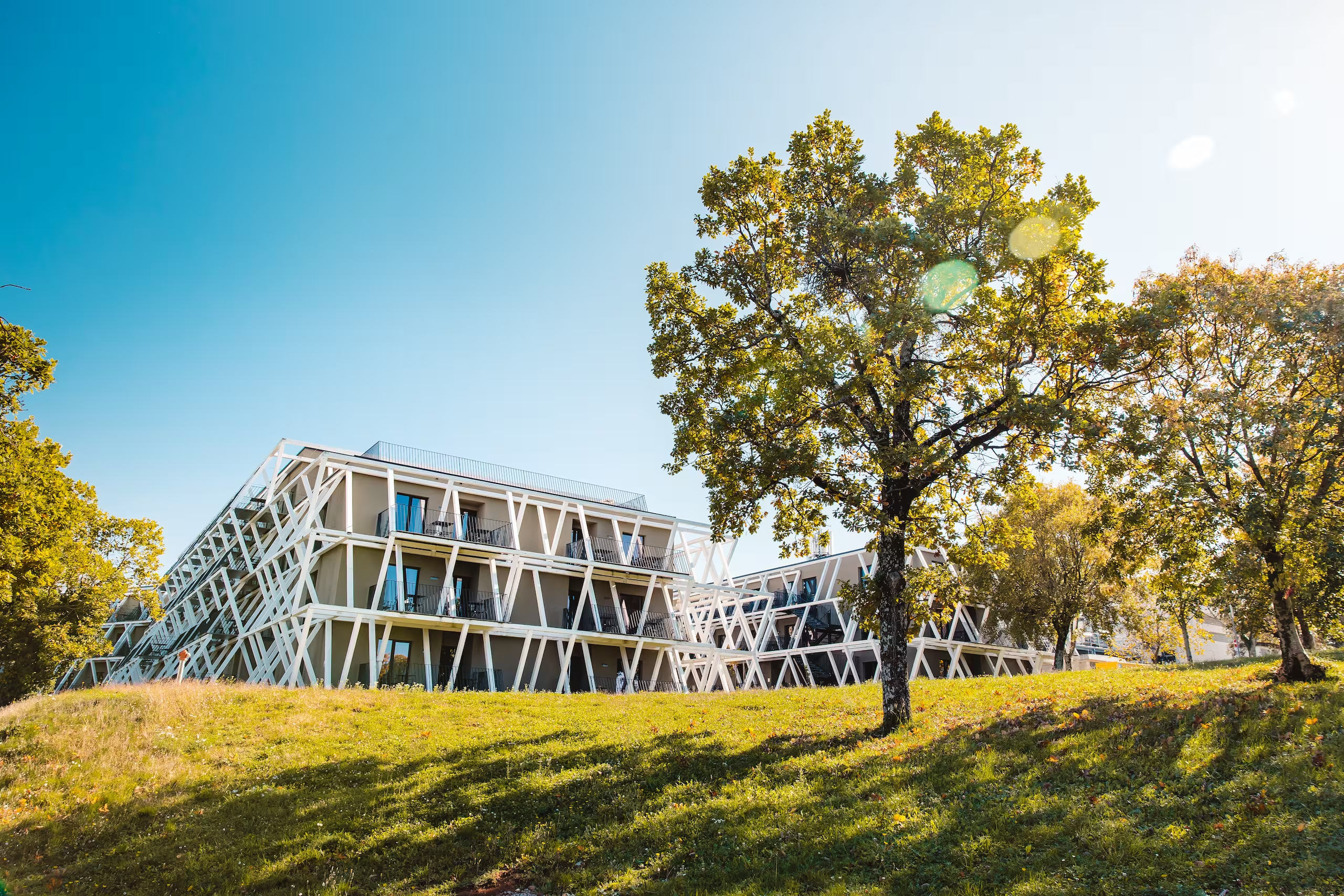
Lipica is more than an afternoon programme, and since the estate was renovated you no longer have to leave at closing time. At the heart of the grounds stands Hotel Maestoso, a four-star (4* Superior) hotel with 139 rooms, named after one of the stud farm’s classic stallion lines. The design echoes the details you saw during the day: white Lipica fences, hay elements and the same sliding doors as the stables. The hotel also holds the Green Key label for sustainable hospitality.
Dinner is served at Gratia, the hotel’s à la carte restaurant, with the Karst on the plate: think pršut and Teran wine from the surrounding hills. You can read more about those regional products in our Slovenian cuisine blog.
For something active there is the Lipica Sports Centre next to the hotel: a golf course, tennis courts, mini golf and disc golf. Family rooms are available, and overnight guests get the estate almost to themselves in the early morning: at 9.30 am you can watch the mares being released to pasture.
Practical tips for your visit to Lipica
- Guided tours are available as standard in Slovenian and English. German, Italian, and French are possible on request, as long as you arrange it at least three days ahead.
- Admission prices vary by type of visit: the stud farm alone, or with a performance, a carriage ride, or the museums added. Check the current prices and opening hours on lipica.org before you go.
- Set aside half a day, and combine Lipica with the rest of the Karst: the Škocjan Caves are nearby, and the Slovenian coast is about an hour's drive.
- Wear good shoes. You walk on unpaved paths and through the pastures.
Frequently asked questions
- Are Lipizzaner horses born white?
No. Lipizzaners are born dark, brown or almost black, and lighten slowly over years. Most are not fully grey-white until somewhere between their sixth and tenth year. - How long does a visit to Lipica take?
Budget half a day. A guided tour with a museum takes about two hours; add a performance or carriage ride and you fill a full morning or afternoon. - Can you ride horses at Lipica yourself?
From May to September you can book horseback rides and carriage rides. Outside that season the offering is more limited. - Is Lipica suitable for kids?
Yes, certainly from around age seven. It is a working stud farm rather than a petting zoo, so set expectations accordingly. The carriage ride and the interactive Lipikum museum tend to go down well with children. - When is Lipizzaner Day?
On 19 May. Slovenia officially declared the day in 2026, because the founding document of Lipica was signed on 19 May 1580.
Lipica has bred Lipizzaner horses since 1580, and you can still walk among the herd today.
Last verified: July 2026 | Last updated: July 2026 | Author: Editorial Team Mijn Slovenië
Sources: i feel sLOVEnia, Lipica Stud Farm, UNESCO