Best time to visit Slovenia
Slovenia packs four climates into a country the size of Wales, so there is no single best season. This guide gives you the weather month by month, region by region, and what each one costs you.
What is the best time to visit Slovenia?
For most trips, June and September are the strongest months: warm enough for the mountains and the lakes, without the crowds and the prices of July and August. If you want to swim in the lakes or walk high in the Alps, you need July and August. If you want wine, colour and quiet, September and October are better. For snow, come between early December and early April.
That is the short answer. The rest of this page explains why it differs by region, what each month actually gives you, and when the crowds arrive. All temperatures and rainfall figures below are long-term climate averages for 1991 to 2020 from ARSO, the Slovenian environment agency. They are averages, not a forecast.
There can be snow on the Vršič pass and terrace weather in Piran on the same day. One national forecast tells you nothing here.
Slovenia has four climates in one small country
Slovenia is about the size of Wales and still has four climate zones sitting side by side. That is the main reason a national forecast tells you almost nothing.
- Mediterranean: the coast around Piran, Portorož and Koper, plus the Vipava valley and Goriška Brda. Mild winters, hot summers, wet autumns. An average of 19.2 degrees by day across the year at Portorož.
- Continental: Ljubljana, Maribor and the east. Cold winters, warm summers with thunderstorms. Watch the difference inside this zone: Ljubljana gets 1,368 millimetres of rain a year, Murska Sobota in Prekmurje only 812. That is forty per cent less rain, less than two hours' drive away.
- Alpine: the Julian Alps, the Kamnik-Savinja Alps and the Karavanke range. At Rateče, at 864 metres, the average January night temperature is minus 7.1 degrees.
- Karst: the limestone plateau between Ljubljana and the coast, with Postojna and Škocjan. Cooler than the coast, wetter than you expect, and known for the bora, the cold downslope wind that tears across the plateau.
A concrete example. On an average day in May it is 22.7 degrees at Portorož and 18.2 degrees at Rateče, but Rateče drops to 5.3 degrees at night while the coast stays close to 12. Above two thousand metres the gap is wider still: on Kredarica, at 2,514 metres, the average May daytime temperature does not get past 3.3 degrees.
The east is the driest corner of the country, and you notice it most when the rest turns wet. September brings Ljubljana 160 millimetres and Murska Sobota 100. In October it is 150 against 70, in November 138 against 66. If you travel in autumn and would rather not walk in the rain, look east. The winters there are harsher, though: in January the night temperature in Murska Sobota drops to minus 3.7 degrees against minus 1.7 in Ljubljana, with snow lying on an average of 34 days a year.
Slovenia weather month by month
What the weather does on the coast, in Ljubljana and in the mountains, what is open, and what each month is good for. The figures are average daily highs and night-time lows, plus average monthly rainfall.
January
Coast 9.3 degrees by day, Ljubljana 4.1 with frost at night, Rateče 2.0 by day and minus 7.1 at night. January is the driest month on the coast, with 54 millimetres. It is also the quietest month of the Slovenian tourist year. The ski areas are running, the spas are through their low season, and Postojna Cave is simply open: it is 10 degrees in there all year round.
February
Coast 10.5 degrees, Ljubljana 7.0, Rateče 4.6 by day and minus 6.4 at night. Together with January, this is the most snow-reliable stretch. Ptuj holds Kurentovanje, the country's largest carnival; the 67th edition runs from 3 to 9 February 2027. If you have children in school in Europe, this is the month that lines up with most half-term breaks.
March
Coast 14.2 degrees, Ljubljana 12.3, Rateče 9.0. A transition month: spring in the valleys, snow still lying higher up. The high ski areas keep running, and Krvavec's winter price list runs until early May. The Vintgar and Mostnica gorges are still closed. Rivers run high on meltwater, which makes March and April the best rafting months.
April
Coast 18.3 degrees, Ljubljana 17.2 with 97 millimetres of rain, Rateče 13.3. The gorges are open: Vintgar runs from April to November with the exact opening day depending on the weather, and at Mostnica the ticket season runs from 1 April to 30 November. Above the treeline there is still plenty of snow. For cities and the coast this is a pleasant, quiet month.
May
Coast 22.7 degrees, Ljubljana 21.8, Rateče 18.2. Watch the rainfall: Ljubljana gets 114 millimetres in May, more than January and February combined. Even so this is one of the loveliest months, everything green and few visitors. Vintgar itself names April and May as its quietest period of the year. The high mountain routes arenot yet clear of snow.
June
Coast 27.0 degrees, Ljubljana 25.8, Rateče 22.3. This is the best mountain month if you are not tied to school holidays. The high mountain huts open; the PZS reports that huts in the high mountains are generally open from June to the end of September, while the mid-altitude huts run all year. Official bathing water monitoring on the inland waters begins on 15 June.
July
The warmest month. Coast 29.4 degrees by day and 17.4 at night, Ljubljana 27.9, Rateče 24.4. Even on Kredarica, at 2,514 metres, the average July daily maximum reaches 10.0 degrees. Ljubljana gets 122 millimetres of rain in July, almost all of it from late-afternoon thunderstorms. Lake Bled warms to 25 degrees in summer. July and August are also the busiest months: around three million overnight stays per month against roughly 750,000 in January.
August
Almost identical to July: coast 29.5 degrees, Ljubljana 27.6, Rateče 23.9. Everything is open and everything is full. Vintgar reports that most visitors in July and August arrive between 9.00 and 12.00, so plan that gorge early or late in the day. Two escapes from the heat that work all year: Postojna Cave at 10 degrees, and the cold water of the Soča.
September
Coast 24.7 degrees, Ljubljana 21.8, Rateče 18.7. It is a wet month, though: Ljubljana gets 160 millimetres in September, the highest monthly figure of the year. The crowds drain away while the lake water is still warm from August. The high huts usually close at the end of September and the grape harvest begins; in the Vipava valley it falls in the first days of September, sometimes as early as late August.
October
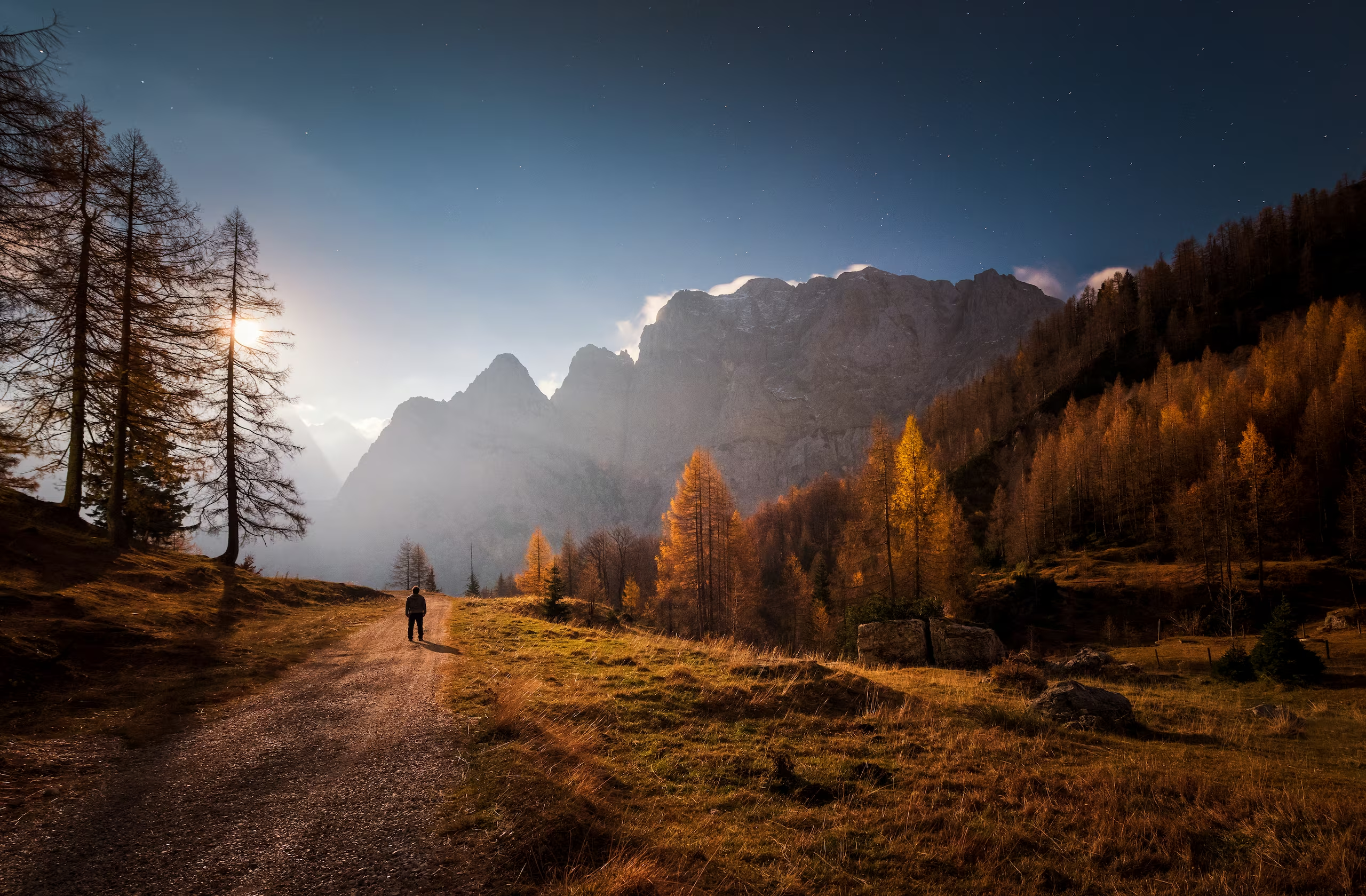
Coast 19.6 degrees, Ljubljana 16.1, Rateče 13.6 with 185 millimetres of rain. Slovenia is pleasantly empty: Vintgar names late September, October and November as its quietest period. Keep an eye on the Vršič pass, which closes in wintry conditions; there is no fixed date, so check promet.si before you set off.
November
This is the quietest month and it deserves to be said. Coast 14.5 degrees, Ljubljana 9.6, Rateče 7.2. It is also thewettest month in the mountains, with 189 millimetres at Rateče. Grey, wet, and much of it closed. Which is exactly why it is the best spa month: the resorts of Dolenjska, Terme Čatež and Terme Olimia run all year and are at their quietest now. On 11 November it is Martinovo, when the must officially becomes wine; Šmartno in Brda celebrates it on 7 and 8 November 2026.
December
Coast 10.4 degrees, Ljubljana 4.2, Rateče 2.0 by day. Ljubljana is at its best in December: the festive lights and the Christmas market run from 27 November 2026 to 15 January 2027. The ski season gets going; last season Kranjska Gora opened on 29 November.
Where should you go when?
The question is not which month is best, but which month suits your destination.
- Mountains and hut-to-hut walking: late June to mid September, while the high huts are open.
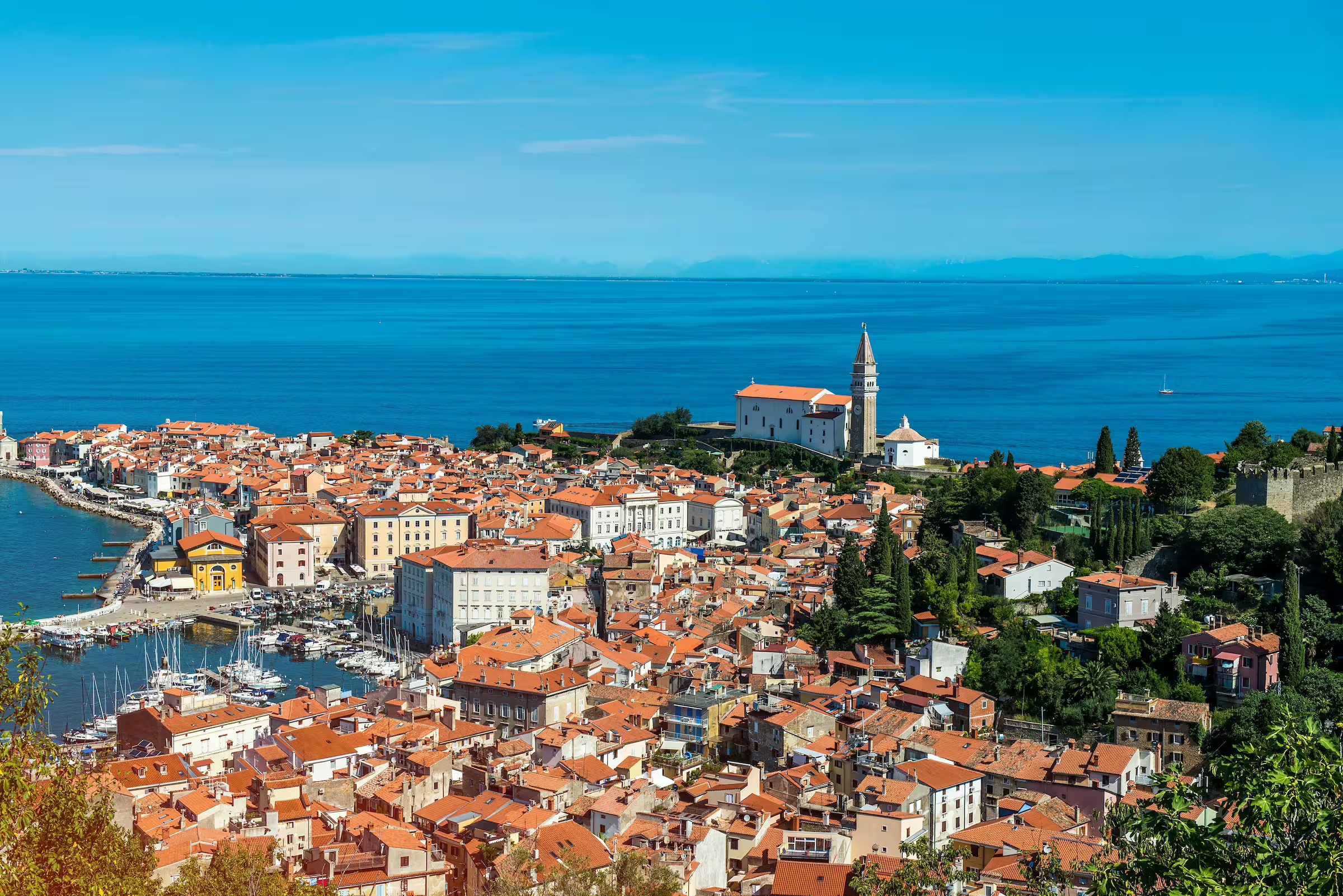
- Coast and Istria: June and September. July and August are hot and full; in May and October the water is still, or already, cold.
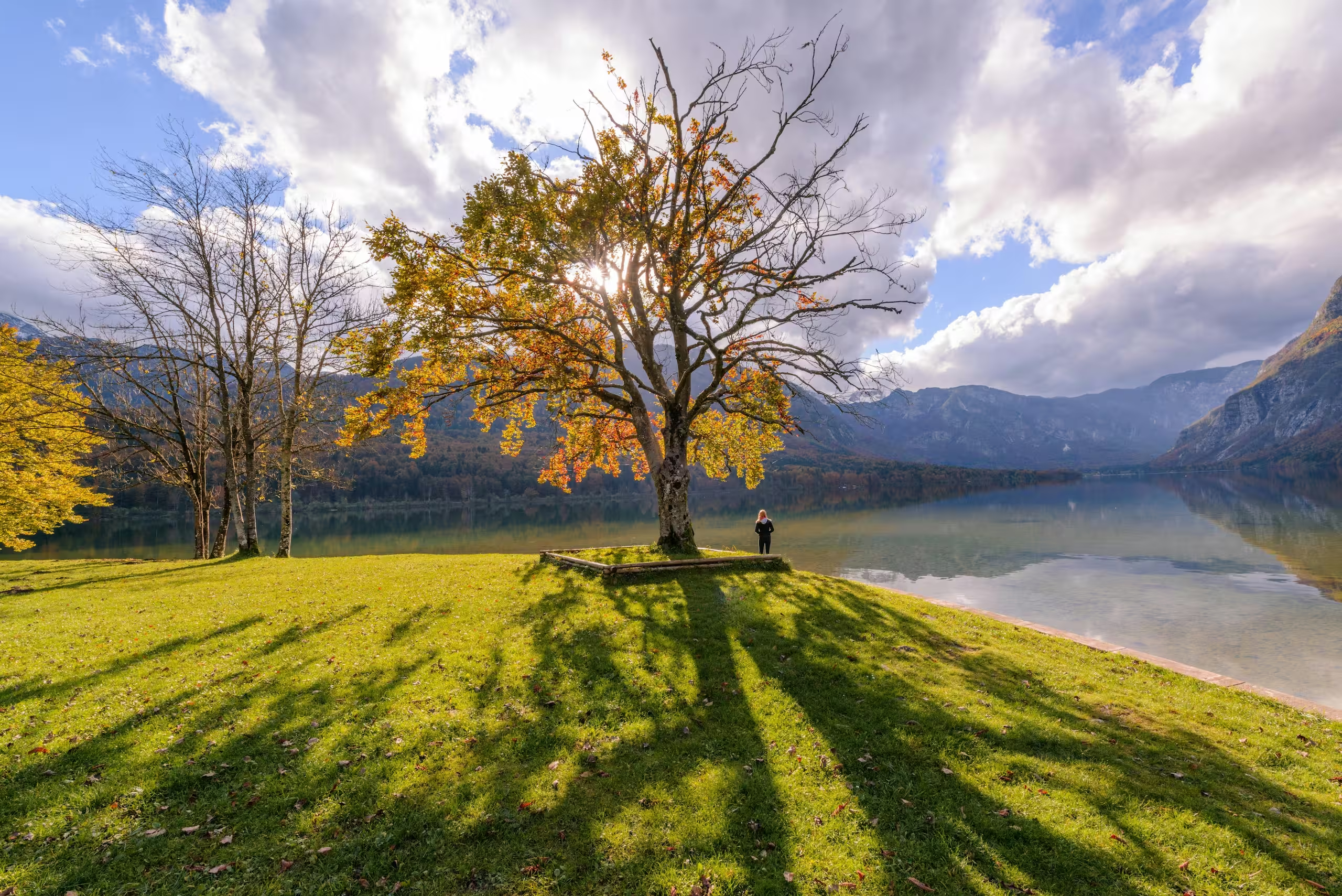
- Lakes: July and August for swimming, May and September for walking and cycling around them.
- Rivers and rafting: April to June, while meltwater keeps the water high. For more information, check our rafting blog.
- Wine regions: September and October, harvest season in Brda, the Vipava valley, Dolenjska, and in the east Jeruzalem in Prlekija and the hills around Maribor.
- Thermal spas and wellness: November to March. Low season, low prices, warm water. The spa belt sits in the east, in Prekmurje, Štajerska and Posavje, which is also the driest corner of the country in the months when everywhere else is grey.
- Cities and caves: all year. Ljubljana works in any month, and Postojna Cave is always 10 degrees.
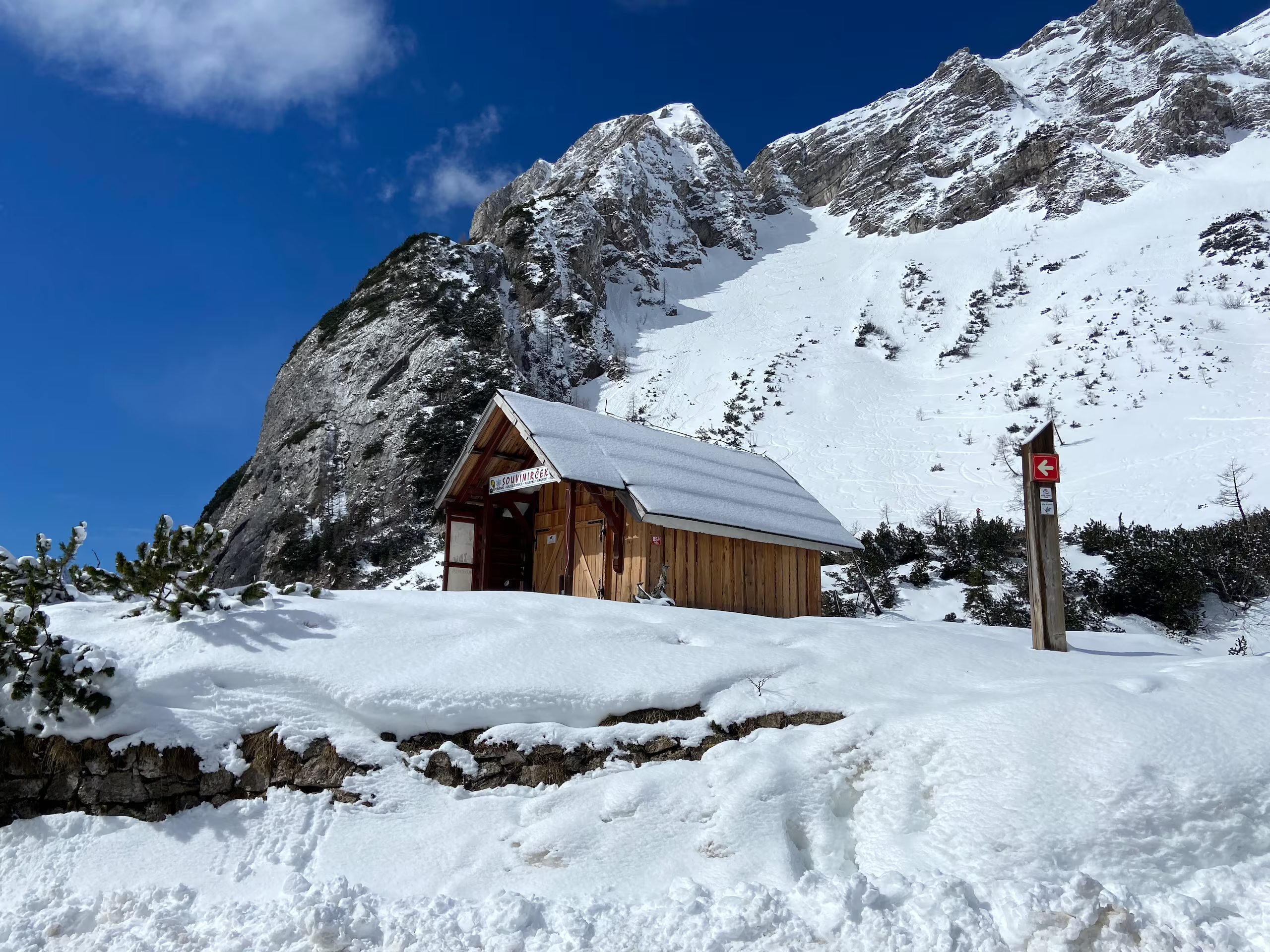
- Skiing: early December to early April, with Krvavec and Vogel running higher up into April.
How do you avoid high season?
Go in June or September. That is the shortest honest summary of this entire page. July and August give you the most predictable weather, but you pay for it with crowds at Bled, Vintgar and the Tolminka gorge, with higher prices and with full car parks. The shoulder season is no secret any more, either. In September 2025 overnight stays were 11 per cent higher than a year earlier. Quieter than August, yes,but not empty. If you want real quiet, go in May or in the second half of October.
If we could pick one month, it would be September. The lake water is still warm from August, the huts are still open, the harvest is starting, and you no longer have to be anywhere at eight in the morning to find a parking space. What you pay for it: more rain, and the first high huts closing after the middle of the month.
When do the crowds actually come?
Slovenia is not busy because of one country's school calendar. Three quarters of all overnight stays are by foreign visitors, and the three largest markets by some distance are Germany with 2.1 million overnight stays in 2025, Italy with 1.1 million and Austria with 1 million. The country fills up when those three are on holiday at the same time.
In practice that means the middle two weeks of August. Around 15 August, Ferragosto in Italy and a work-free holiday in Slovenia itself (Marijino vnebovzetje, the Assumption of Mary, Bled, the coast and the Soča valley are at their fullest of the entire year. If your dates are flexible by even a week, move away from that fortnight rather than away from August as a whole.
The second pattern worth knowing is a daily one. Vintgar reports that most of its visitors arrive between 9.00 and 12.00, and the same is true of Bled and the Postojna car park. Arriving before eight or after four changes a busy day into a quiet one more reliably than changing your month does.
If you are tied to school holidays, the quietest window that still works for hiking is late June, before the German and Austrian summer holidays get going in earnest. The exact dates shift by region and by year, so check them against your own. The busiest is the first half of August. Late October is quiet and mild in the valleys, and the one to pick if colour matters more to you than altitude.
What should you pack?
Briefly, by season, assuming a trip that covers more than one region.
- Spring: rain jacket, layers and waterproof shoes. In April and May it can be 20 degrees in the valley and below freezing in the mountains
- Summer: swimming things, sun protection, and still a fleece for evenings at altitude. A light rain jacket for the afternoon storms in Ljubljana and the Alps.
- Autumn: waterproof jacket and shoes, a warm layer for the mornings, and a torch if you set off early or finish late.
- Winter: winter coat, hat and gloves, and winter tyres if you are driving yourself. Winter equipment is compulsory in Slovenia from 15 November to 15 March.

Frequently Asked Questions
- When is it warmest in Slovenia?
In July and August. On the coast at Portorož the average daily maximum is then 29.4 and 29.5 degrees, in Ljubljana 27.9 and 27.6 degrees. In the mountains it stays considerably cooler even at the height of summer. - Does is rain a lot in Slovenia?
Yes, more than most visitors expect. Ljubljana gets an average of 1,368 millimetres of rain a year and Rateče in the Julian Alps 1,592 millimetres.The wettest months are September to November; summer storms are short and heavy, autumn rain is long and steady. - Can you still hike in Slovenia in October?
In the valleys and at middle altitudes, easily: Ljubljana averages 16.1 degrees by day in October. The high mountains are another story, because most huts close at the end of September and snow is possible. In October, choose gorges, lakes and winehills. - When is there snow in Slovenia?
Reliably between December and March in the ski areas. The season runs roughly from early December to early April; Krvavec keeps a winter season until early May and Vogel closed on 6 April in 2026. In the high mountains snow can fall outside that window too. - What is the best month for a family holiday?
If you can choose freely, late June. Warm enough for the lakes, the high huts are opening, and the German, Austrian and Slovenian school holidays have not started. If you are tied to the summer break, take the last week of it.
Last verified: September 2026 | Last updated: September 2026 | Author: Editorial Team Mijn Slovenië
Sources: ARSO, postojnska jama, Vintgar, Bohinj, PSZ, Bled, Krvavec, Kranjska Gora, Visit Ljubljana, SURS, Kurentovanje, Brda, Vipavska Dolina, Rijksoverheid NL, Mijn Slovenië
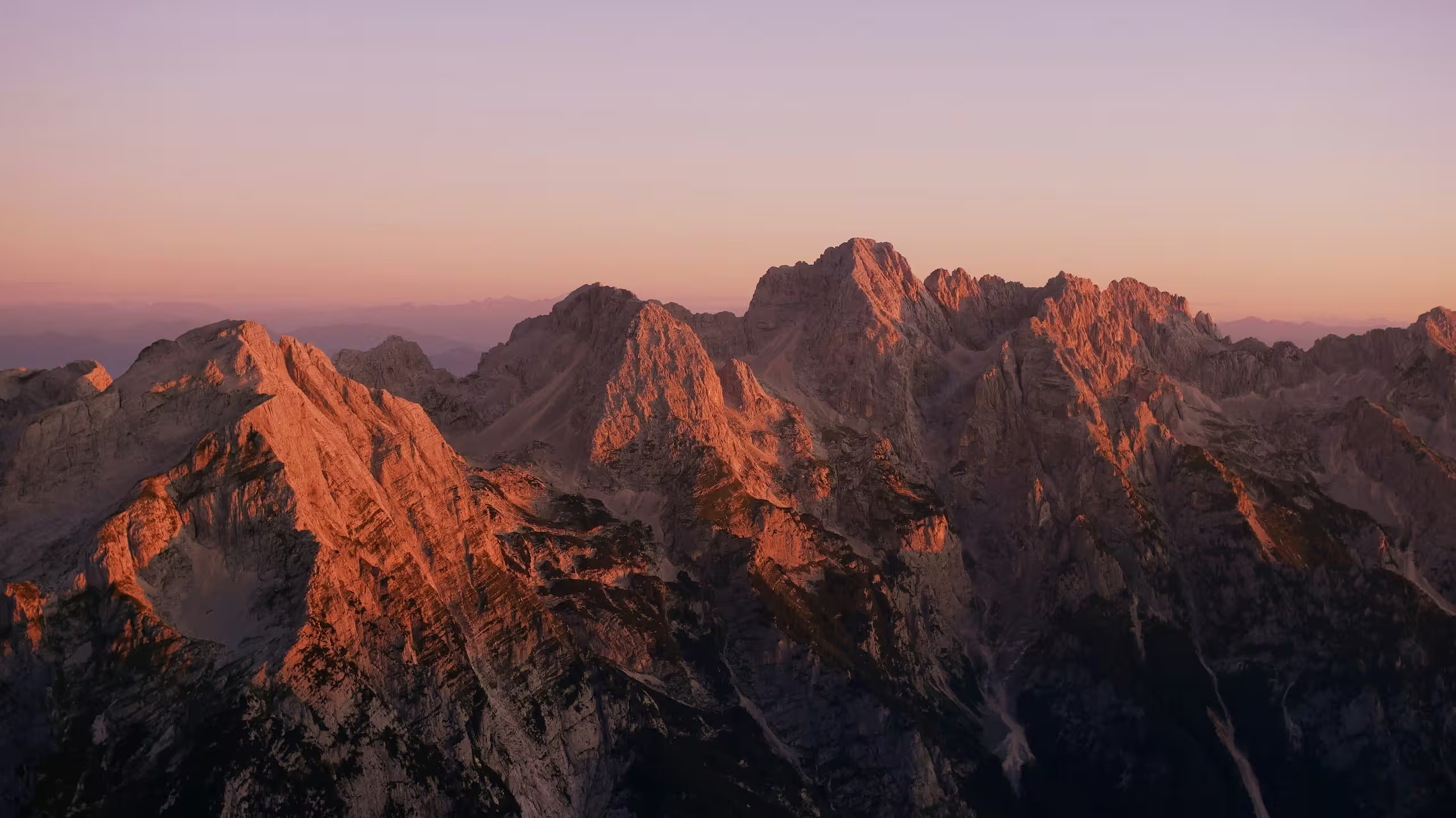
Header image: Triglav ©Tono-graphy

.avif)