East Slovenia
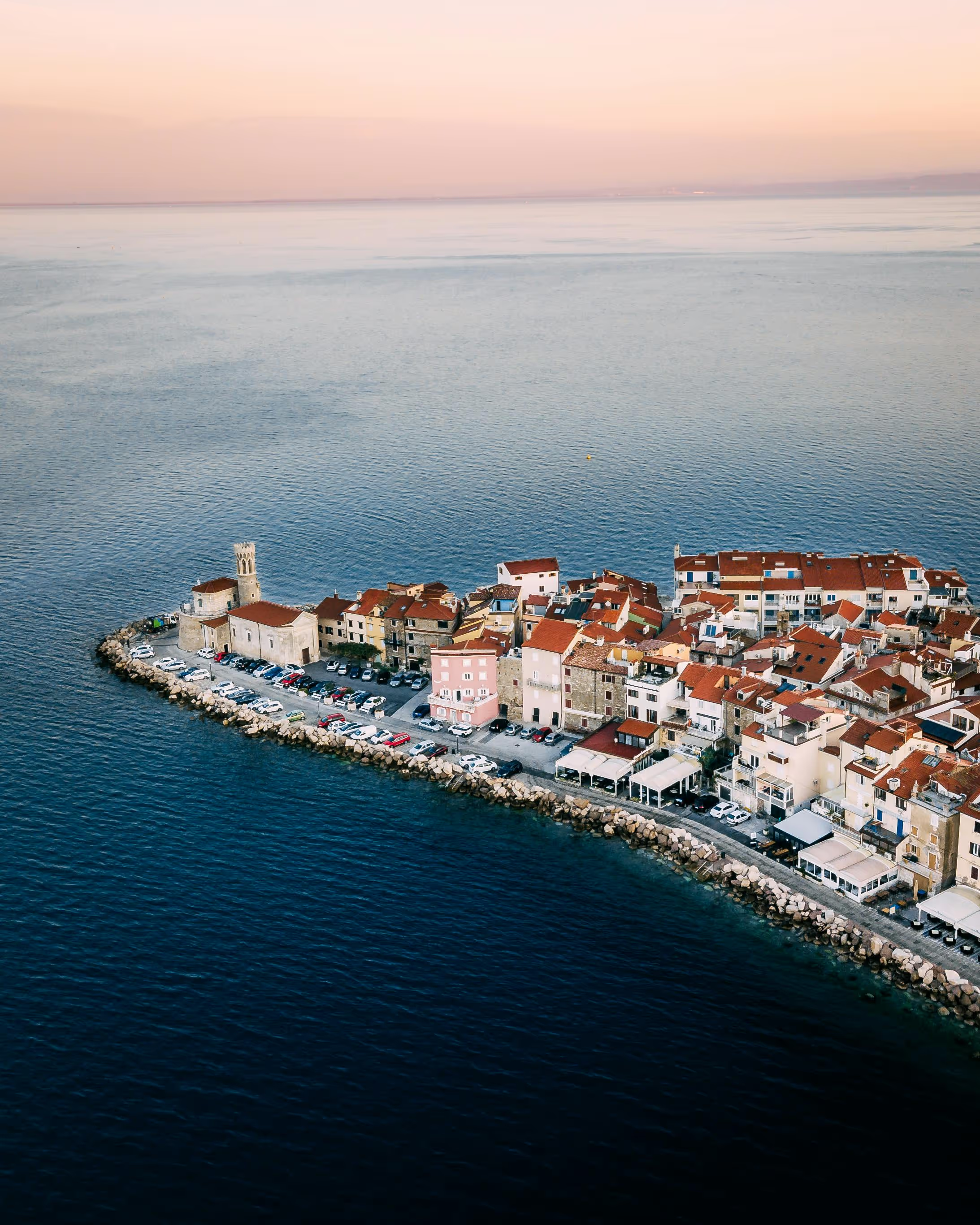
Where the mountains stop, Slovenia doesn’t end. To the east, Slovenia becomes flatter. The only mountain range here reaches just above 1,500 meters at its highest point. The nature remains just as breathtaking as in the rest of the country. Discover picturesque villages and towns between the green slopes and embrace the relaxed way of life here. You can fully unwind in one of the spa resorts in this part of the country.
Where is Eastern Slovenia located and what is excluded from it?
Eastern Slovenia is the flatter half of the country, situated between the Pohorje mountains and the Hungarian border. We include four sub-regions: Štajerska with Maribor, Ptuj, Celje, and Laško; the Pohorje with Rogla; Pannonian Slovenia with Prekmurje, Goričko, and the wine hills of Jeruzalem; and Koroška. Dolenjska, Bela krajina, and Rogaška Slatina are part of South-Eastern Slovenia.
That last sentence is not just a formality. Anyone searching for Slovenia's thermal spas almost always ends up with Rogaška Slatina and Terme Olimia, but those are located in the Sotla corner, not here. Logarska dolina and Velika Planina are also often grouped with the east, but they belong to the Kamnik-Savinja Alps. We maintain these boundaries because they align with how you travel through the region: the east is flat, expansive, and slow-paced, while the mountains begin elsewhere.
The water in the east was already bubbling up long before any hotels were built around it.
Thermal spas: the water was there before the hotels
Slovenia has fourteen natural health resorts, and most of them are located in the east. The thermal spas listed below are in this region. The resorts of the Sotla corner and the Sava valley are listed under South-Eastern Slovenia, and you can find an overview of the entire country in our wellness guide.
What sets the east apart is not the wellness, but the underground. Beneath Prekmurje and Pomurje lies warm, mineral-rich water that existed long before anyone thought to build a bathhouse around it. In Moravske Toplice, it surfaces as black thermo-mineral water, while in Radenci, it emerges as spring water that was bottled as mineral water in the nineteenth century and sold far beyond the country's borders.
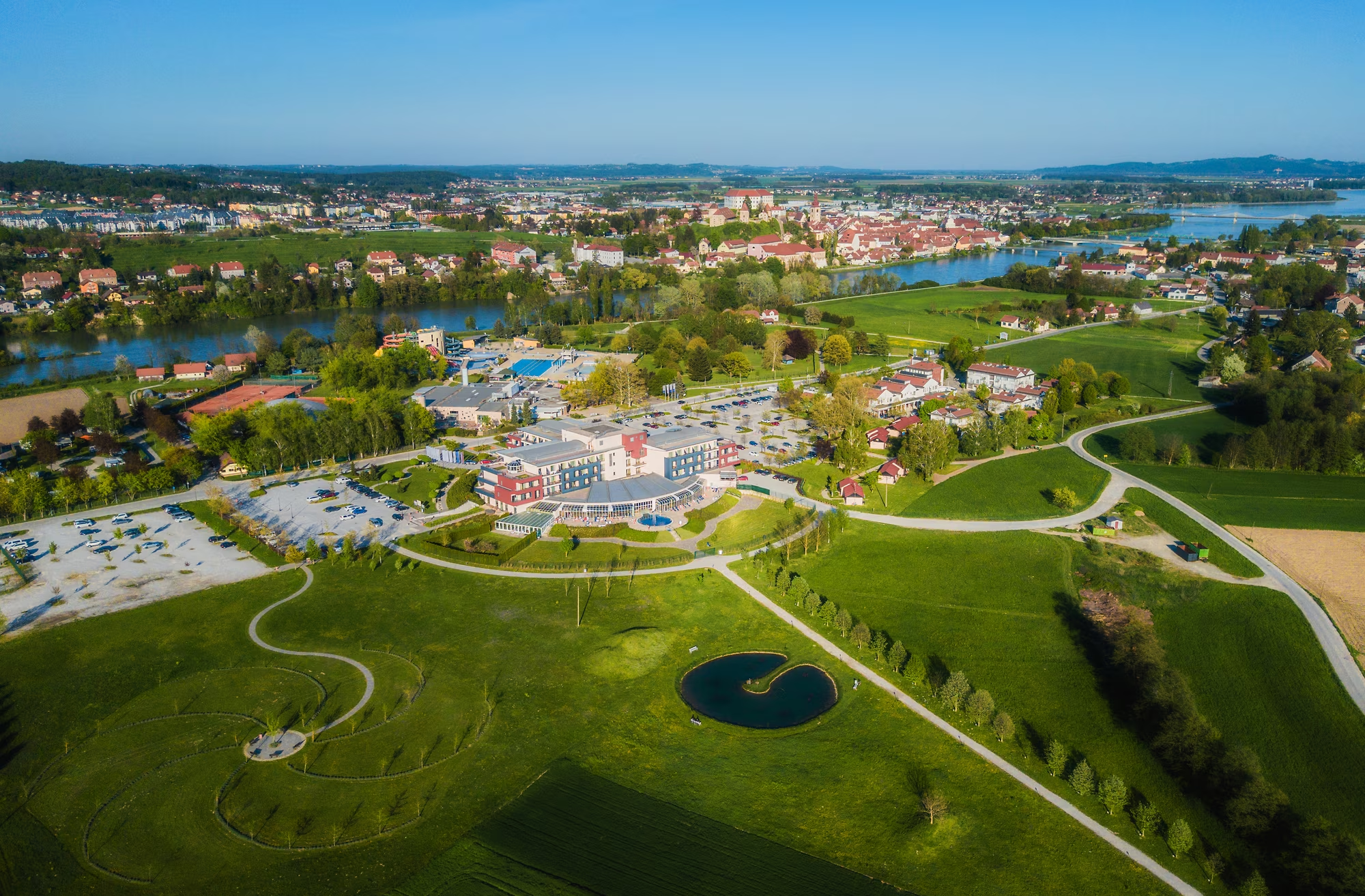
Terme 3000 in Moravske Toplice is the largest complex in the region. Radenci and Banovci are smaller and quieter, which is more of an advantage than a drawback here. Terme Ptuj is located on the edge of the country's oldest city, creating an unusual combination: you can swim in the afternoon and walk through a Roman city center in the evening. Further west lie Dobrna, Laško, Velenje, and Topolšica, all within an hour of Maribor.
With children: Terme 3000 and Terme Ptuj both have water parks with slides. That is a different experience than a day in the thermal baths, and it is good to know in advance which of the two you are coming for.
Practical information: most complexes sell day passes separate from overnight stays, and hotel guests generally have unlimited access to the pools. For a first visit, a day pass is enough to decide if you want to return.
Jeruzalem and the wine hills of Slovenske gorice
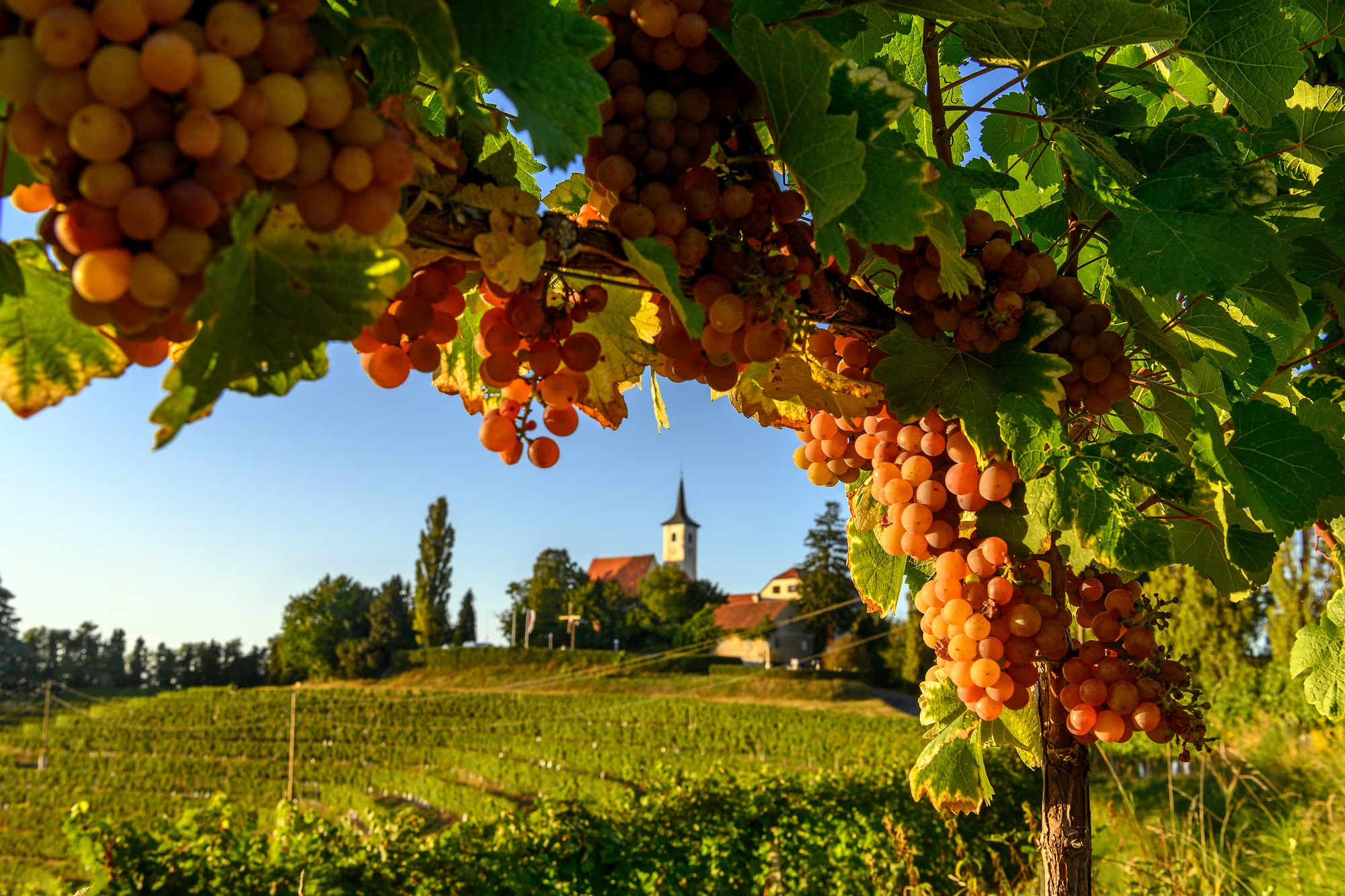
In the middle of the hills between the Mura and Drava rivers lies a village called Jeruzalem. The name dates back to the thirteenth century: crusaders brought an icon of Mary back from Jerusalem and placed it in the chapel that stood there, after Frederick of Ptuj had granted them the area. The church that stands there today is dedicated to Our Lady of the Seven Sorrows.
Jeruzalem is located seven kilometers south of Ljutomer and nine kilometers north of Ormož, on a ridge with vineyards on both sides. The wine route along that ridge is the most famous part of Slovenian viticulture that most people have never seen. White grapes grow here primarily: Laški Riesling, Šipon, Sauvignon and Traminer.
Šipon deserves its own sentence. It is the same grape as the Hungarian Furmint, which is used to make sweet Tokaj on the other side of the border. Here, they do the opposite and make it dry, with the grape's high acidity being the whole point rather than something to be masked. You can find more about the regions and the grapes in our guide to the Slovenian wine regions, and you can read about the wines of the west at Brda and the Vipava Valley.
The harvest here is late, from late September to early October, which is also the most beautiful time to drive across these ridges.
Is Maribor worth a visit?
Yes, and for one main reason: growing against the facade of a house along the Drava is the oldest fruit-bearing grapevine in the world. Its age has been confirmed at four hundred years, and it is listed as such in the Guinness Book of Records. It still produces grapes, of the žametovkavariety, and every year in late September, it is ceremoniously harvested during the Old Vine Festival. In 2026, this will take place from September 24th to 27th.
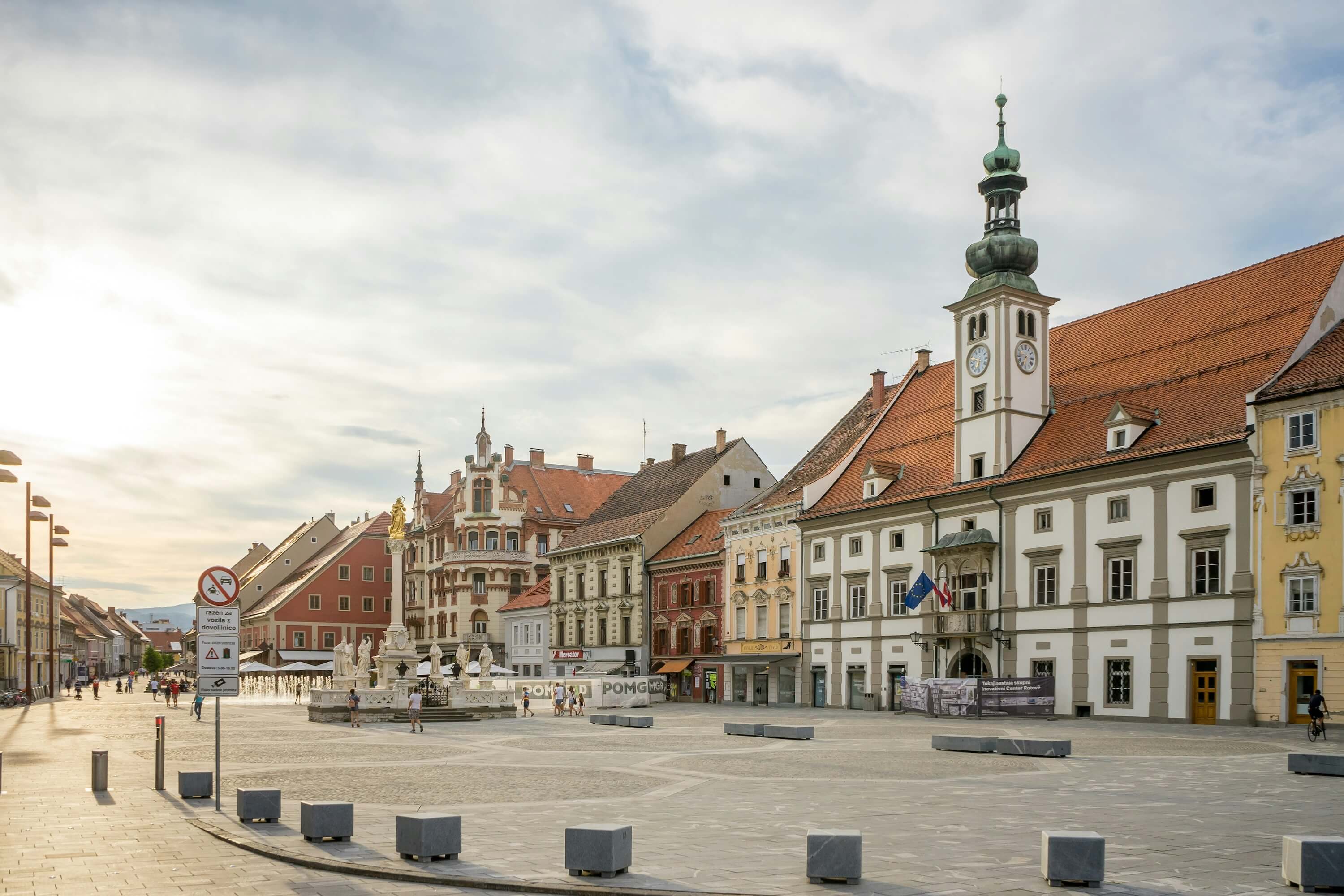
Maribor is also the country's second-largest city, featuring an old riverside district called Lent, a city park with ponds, and a ski area accessible by cable car from the city center. You can find exactly what to do and how much time you need in our Maribor city guide.
It is no coincidence that the vine is located here. Lent is the old riverside district where the wine trade took place, and the plant grows against the facade of what is now the Old Vine House. The harvest is small: a few dozen kilos, enough for about a hundred bottles that the city gives away as corporate gifts. You cannot buy them.

Ptuj: the oldest city in the country
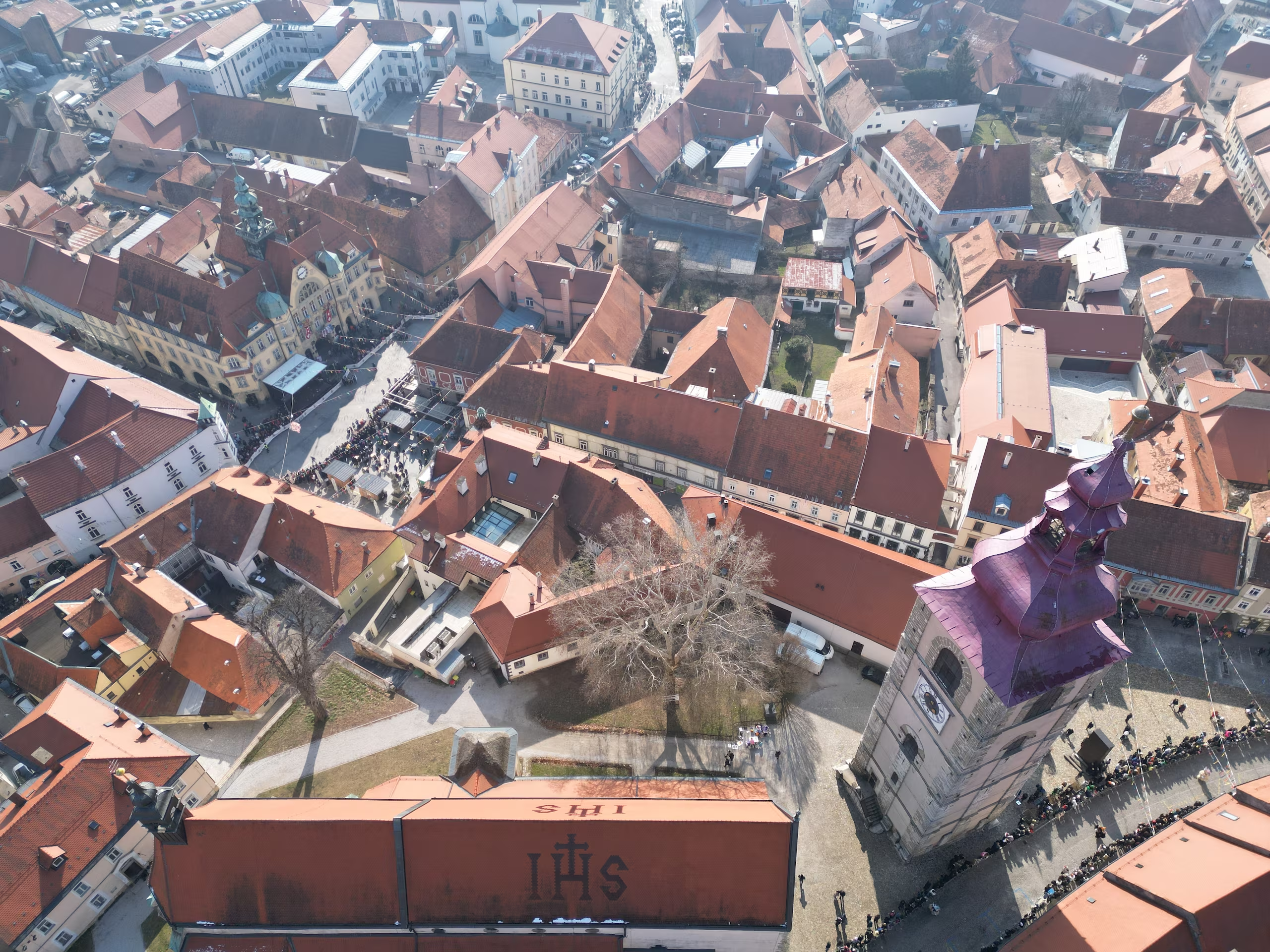
Ptuj is Slovenia's oldest city, and you can see it in the layers. Beneath the medieval streets lies the Roman Poetovio, above the city stands a castle overlooking the Drava, and in the cellars below, there is wine that dates back in part to the 1970s.
For one week each winter, the city changes completely. That is when Ptuj belongs to the Kurenti, figures in sheepskins with feathered masks and heavy cowbells, who come to chase away the winter. Kurentovanje is the country's largest and oldest carnival and is listed by UNESCO.
For the rest of the year, Ptuj is a small town you can walk through in a single morning. The castle has been turned into a museum, housing a collection of historical musical instruments, among other things. What makes a visit worthwhile isn't one single masterpiece, but the layout of the town below: old enough to reveal something new at every corner. Furthermore, Ptuj is a half-hour drive from both Maribor and the wine hills, making it a logical base of operations.
Celje, Žalec, and the hops of the Savinja Valley
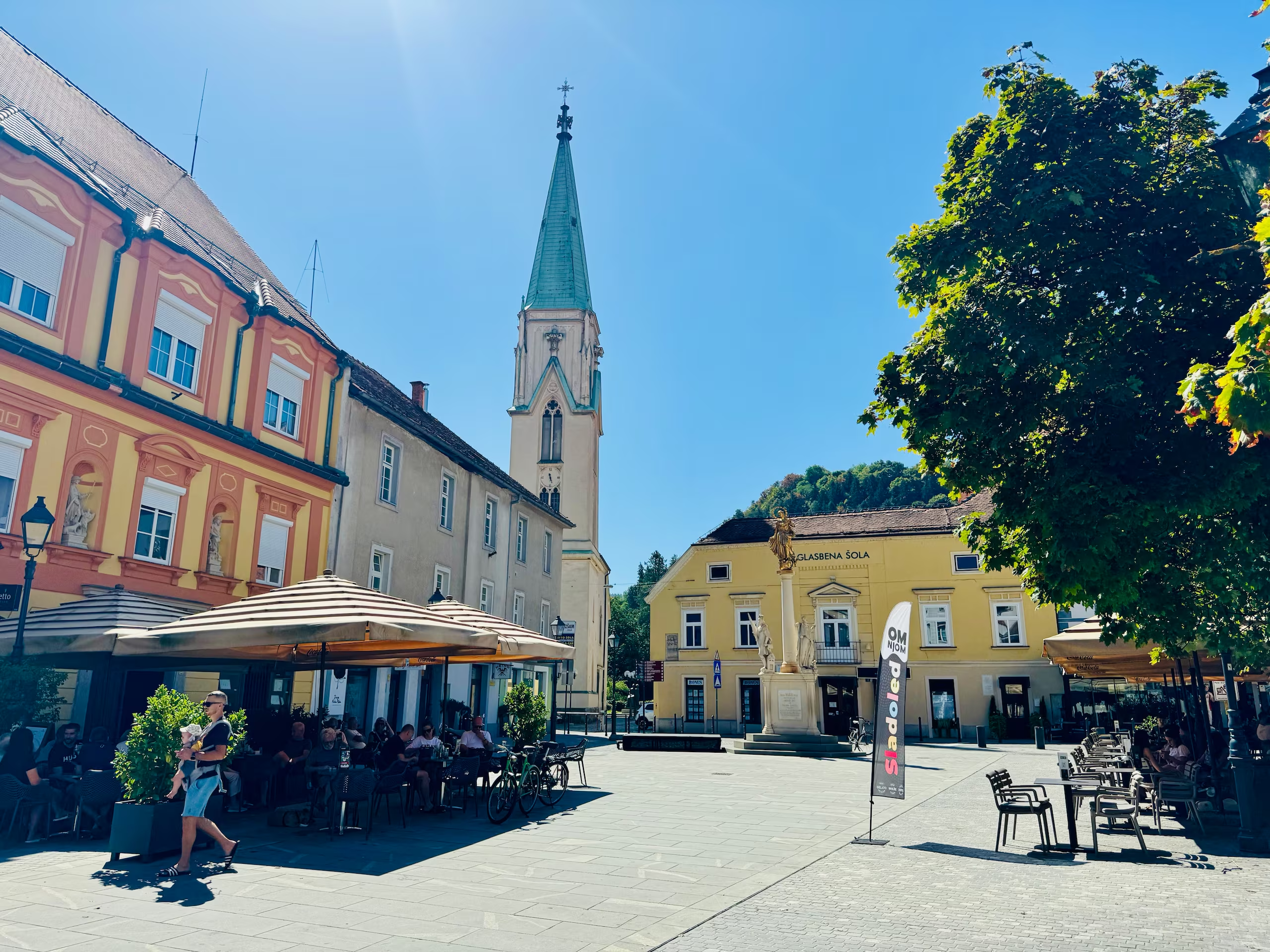
Celje is Slovenia's third-largest city and is located on the western edge of this region, along the lower reaches of the Savinja River. Take note of the river's name: the upper reaches, including Logarska Dolina, belong to the Kamnik-Savinja Alps, while Celje and Žalec belong here.
Above the city lies Stari Grad, an expansive fortress complex on a hill in the bend of the river. The Counts of Celje who held court here were the most powerful noble family in the region during the late Middle Ages, and the three golden stars from their coat of arms still appear on the Slovenian national emblem. Moreover, beneath the current city center lies the Roman Celeia, a portion of which can be visited underground.
A little further west lies Žalec, and there you will find something that exists nowhere else in the world: a beer fountain. Since September 6, 2016, it has been pouring beer from local breweries. You purchase a glass for eleven euros, which allows you to pour six deciliters from six different taps.
That might sound like a gimmick, and in part it is, but the motivation behind it is serious. The Savinja Valley is hop country. Slovenia is the fifth-largest hop producer in the world, and the majority of it grows in the fields between Žalec and Celje. In August, the plants stand in rows meters high, and the entire valley is filled with their scent.
In December, Celje is one of the most beautiful places in the country. In 2025, the city held the title of European Christmas City, and the Christmas market in the old town runs throughout the entire month.
What is there to do on the Pohorje and Rogla?
The Pohorje is a long, forested mountain massif southwest of Maribor, and Rogla is the highest point you can reach by car. You will find two things there that exist nowhere else in Slovenia.
The first is Among the treetops, the Treetop Walk. A 1,043-metre wooden walkway that climbs to about twenty metres above the forest floor and ends in a 37-metre observation tower. The incline never exceeds six percent, making the path accessible for wheelchairs and strollers. You can head back down via a tunnel slide for an extra two euros. The path is open all year round, except on 1 November and 24 December.
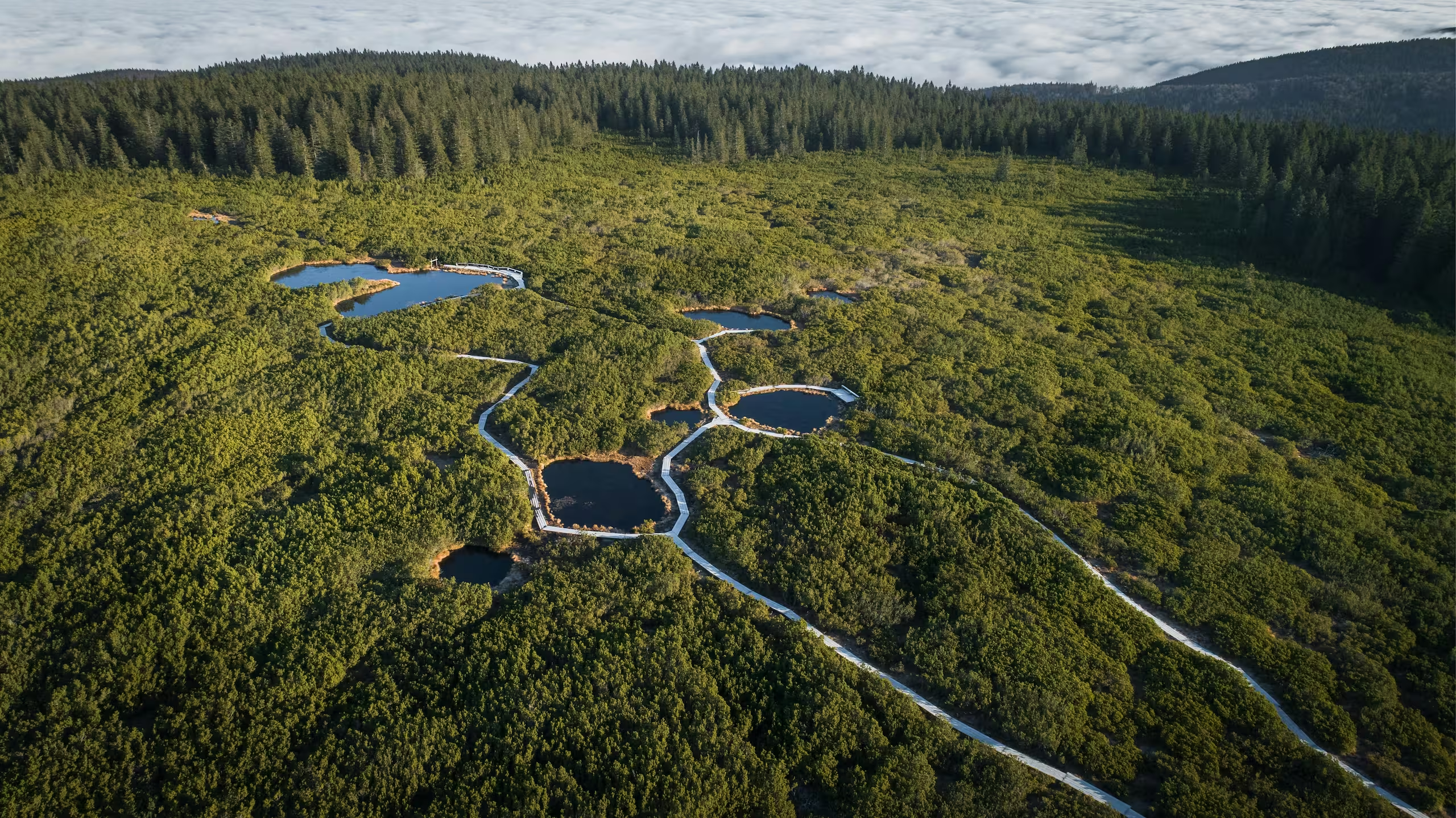
The second is Lovrenška jezera, the country's largest high moor. About twenty small peat lakes at an altitude of 1,500 metres, fed only by rainwater and accessible via a wooden boardwalk. The circular walk from Hotel Planja is fifteen kilometres long and takes three to four hours. More routes and difficulty levels can be found in our guide to hiking in Slovenia.
On Rogla itself, there is a thirty-metre steel observation tower at an altitude of 1,540 metres, a one-kilometre walk from the car park at Hotel Planja. It is free of charge. Please note the potential for name confusion: the observation tower on the Mariborsko Pohorje is a different structure, located fifty kilometres away, and has been closed since June 2020 due to its dilapidated state.
In winter, Rogla is a small ski resort with about twelve kilometres of slopes at an altitude of 1,517 metres, featuring artificial snow and night skiing.
Goričko and the Mura: the quietest part of Slovenia
If there is one hidden gem on this page, it is Goričko. The landscape park covers 46,200 hectares, was established in 2003, and is part of Natura 2000, with 47 protected natural sites. Together with the Austrian Raab and the Hungarian Őrség, it forms a tri-border park of over 105,000 hectares.
The park is not a wilderness but a cultural landscape: rolling fields, orchards, meadows, and villages with long, narrow plots that have remained divided this way for centuries. This makes it primarily an area to drive or cycle through, rather than a place to tick off a single landmark.
The largest castle in Slovenia is located here, in the village of Grad, built on volcanic ash. And near Lendava stands the Vinarium Tower: 53.5 meters high, with an observation deck at 42 meters where you can look out over four countries. Slovenia, Hungary, Croatia, and Austria, in a single glance. There are 240 steps and an elevator, which costs nothing extra.
Koroška
Koroška is the narrow strip along the Austrian border, with the Mislinja Valley at its heart and Slovenj Gradec as its main town. The best-known feature is the bike path built on an old railway line; it is flat and wide, making it one of the few places in Slovenia where you can cycle with children in a relaxed way without any climbing.
Slovenj Gradec has a museum of modern art that is larger than the town suggests, and the surrounding area consists of meadows, forests, and scattered hamlets. Koroška is the least visited of the four sub-regions, and that is exactly the reason to dedicate a day to it if you are in the east anyway.
Dining in the east: gibanica, bograč, and pumpkin seed oil
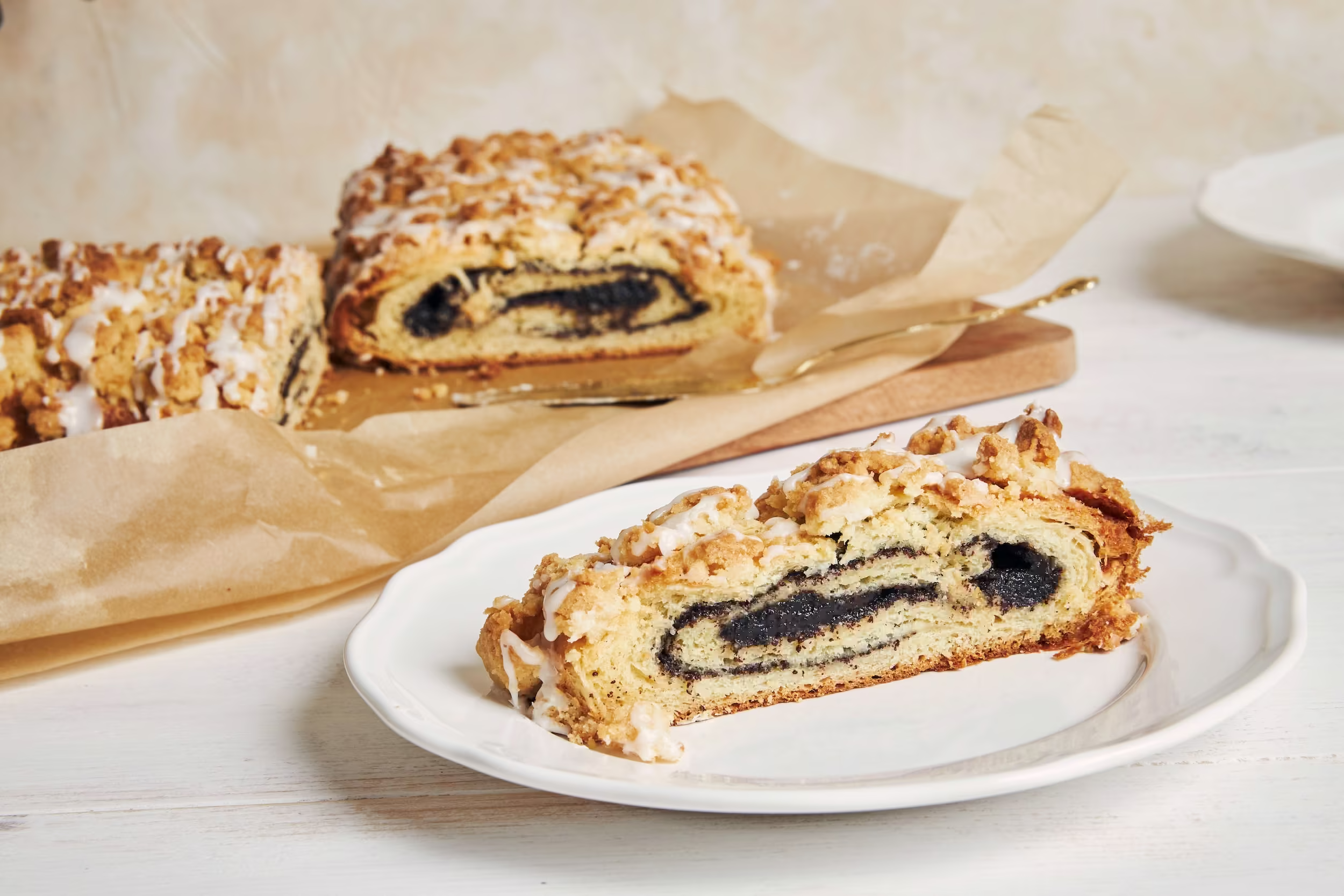
Prekmurska gibanica is a ten-layer cake with poppy seeds, walnuts, apples, quark, and pastry, and it has been registered as a Traditional Speciality Guaranteed in the EU register since March 2, 2010. That is not a judgment of taste but a legal status: the recipe is fixed.
Bograč is the stew of Prekmurje, named after the cauldron in which it is prepared. And bučno olje, the dark green pumpkin seed oil from Štajerska and Prekmurje, is served over vanilla ice cream here. That sounds stranger than it tastes. You can find more about the regional cuisines in our guide to the Slovenian cuisine, and you can find out where to go in dining out in Slovenia.
Practical tips for your visit to Eastern Slovenia
- How to get there?
By car, it takes about an hour and a half to drive from Ljubljana to Maribor via the A1. Ptuj is another half hour further east, and Moravske Toplice and Lendava are an additional 45 minutes away. You can reach Maribor, Ptuj, and Murska Sobota by public transport, but the wine hills, Goričko, and the Pohorje mountains are difficult to explore without a car. For this region, renting a car is practically the only way to see everything.
- How long should you stay?
Three to four days is enough for a good impression: one day for Maribor and Ptuj, one day for the wine hills, one day for the thermal spas, and one day for the Pohorje or Goričko. If you are only coming for the thermal spas, a long weekend may be enough.
- When should you go?
Late summer and early autumn are the best times to visit. September and October coincide with the harvest, the water in the thermal spas is pleasantly warm, and the forests of the Pohorje don't start changing color until the end of October. You can find a month-by-month breakdown in our guide on the best time to visit Slovenia.
- Where should you stay?
The thermal spas are the largest providers of accommodation here, which is also the most practical base: you sleep where you swim. In the wine hills around Jeruzalem and Ljutomer, there are small tourist farms nestled among the vineyards. Maribor and Ptuj have standard city hotels.
Last verified: September 2026 | Last updated: September 2026 | Author: Mijn Slovenië
Sources: slovenia.info, visitmaribor.si, slovenia-spa.si, rogla-pohorje.si, Mijn Slovenië