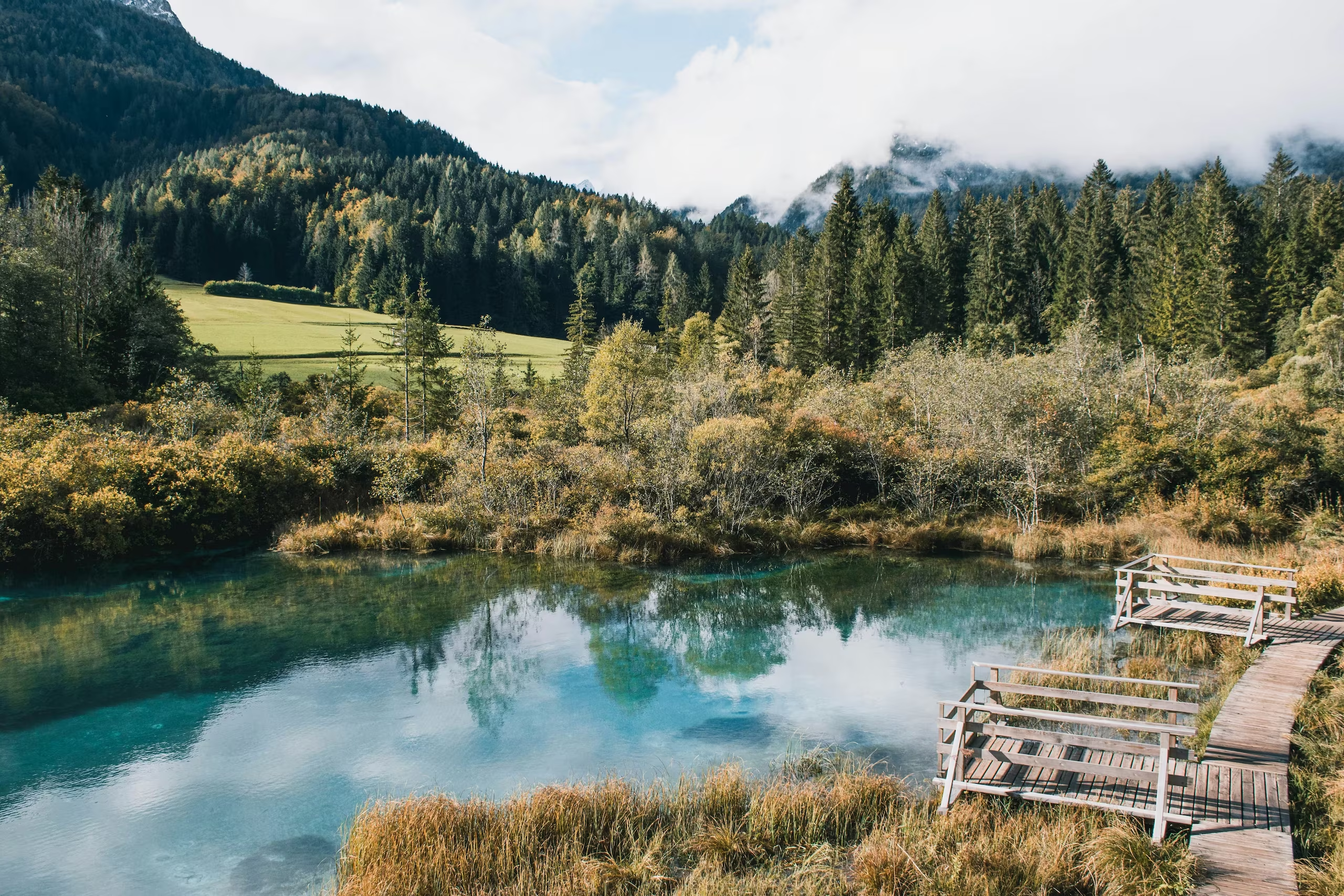
Hiking, Cycling or Whitewater: an Active Holiday in Slovenia

Slovenia is the country where you can hike a hut-to-hut route, raft the Soča and cycle along a lake in one week, with transfers of just a few hours at most. This guide explains which activity suits whom, where and when.
An active holiday in Slovenia means hiking in the Julian Alps, rafting or kayaking on the Soča, and cycling along lakes or over mountain passes. That is the whole promise: you don't have to choose between mountains, water and cycling, and you don't need to take any domestic flights between regions. One week is enough for all three, using one or two base camps.
This page is a signpost, not a manual. For each activity, you can read who it is for, where to do it, when the season runs and what it roughly costs; in-depth information can be found in our separate guides on hiking,hut-to-hut tours, the Soča and cycling, and in the six regional pages.
Hut-to-hut tour, rafting and cycling in one week, without a plane and with transfers of a few hours.
This guide contains a few affiliate links. If you book via such a link, we receive a small commission; you pay nothing extra. You can read more about this in our disclaimer.
Why Slovenia works for an active holiday
Because it is small yet has everything. The Julian Alps, the Soča Valley and Lake Bled are all located in the northwest, with Ljubljana as the logical arrival point. Slovenia has about 10,000 kilometers of marked hiking trails in an area of approximately 20,000 square kilometers, half the size of the Netherlands. The Soča is navigable from March 15th to October 31st, and all water sports providers are located in and around Bovec. And for those who want a flat day after three days in the mountains, there is the new car-free path along the lake between Bled and Bohinj.
The result is a trip without wasted days: no domestic flights, no days spent in the car, and a local gostilna in the evening instead of a highway hotel.
Hiking: day hike or hut-to-hut tour
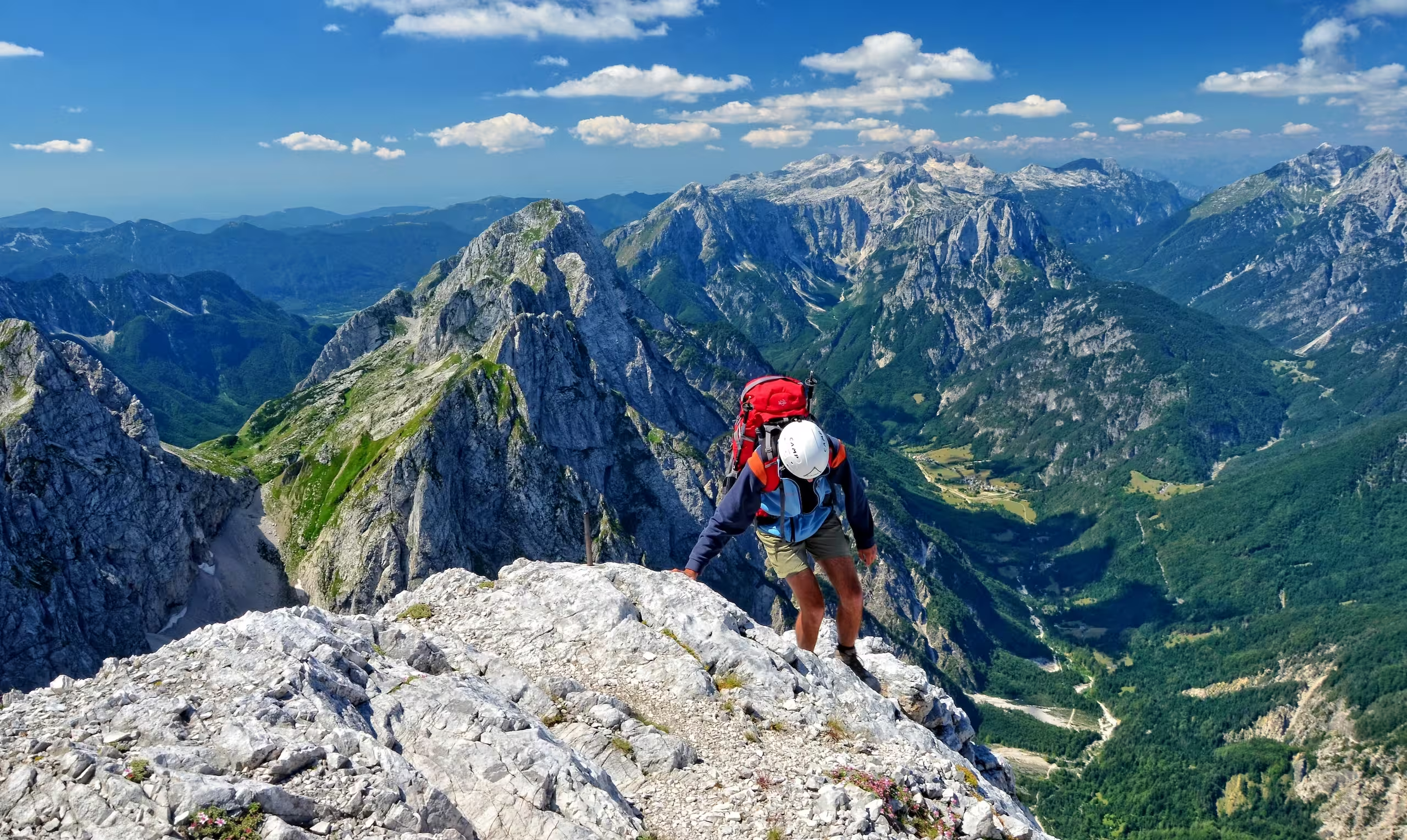
For whom: anyone who enjoys walking, whether it's a leisurely day hike along a gorge or a multi-day hut-to-hut tour above the tree line. Hiking is the primary activity of an active holiday in Slovenia and the only one you can do all year round, although the high-altitude routes are covered in snow for a large part of the year.
How important it is: climbing Mount Triglav at least once is considered a must for Slovenians.
Where: the Julian Alps for altitude, with Triglav (2,864 meters) as the goal for those who can handle a mountain trek with cables and rungs, and with the Vrata Valley, Pokljuka, and the Triglav Lakes as the classic routes. The Kamnik-Savinja Alps for day hikes from the Logar Valley, which ends at the 90-meter-high Rinka Waterfall, and for the shepherd huts of Velika Planina. And beyond that, the gorges and waterfalls you can hike in half a day: the Mostnica Gorge near Bohinj, the Martuljek Waterfalls near Kranjska Gora, and the Vintgar Gorge near Bled.
Those who prefer walking from village to village rather than climbing up should choose the Juliana Trail: a 270-kilometer route in 16 stages around the national park, with overnight stays in the valleys and luggage transfer available if desired.
How difficult: the Slovenian Alpine Association (PZS) classifies trails into three categories: easy, demanding, and very demanding; the latter two require mountain experience, and the third often requires a helmet and climbing gear. A mountain hut costs around 45 euros per person per night with half-board; the huts are open from approximately June 20 to September 20, and you must book in advance during July and August. Everything about routes, huts, and reservations can be found in our blog about hut-to-hut tours in Slovenia; the most beautiful day hikes are in our hiking guide.
If you are unsure about a route, ask for advice at the local tourist office or hire a mountain guide. For the more difficult categories, that is certainly not an unnecessary luxury.
Whitewater: the Soča and other rivers
For whom: for those who love water and aren't afraid of getting wet and cold. The Soča is cold even in August; a wetsuit is included with every organized trip.
What: Rafting is the entry-level activity, a two- to three-hour trip along the classic route from Log Čezsoški or Boka towards Trnovo, costing approximately 62 to 75 euros per person, including equipment and a guide. Canyoning is the next step up: the Sušec for beginners is around 65 to 72 euros, while the Fratarica for advanced participants starts at about 105 euros. Kayaking is done via a multi-day course or in an inflatable duo kayak, and aquatrekking is essentially canyoning without the jumps. During the high season, Bovec and Kobarid charge a river fee of 6 euros per adult and 3 euros per child, which is usually included in the price of the trip.
Where and when: Bovec is the capital of water sports, while Kobarid is the quieter alternative. The season runs from March 15th through October 31st; in the spring, the water is high and wild, while in September, it is calmer and cheaper. Which provider offers what and how to book can be found in our guide on rafting, kayaking, and canyoning on the Soča.

Cycling: more route or mountain pass
To be honest: Slovenia is not a cycling country in the way the Netherlands is, and the demand for cycling holidays in Slovenia is relatively small. However, those who do cycle will find two extremes that both have their merits.
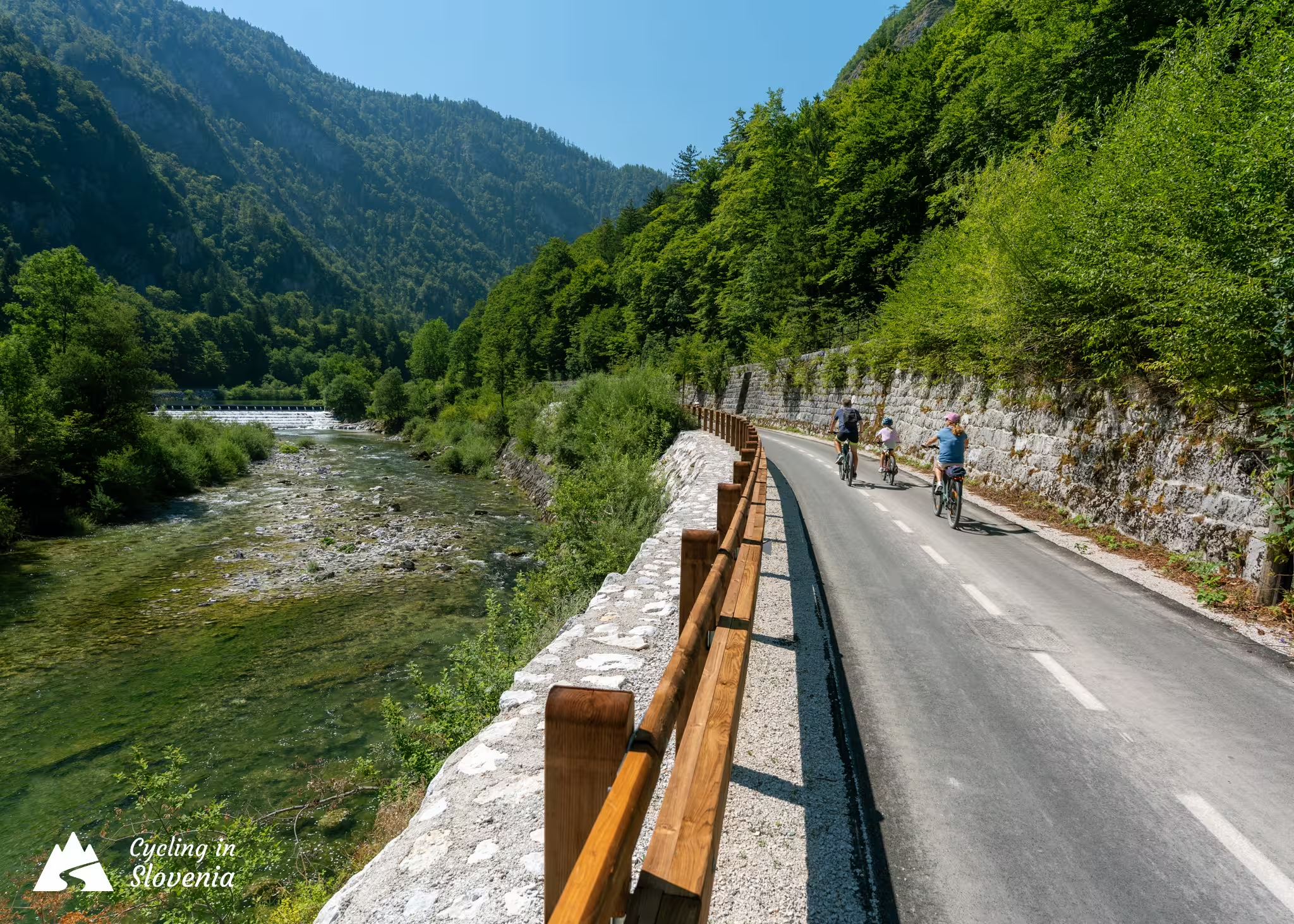
The accessible side: Since July 17, 2026, there has been a new, low-traffic bike path between Bled and Bohinj. This 20-kilometer stretch connects to the existing route to Lake Bohinj, totaling 28 kilometers through the Sava Bohinjka valley. It is a great day out for everyone, including children, with rental bikes costing 20 to 35 euros per day or e-bikes from 40 to 60 euros. In the southwest, you will find the Parenzana, a 130-kilometer former railway line through the Istrian hills that is largely flat.
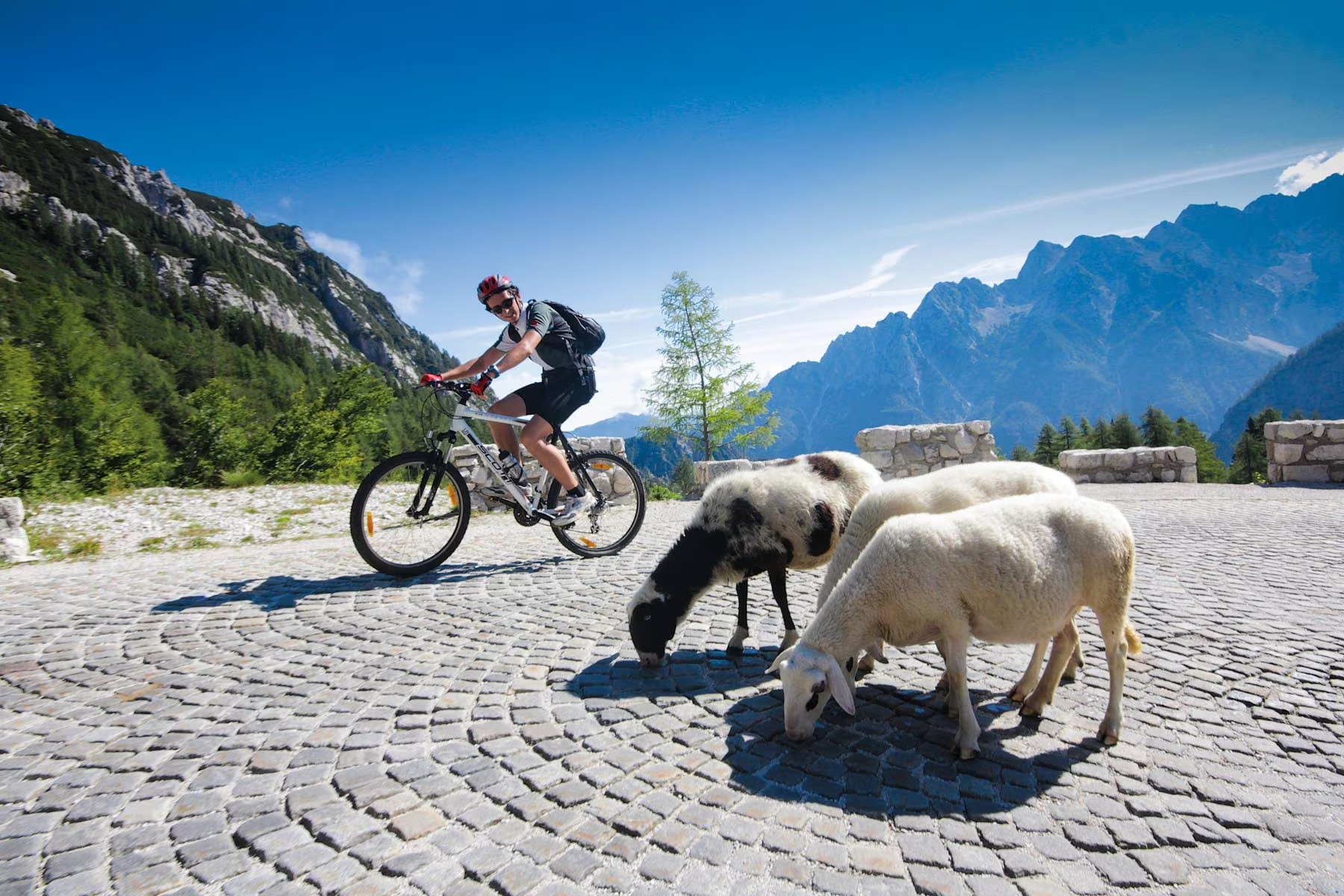
The other side: The Vršič Pass, at 1,611 meters with fifty numbered hairpin bends and an average gradient of 6.9%, and the Juliana Bike, a 290-kilometer route in seven stages around Triglav National Park with over 7,000 meters of elevation gain. This is for those who come to climb. The passes usually open in May or June and close in October, depending on the snow. Routes, rentals, and seasonal information can be found in our blog on cycling in Slovenia.
You can go even higher: the road to the Mangart Saddle climbs to 2,055 meters and is the highest road in the country.
Two rules that differ from back home: a helmet is mandatory until you are 18, and you are not allowed to cycle side-by-side. Cars must maintain a distance of 1.5 meters when overtaking.
Which region suits which activity
Slovenia has six regions, and each activity has its own home base:
- Julian Alps: Hiking and hut-to-hut tours, Triglav, and with Bled and Bohinj, the bike path as well. From Bovec, the whitewater of the Soča. The region where you can do all three in one week.
- Kamnik-Savinja Alps: Day hikes in the Logar Valley and on Velika Planina, closer to Ljubljana and quieter than the Julian Alps.
- Mediterranean Slovenia: cycling along the Parenzana, hiking on the Karst Plateau, and finishing off at the coast.
- Central Slovenia: Ljubljana as a base with the Green Karst and Škofja Loka as day trips; a cycling city, not a mountain city.
- Southeast Slovenia: the Kolpa for peaceful canoeing and the forests of Kočevsko for those who enjoy hiking without running into anyone.
- Northeast Slovenia: cycling through the wine hills followed by thermal spas; no high mountains, but the Pohorje range.
Each region has its own page detailing exactly what you can do, how to get there, and when; the links can be found on the region pages above.
And furthermorein the forests of Kočevsko you can go brown bear watching under expert guidance, and underground, the caves of Postojna and Škocjan await. We have written a separate guide for both.

When to go: the active season by month
- April and May: cycling along the coast and through the wine hills, day hikes in the valleys; the Soča is navigable from mid-March and at its wildest in the spring; high-altitude routes are still closed.
- June: the mountain huts open around June 20th, the mountain passes open, and it is still quiet.
- July and August: everything is open and everything is busy; book huts and rafting trips days in advance, and temperatures in the valleys can exceed 35 degrees. Start early if you do.
- September: the best month. Huts remain open until around September 20th, the Soča is calmer and cheaper, and the mountain passes are still open.
- October: day hikes and cycling in the valleys, the Soča is open until October 31st. Note: many cable cars close for a few weeks in the autumn for maintenance, so check the cable car's website before you go.
- November through March: snow in the mountains; hiking in the valleys and along the coast, otherwise it is the winter season.
What the weather is like each month and what is open can be found in our blog about the best time to visit Slovenia.
Active holidays with children
Slovenia is one of the easiest countries for an active family holiday, because distances are short and almost every activity has a kid-friendly version. On the Soča, there is family rafting for those around 110 cm tall and up, featuring calmer water and shorter trips; an inflatable duo kayak can accommodate a child in the front, and aqua trekking is the child-friendly version of canyoning. The Bled-Bohinj bike path is flat and has little traffic. And there are a handful of mountain huts that are well-suited for children, such as the huts on Velika Planina and the lower-lying huts around Bohinj; you can find out which ones in our mountain hut guide.
What you shouldn't put your kids through: Triglav, the Fratarica, or cycling the Vršič pass. What they will remember: a night in a mountain hut, a river bluer than in the photos, and a cable car ride up the mountain.

Practicalities: costs, equipment, and booking
As a rough estimate based on 2026 prices: 62 to 75 euros for a rafting trip, 65 to 105 euros for canyoning, around 45 euros per night in a mountain hut including half-board, 20 to 60 euros per day for a rental bike, plus the 6-euro river fee in Bovec and Kobarid. A week with two activities per person will therefore cost a few hundred euros on top of travel and accommodation.
Equipment: providers supply wetsuits, helmets, life jackets, and boats; for hiking, you need your own sturdy shoes, and huts provide bedding for a fee, so there is no need for a sleeping bag.
Booking: in July and August, book huts and rafting a few days to weeks in advance, and e-bikes at least a week ahead; in June and September, you can often manage on the spot. You can also rent a bike or e-bike online in advance. For your base camp: stay in Bovec or Bohinj.
Prefer a custom active trip? We create travel plans for Slovenia, tailored to how you want to travel: which base camps to use, which hikes to take, and which day to head out on the river. Get in touch via the contact page.

Last verified: November 2026 | Last updated: November 2026 | Author: Mijn Slovenie Editorial Team
Sources: Mijn Slovenië, pzs.si, soca-valley.com, soca-plovba.si, logarska-dolina.si, triglavskidom.si