Cycling in Slovenia: The Complete Guide to Bike Holidays

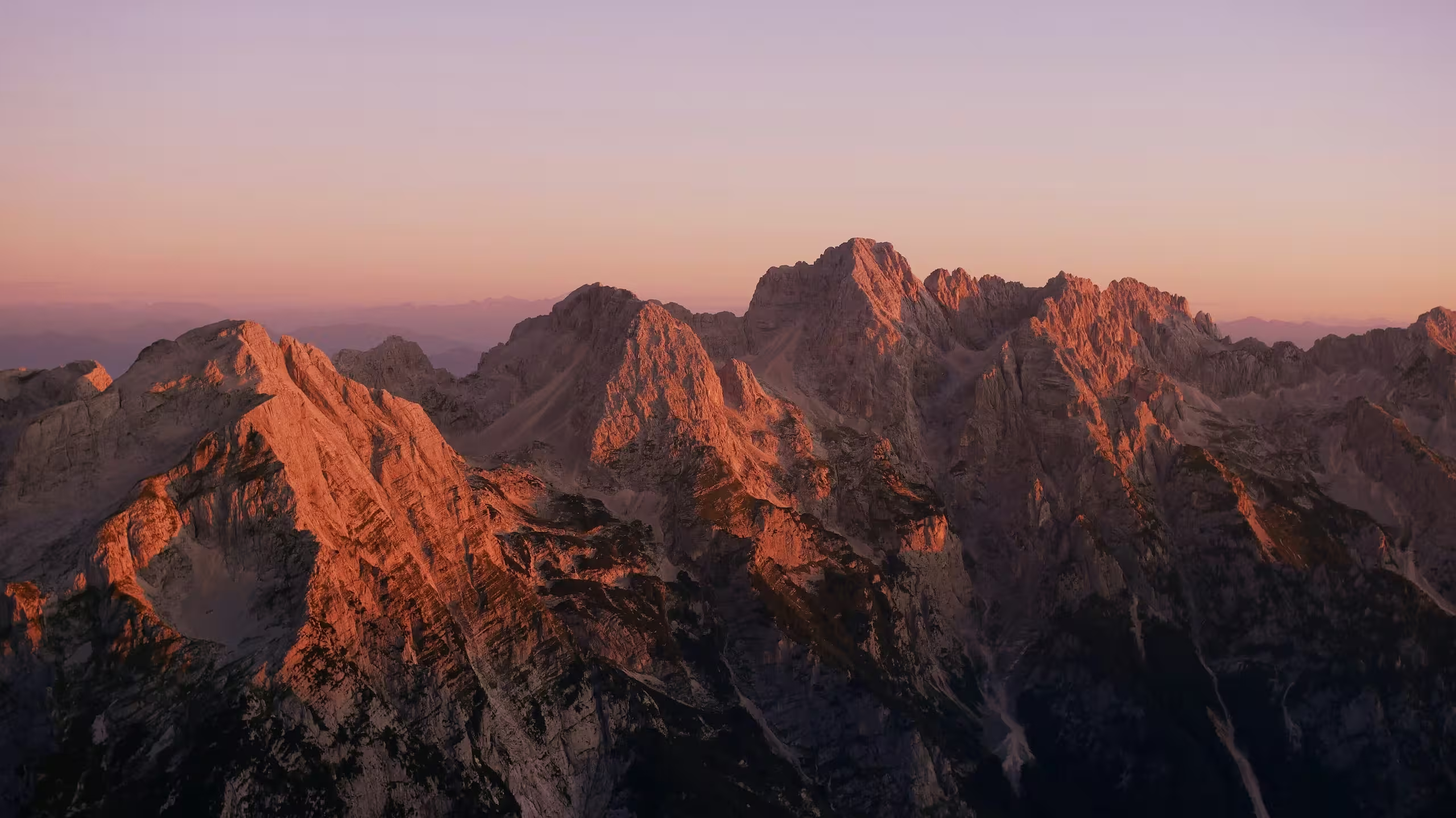
Slovenia is one of Europe's most underrated cycling destinations. At just 20,271 square kilometers, you'll find landscapes ranging from the snow-capped Julian Alps to the Mediterranean coast near Piran
This compact country, roughly half the size of the Netherlands, packs a diversity of landscapes that draws cyclists from across Europe. From relaxing riverside paths along the Drava to epic climbs over the Vršič Pass: whether you're looking for a family-friendly holiday or a sporting challenge, Slovenia has it all.

Why is Slovenia such a great cycling destination?
Slovenia is one of Europe's most underrated cycling destinations. At just 20,271 square kilometers, you'll find landscapes ranging from the snow-capped Julian Alps to the Mediterranean coast near Piran. That compactness is precisely what makes Slovenia so special for cyclists: within a few hours of riding, you transition from an Alpine valley to a wine region, or from a medieval town to a coastal village.
Infrastructure is well-developed. There are 14 officially recognized cycling destinations spread across the country, from Kranjska Gora in the mountains to Piran on the coast. The cycling path network is steadily growing, with both paved paths and gravel routes through the countryside. Many routes are signposted and supported by service points offering bike repair, e-bike charging stations and refreshments.
It's no coincidence that two of the world's best cyclists (Tadej Pogačar and Primož Roglič) come from this country. The combination of challenging mountain passes, perfectly maintained roads and a culture that embraces cycling makes Slovenia a cycling paradise. Pogačar grew up in Komenda, a village north of Ljubljana, training as a teenager on the slopes of Krvavec. Roglič hails from Zasavje, the hilly mining region of central Slovenia. Their success has sparked a wave of cycling tourism in the country: more rental shops, new routes and events such as the Tour of Slovenia (WorldTour since 2023) now attract international audiences.
Slovenia also holds the distinction of being 'Europe's most sustainable country' and actively promotes cycle tourism as part of the Slovenia Green strategy. Accommodations along cycling routes are increasingly certified as bike-friendly, offering secure storage, tools and laundry facilities for cycling gear.
%20kopie.avif)
What cycling routes are available in Slovenia?
Slovenia offers an impressive variety of cycling routes for all skill levels. Here's an overview of the major multi-day routes:
The world's first sustainable cycling route, certified by the European Cyclists' Federation. Starting in Kranjska Gora, passing through Bled and Bohinj, along the Soča Valley towards Nova Gorica, then to the coast at Piran. The route is deliberately designed to pass through Slovenia Green-certified destinations with overnight stays at sustainable accommodations. Stages average 40-60 km per day, perfectly manageable on a touring bike or e-bike. Along the way you'll pass through Triglav National Park, the wine hills of Brda and the Karst region: a cross-section of everything Slovenia has to offer.
The 'Path of Health and Friendship': 130 km along a former narrow-gauge railway line (1902-1935) that once connected Trieste with Poreč. The Slovenian section runs through the Istrian hills with spectacular views over olive groves and the sea. The route is mostly flat to gently rolling, making it perfect for families and recreational cyclists. You'll pass through beautifully restored historical tunnels and viaducts. Combine it with a visit to the coastal towns of Koper, Izola and Piran for the ultimate bike-and-beach holiday.
An epic 290 km mountain bike route around Triglav National Park in seven stages. Starting and finishing in Kranjska Gora, with passages through the Soča Valley, over the Baška Grapa and along Lake Bohinj. This is technically demanding terrain with over 7,000 meters of climbing in total. Suited for experienced mountain bikers who love spectacular scenery. The route was developed in collaboration with local communities, offering authentic mountain huts and guesthouses along the way. Each stage has its own character: green Alpine meadows above Bohinj and rocky trails along the Soča.
An international cycling route connecting Maribor with the Pohorje mountains and the orchards of eastern Slovenia. The path follows the Drava River and is mostly flat, making it ideal for families and beginner cyclists. Along the way you'll pass through the historic town of Ptuj, Slovenia's oldest town, vineyards and thermal springs. 145 km on Slovenian territory, but the route continues into Croatia. A perfect route to combine with a visit to Ptuj's thermal baths or the wine cellars of Jeruzalem
- Slovenian Mountain Bike Route, 1.800 km, expert
- Trans Dinarica, 262 km (total length 1.500 km), average, crosses 8 countries
What does an organised multi-day tour cost?
Most operators running multi-day tours include luggage transfer: your bags are collected each morning and delivered to the next hotel.
One example of what such a package looks like. Cycling in Slovenia runs a three-day loop from Kranjska Gora. Day one goes through the Radovna valley to Lake Bled, 40 km and 450 metres of climbing. Day two passes Lake Bohinj, where riders and bikes take the Bohinj Railway under the mountains and come out in the Soča valley, 70 km and 1,347 metres. Day three returns over the Vršič Pass, 51 km and 1,835 metres. It is self-guided, with a roadbook and GPX files, and a support vehicle follows the route. Including two nights in four-star hotels with breakfast, luggage transfer and the train ticket.
Two things worth knowing. The Vršič needs low gearing: a compact 50/34 with at least a 30-tooth cassette. And popular departures fill up early. The September 2026 departure sold out, with a waitlist open for 2027.

Touring, road or mountain bike: what type of cyclist are you?
Touring / Trekking: Most routes are suitable for touring bikes or e-bikes. Stages of 40-70 km per day, with plenty of time to stop for coffee or visit local attractions. The Bike Slovenia Green route and the Parenzana are perfect examples: manageable distances, stunning scenery and accommodation everywhere.
Road cycling: Slovenia is a road cyclist's paradise. The Vršič Pass (1,611 m, 50 hairpin bends, average 6.9% gradient) is the iconic climb, but there are dozens of other cols worth tackling. The Mangart Pass (2,055 m) offers the steepest paved climb in the country. Around Kranjska Gora you can combine different routes daily, each with its own character. Roads are generally in excellent condition and traffic is significantly lighter than in popular Alpine countries like France or Italy.
Mountain biking: The Juliana Bike Trail (290 km) and Trans Slovenia (1,800 km) are the major multi-day routes. But there are also hundreds of kilometers of singletrack around Kranjska Gora, in the Pohorje mountains and in the hills above the Soča Valley. Bike parks such as Bike Park Kranjska Gora and Bike Park Krvavec offer downhill trails for adrenaline seekers.
Gravel: A growing scene in Slovenia. The Parenzana Trail is partly unpaved, and around the Julian Alps there are countless forest paths and gravel roads perfect for gravel bikers. The mix of paved and unpaved surfaces makes Slovenia ideal for mixed-terrain riding. An increasing number of events cater to the gravel community, including the growing Slovenian Gravel Series.
E-bike: Widely available at rental shops throughout the country. Range of 70-90 km and up to 2,000 meters of climbing on a full charge. Charging points are available at most bike-friendly accommodations and service points along the routes. The e-bike makes routes like Bike Slovenia Green accessible to everyone regardless of fitness level.

What are the most beautiful cycling regions?
Julian Alps: The epicenter of cycling in Slovenia. Kranjska Gora, Bled, Bohinj and the Soča Valley offer spectacular routes for every level. The Bled area makes an ideal base: each day you can head in a different direction, from flat lakeside paths to serious climbs toward the Pokljuka plateau. Triglav National Park is the crown jewel of this region.
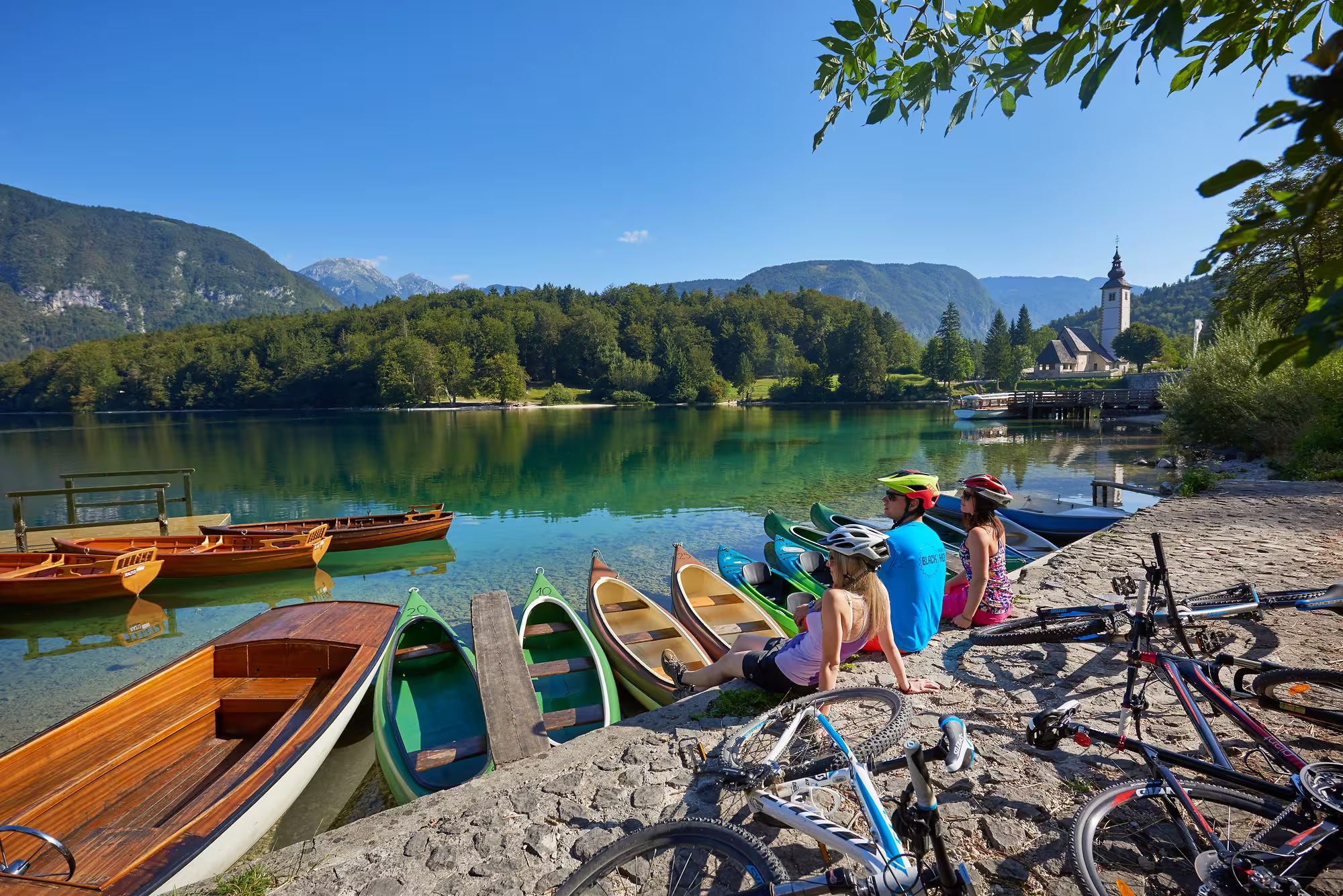
Soča Valley: The emerald-green Soča River is the thread running through this valley. One of Slovenia's most beautiful cycling paths runs here: from Bovec via Kobarid to Tolmin, always alongside the river. Beyond cycling, the valley offers canyoning, kayaking and paragliding, making it perfect for active families. Historic villages along the route serve local dishes such as štruklji and tolminski sir.
Brda & Vipava: Slovenia's wine country is Tuscany twenty years ago, but on a bike. Rolling hills covered in vineyards, medieval-looking villages and views that take your breath away. The Vipava Valley is particularly suited for road cyclists: minimal traffic, perfect roads and climbs that challenge without overwhelming. Stop along the way at one of countless wine farms for a tasting of local Rebula or Zelen.
The coast (Piran, Koper, Portorož): The Parenzana Trail is the highlight here, but the Piran area also offers beautiful coastal rides with views over the Adriatic Sea. The mild Mediterranean climate makes this region ideal for early-season cycling — March and April are already pleasant.
Ljubljana and surroundings: The capital has more than 230 km of cycling paths and the BicikeLJ bike-sharing system. From Ljubljana you're quickly cycling into nature: the Ljubljana Marshes nature reserve, the hilly surroundings of the Polhograjski Dolomiti, or via the Sava path toward Litija and Zasavje. The city itself is compact and bike-friendly, with car-free zones in the center.
Eastern Slovenia (Maribor, Ptuj, Pomurje): The flatter side of Slovenia, ideal for families and relaxed cyclists. Multiple wine tour routes through the famous Jeruzalem hills, thermal spa towns for breaks, and the charm of the country's oldest town (Ptuj). The Drava cycle path is the main artery here, but there are also countless smaller routes through vineyards and along the Mur River.

What is the best season for cycling in Slovenia?
The cycling season runs from April to October, but the best months are May, June and September. In May the landscape is at its most beautiful: green valleys, snow-capped mountain peaks in the background and pleasant temperatures between 18 and 25 degrees Celsius. June brings longer days and stable weather, with all mountain passes now open.
July and August are warm (sometimes above 35°C in the valleys) and busier on popular routes. If you visit in summer, start early in the morning and spend the afternoon in the shade or at one of the many lakes. The high-altitude routes in the Julian Alps provide relief from the heat but are busier on weekends.
September is the secret season: stable weather, pleasant temperatures, grape harvest in the wine regions and fewer tourists on the cycling paths. For those who love both wine and cycling, the combination of autumn sun through the vineyards of Brda and Vipava is unbeatable. October can still offer good weather, especially on the coast and in lower-lying areas.
Note: high mountain passes (Vršič, Mangart) are typically open from May/June to October, depending on snowfall. Always check current status before you depart.

What are the traffic rules for cyclists?
- Helmet requirement: A helmet is mandatory for cyclists under 18. For adults it's not required but strongly recommended, especially on mountain roads and busy provincial routes.
- Passing distance: Cars must maintain at least 1.5 meters distance when overtaking cyclists. In practice, most Slovenian drivers respect this well. The courteous driving behavior stands out compared to many other European countries.
- Riding abreast: Not permitted on public roads. Ride in single file in traffic.
- Children: Children under 14 need a cycling proficiency certificate or must be accompanied by an adult. Children under 8 may only ride on designated cycling paths, not on public roads.
- Lighting: Front and rear lights are mandatory in poor visibility conditions (dusk, tunnels, bad weather). Reflectors are required at all times.
- Road quality: Roads are generally well-maintained; on some routes you may ride short sections on busy provincial roads, but traffic is significantly lighter than in the Netherlands or Belgium everywhere.
How does bike rental work in Slovenia?
Rental shops can be found at virtually all cycling destinations. Most offer touring/trekking bikes, mountain bikes and e-bikes. Prices are around 20-35 euros per day for a regular bike and 40-60 euros for an e-bike. Multi-day rentals typically come with a discount. During peak season (June-August), book at least a week in advance, especially for e-bikes.
For multi-day tours, most tour operators offer luggage transfer: your bags are collected each morning from one accommodation and delivered to the next. This allows you to ride with light panniers, significantly improving comfort. Organizations such as Cycling Slovenia and local providers arrange complete packages including route planning, accommodation and luggage transport.
Tip from our cycling expert: If you bring your own bike, you can transport it on most Slovenian trains, useful as a shortcut or in bad weather. The train from Ljubljana to Bled or Bohinj is particularly popular among cyclists. Air travelers can also ship their bikes; Ljubljana Airport (Brnik) is just 25 km from the capital.

Frequently asked questions
- Is a cycling helmet mandatory in Slovenia?
For cyclists under 18, yes. For adults it's not mandatory but strongly recommended, particularly on mountain roads and busy provincial routes. - Are there cycling junction networks?
Slovenia has a limited junction network, for example around Bled and in the Soča Valley. Most routes are signposted with signs and supported by GPS tracks you can download from the official tourism website or apps like Komoot and Ride with GPS. - Is Is Slovenia suitable for cycling with children?
Absolutely, provided you choose the right routes. The Parenzana Trail, the Drava Cycle Path and the cycling paths around Bled and Lake Bohinj are flat to gently rolling and safe for families. Many accommodations offer child seats and child trailers for rent. - How much does a cycling holiday in Slovenia cost?
An organized multi-day cycling tour (8 days, including accommodation and luggage transfer) costs between 800 and 1,500 euros per person. Going independently is cheaper: campsites cost 15-25 euros per night, a B&B or guesthouse 40-80 euros. Slovenia is generally more affordable than Austria or Italy. - How do I get to Slovenia?
Slovenia is easily accessible by car (via Austria, vignette required) or by plane (Ljubljana Airport, roughly 2 hours from major European hubs). From the airport there are bus connections and shuttles to Ljubljana, Bled and other destinations. Alternative: fly to Venice or Klagenfurt and drive to Slovenia; both are approximately 2 hours from the Julian Alps.
In one week you cycle from the Alps to the Adriatic Sea, through wine regions and along emerald rivers. Only Slovenia offers this.
Last verified: May 2026 | Last updated: September 2026 | Author: Editorial Team Mijn Slovenië
Sources: Cycling in Slovenia, Slovenia.info, Cycling Slovenia, Tour of Slovenia, Epic Road Rides, Bike Experience Ljubljana, Slovenian Police, Mijn Slovenië, Soča Valley
Header image: Tomo Jesenic, www.slovenia.info