Bear Watching in Slovenia: spot brown bears in Kočevsko and the Lož Valley
.avif)
Slovenia is home to nearly a thousand brown bears, one of Europe’s densest populations. An hour from Ljubljana you settle into an observation hide at dusk, with a 70 to 96 percent chance of a sighting.
You don't need Alaska or Canada for wild bears. An hour's drive from Ljubljana, in the densely forested southern half of Slovenia, hundreds of brown bears roam free. Not in a park and not behind a fence, but in the same old-growth forest where wolves and lynx still live. If you can sit still in a wooden observation hide for one evening, your odds are good: success rates run between 70 and 96 percent, depending on the region and the season.
This guide covers how bear watching in Slovenia works, what it costs, which region to choose and how to do it in a way that costs the bears nothing.
Why Slovenia is one of Europe's best bear countries
Nearly 60 percent of Slovenia is covered in forest, and in the south that forest runs almost unbroken across the Dinaric limestone ridges towards Croatia. That is exactly where Slovenia's bears live. How many there are depends on who you ask: the official genetic census counted 695 to 797 bears at the end of 2023, while experts estimated the population at around 950 in 2025, with growth expected towards 1,100. However you count, for a country smaller than the Netherlands that is one of the densest bear populations in Europe.
The Slovenian Tourist Board has given bear observation its Slovenia Unique Experience label. Deservedly so: nowhere else in Europe do you combine such a high chance of a sighting with such easy access.

How does bear watching work in practice?
Bear watching in Slovenia is not a jeep safari but an exercise in silence. It comes down to three things: a good spot, a local guide and patience.
A typical evening: you meet the guide in the late afternoon, usually between 4 and 6 pm, and drive a short way into the forest before walking the last stretch to a wooden observation hide. There you sit for two to three hours, in silence, behind wide viewing windows, while the forest comes to life around you. First come the smaller animals, a roe deer, sometimes a badger. Somewhere between 7 and 9 pm, as the light softens, your chance of a bear is highest. Once it is dark, you walk back to the car with the guide. Count on four to five hours for the whole programme.
A sighting is never guaranteed, and an honest operator says so upfront. In Kočevsko the average success rate is 70 to 80 percent; operators in the Lož Valley claim 90 to 96 percent in good years. Some offer a free second attempt on another evening if no bear shows up; ask about this when booking, because the policy differs per operator.

Where to go: Kočevsko or Loška Dolina (Lož Valley)?
Slovenia has two core regions for bear observation, and which one you choose mostly depends on your route and your time.
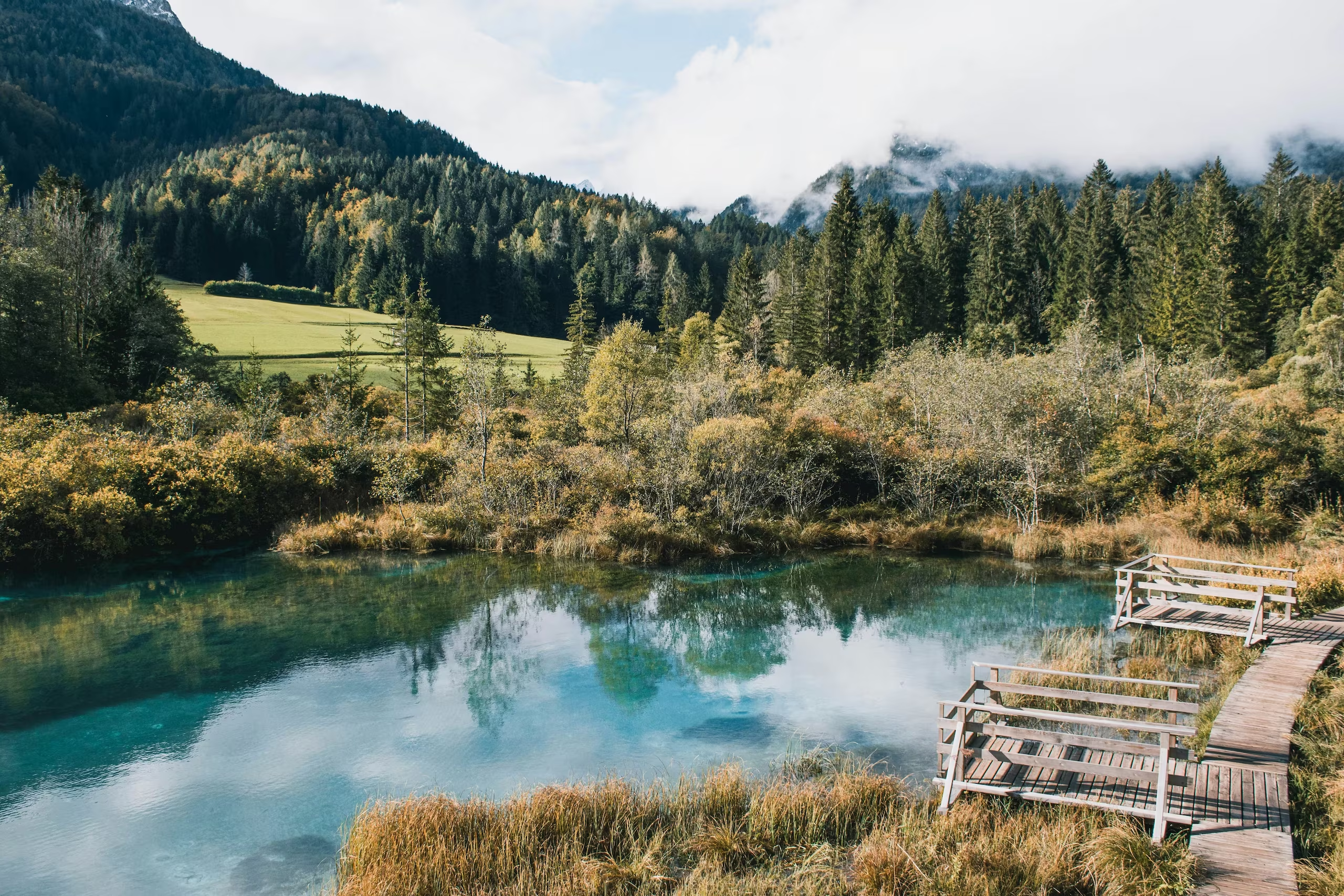
Kočevsko: the largest continuous forest area in the country, against the Croatian border. Most of Slovenia's bears live here, in old-growth forest that is partly UNESCO World Heritage. It is the wildest setting, but also the furthest: count on roughly one and a half to two hours' drive from Ljubljana.
The Lož Valley (Loška dolina, Notranjska): a quiet karst valley below Mount Snežnik, about an hour from Ljubljana. This is where the country's most-reviewed operators are based, and the bear density is permanently high.The valley also sits practically next to Postojna: the caves and the bears make an excellent combination day.
The choice in short: if you are short on time or travelling the classic route past Postojna Cave, pick the Lož Valley. If you want the full forest experience and have a whole day, drive on to Kočevsko.
The best tours and operators
Prices range from a short evening observation to a fully guided day trip. As an indication (2026 levels, always check current prices with the operator):
- Standard evening observation (2-3 hours): 79 to 125 euros per person, including guide and transfer into the forest. This is the usual format in the Lož Valley, offered by Slovenian Bears, Best Bear Watching and TuamV, among others.
- Premium day tour in Kočevsko: around 200 to 290 euros per person, with a guide for the full day, a walk along bear tracks and lunch.
- Family option: near Postojna, Forest Adventures combines bear observation with a family forest hike, suitable for families with slightly older children.
Many tours can also be booked through GetYourGuide, which is convenient if you are arranging several activities at once. In high season, book at least a few weeks ahead: the hides only hold a handful of visitors per evening.

When to go and what to bring?
The season runs roughly May to October, with July and August as the peak: long evenings, active bears and the best chance of a mother with cubs. In late spring the males are on the move for the mating season; in September and October the bears are feeding up for winter and tend to stay longer in one spot. Outside the season, most bears are in their winter dens.
What to bring is mostly a question of what to leave at home. The same lessons come up again and again in visitors' accounts:
- Silence: you sit for two to three hours without talking, without rustling jackets and with your phone on silent. For most people this is the hardest part.
- No scents: leave perfume and insect spray at home; a bear will smell you long before it sees you. Wear long sleeves against the mosquitoes and ask your operator what is allowed.
- Camera without flash: photography is allowed almost everywhere, flash nowhere. Binoculars make the waiting shorter.
- Muted colours: no bright white or red; think green, brown, grey.
Practical tips for your visit
How to get there
From Ljubljana it is about an hour's drive on the A1 (direction Koper, exit Unec or Postojna) to the Lož Valley. Kočevsko takes roughly one and a half to two hours via Ribnica. You need an e-vignette for the motorway; the regional roads after that are free and worth the drive in themselves.
Where to sleep?
The observations end after sunset, so sleep nearby. Around the Lož Valley and Cerknica you will find small farm stays and guesthouses; around Kočevje you can camp or glamp by the reservoir or in the forest. If you are combining the evening with Postojna Cave, staying there works well too.
How does it fit into your route?
The logical combination for most travellers: Ljubljana, Postojna Cave, Lake Cerknica and then the bear evening in the Lož Valley. If you are heading towards Croatia via Novo Mesto, plan the bear evening in Kočevsko instead. Either way it costs you one evening and will probably be the strongest memory of the trip
.avif)
Kočevsko is more than bears
If you drive all the way to Kočevsko for the bears, don't stop at one evening in the hide. This is the quietest part of Slovenia: vast old-growth forests, of which the Krokar reserve is UNESCO World Heritage, hiking and cycling routes that go for hours without touching a village, and a river, the Rinža, that regularly disappears into the karst. Combine the bear evening with a day of hiking and you will understand why nature lovers rate this region so highly. Mountain bikers get their own playground too: the MTB Trail Center just outside Kočevje counts eleven trails and nearly twenty kilometres of single track, ranging from flow trails to technical lines

Is bear watching safe and bear-friendly?
Safe: yes. You are never on foot in the forest alone, the hides are solid and the guides know how the animals behave. In organised observation there are no dangerous encounters; most of the time the bear never knows you were there.
Bear-friendly is the better question. Good operators observe from a distance, keep groups small and do not disturb the animals. The European LIFE DINALP BEAR project, which coordinated bear management across the Dinaric Alps, also sees responsible bear tourism as a way to give the bear economic value: a living bear earns a village more than a culled one.
Do be aware that many observation hides stand at sites where supplementary feeding has been part of regular population management for decades; that partly explains the high success rates. Serious operators are open about this. Ask about it when booking and choose an organisation that works with small groups.
Honesty also means this: living alongside nearly a thousand bears causes friction. In October 2025, residents of bear regions called on the government to manage the population more tightly, including culling. That is exactly why your visit counts: every booked observation is an argument for keeping the forests, and their residents, as they are.
Frequently Asked Questions
- How many bears live in Slovenia?
The official genetic census counted 695 to 797 bears at the end of 2023; expert estimates for 2025 sit around 950, with growth expected towards 1,100. - Can you go bear watching with children?
Yes, but with a lower limit: most operators require a minimum age of 8 to 10 years, because children need to sit still for two to three hours. For younger children, a family walk along bear tracks is a better alternative. - What does bear watching in Slovenia cost?
A standard evening observation costs 79 to 125 euros per person; a fully guided day tour in Kočevsko around 200 to 290 euros. - When is the best time to see bears?
May to October, with July and August as the peak. Bears are most active in the early evening, which is why nearly all observations are evening sessions. - How likely are you to actually see a bear?
Between 70 and 96 percent, depending on region, season and weather. Some operators offer a free second attempt if no bear appears; ask when booking. - Is bear watching worth it?
The reviews are strikingly unanimous. Visitors describe the evening as one of Europe's most impressive wildlife experiences; one participant on Tripadvisor called it 'the best experience of my life', after an evening with a mother bear and two cubs.
The forests of southern Slovenia hold one of the densest brown bear populations in Europe. And you can see them, safely and without disturbing them.
Last verified: July 2026 | Last updated: July 2026 | Author: Editorial Team Mijn Slovenië
Sources: ARSO, The Slovenia Times, kosevsko.com, loskadolina.info, bestbearwatching.si, forest-adventure.eu, slovenia.info, dinalpbear.eu, Tripadvisor, tuamv.com
Cover photo: ©Janez Papeż / Kočevsko