Traveling by public transport in Slovenia
Slovenia is small enough to travel without a car, provided you know which bus to take. In this guide: trains and buses, one ticket for both, what it costs, and where it doesn't work.
Slovenia might seem like a country for a rental car: mountain valleys, karst villages, and rolling vineyards. Yet, you can explore a large part of the country perfectly well by train and bus. It comes down to the details: where to buy your ticket, what a day pass costs, and where the network ends. I have listed these below, including prices and an honest look at the places where you are better off renting a car.
This guide contains a few affiliate links. If you book through one of these links, we receive a small fee; it costs you nothing extra. You can read more about this in our disclaimer.
To get to Bled, Bohinj, and the Soča Valley without a car, take the bus; the train is for the cities.
Can you do it without a car? The honest answer
Yes, for Ljubljana, the coast, the Postojna caves, and the lakes of Bled and Bohinj. No, or only with a lot of patience, for the remote mountain valleys, the small karst villages, and the countryside in the southeast. Slovenia has a dense bus network and a smaller rail network, and you can use one ticket for both.
The catch is in the frequency, not the reach. A village can be perfectly accessible and still only have three buses a day, and even fewer on weekends. So, plan based on the timetable, not the map.
Our rule of thumb: if your destination has one bus per hour, you can build a holiday around it. With two a day, it’s a day trip with a departure time you simply can’t afford to miss.
The train: Slovenske železnice
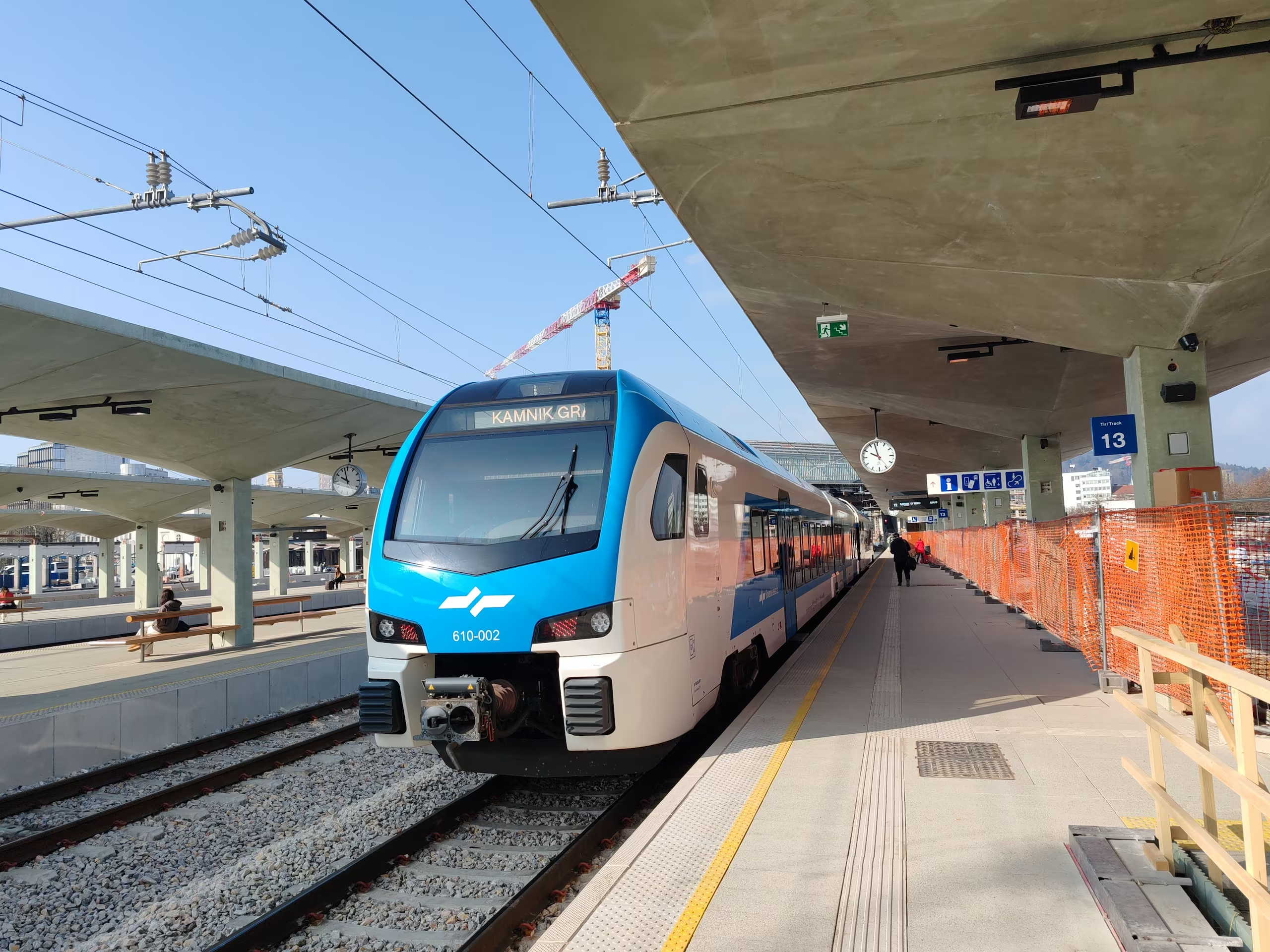
The national railway company is called Slovenske železnice, abbreviated as SŽ. The train works well between the cities: Ljubljana, Maribor, Celje, Postojna, Koper, and the border crossings to Austria, Croatia, and Italy. The train ride to Maribor takes just over two hours. Nine trains a day run to Zagreb, taking between 2 hours 14 minutes and 3.5 hours.
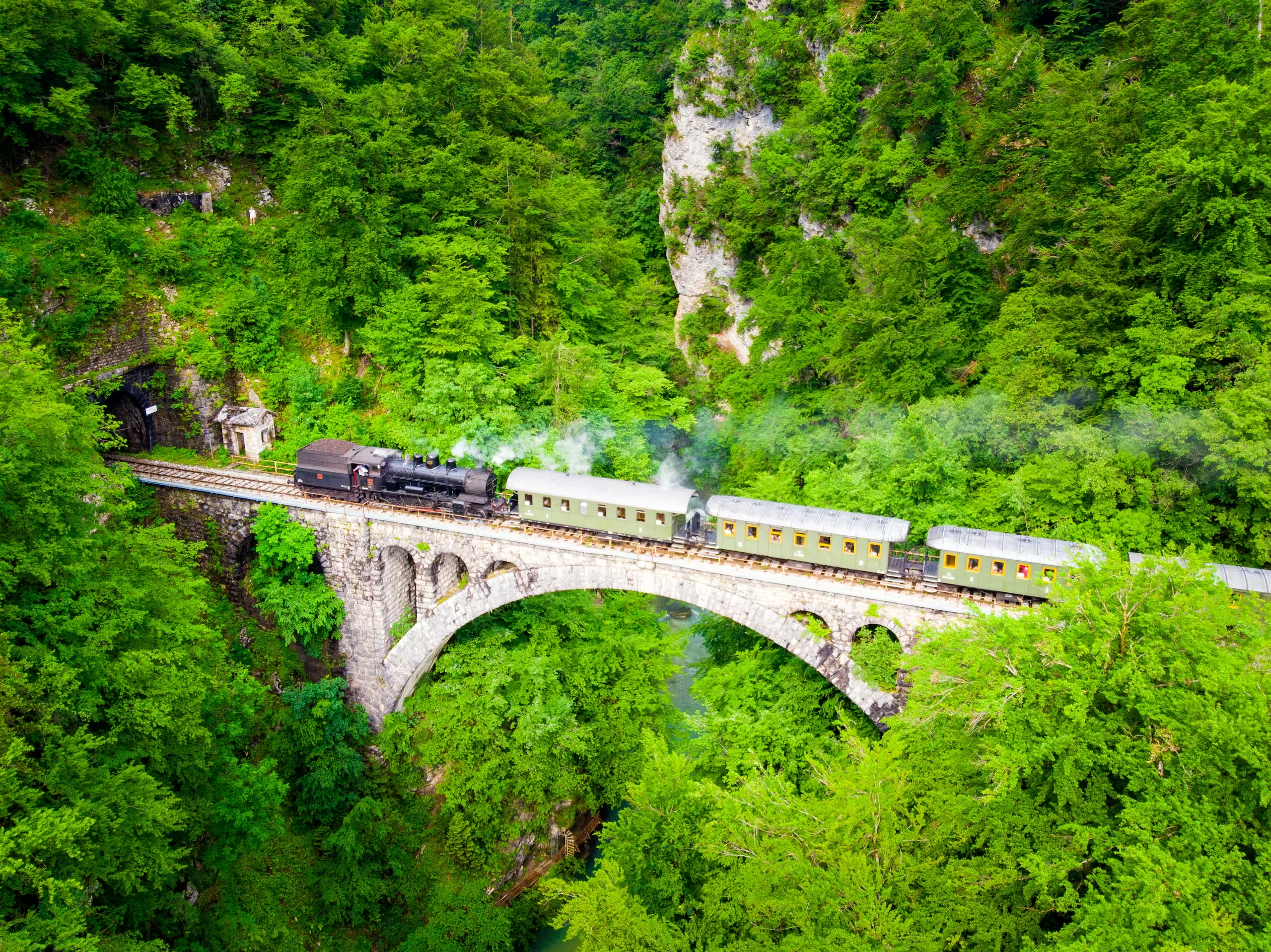
Where the train won't take you: into most mountain valleys. The notable exception is the historic line through the Julian Alps via Bled Jezero and Bohinjska Bistrica to Nova Gorica, which we covered in a dedicated guide to the Bohinj Railway. Give that a read if you want to travel through the mountains by train (or motorail).
You can buy tickets at the ticket office, online via the SŽ web shop, or on the train if the office was closed. If the office was open and you buy on the train anyway, you will pay a 12-euro surcharge. With SŽ, your ticket is loaded onto a chip card, which you receive at the ticket office with your first purchase; you can only buy online in the SŽ web shop once you have that card. For faster trains (IC, EC, and similar), you pay a 2-euro surcharge at the ticket office or 4 euros on the train. On weekends and public holidays, you get a 30 percent discount on single and return tickets. Bringing a bike costs 3 euros per trip.
A quick heads-up for Bled: Lesce-Bled station is located 4 kilometres from the lake, so you’ll need to catch a bus from there. Bled Jezero, on the Bohinj line, sits 1.5 kilometres from the town centre.
The bus: Arriva, Nomago, and the rest
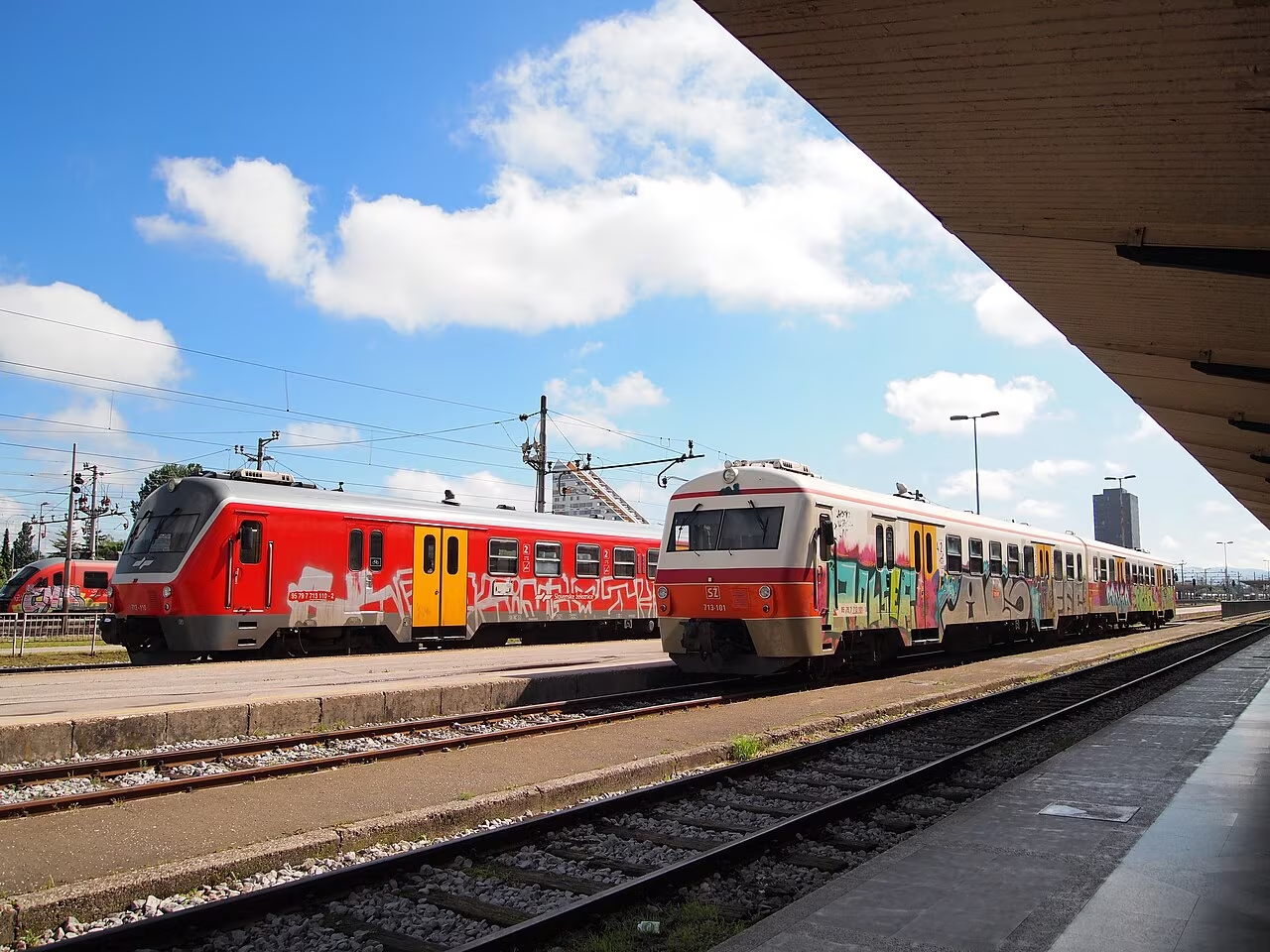
The bus takes you where the train can't go, and for most tourist destinations it's also faster. The main operators are Arriva and Nomago, alongside several regional companies. Direct buses run from Ljubljana to Bled, Bohinj, Piran, Portorož, and the valleys of the Soča.
Please note: on 24 August 2026, Ljubljana's bus station moved to a temporary location on Masarykova cesta, on the east side of the train station. There are 46 platforms and a ticket office where you can pay by debit or credit card. Older maps and travel blogs still point to the old site; just head east from the railway station.
If your bus departs from a station with a ticket office, such as Ljubljana, buy your ticket at the office or online before boarding. At smaller stops, you pay the driver. On busy summer routes, such as the afternoon buses from Bohinj back to Ljubljana, buses can get full; take an earlier bus if possible.
You can find timetables for all operators combined, including the train, in the national journey planner SiMO. For buses departing from the capital, ap-ljubljana.si is your best bet.
How does one ticket for both train and bus work?
Slovenia has an integrated network called IJPP (integrirani javni potniški promet, or integrated public passenger transport). An IJPP ticket is valid on your chosen route across both trains and buses, covering all operators. That means you can transfer from train to bus without having to buy a new ticket.
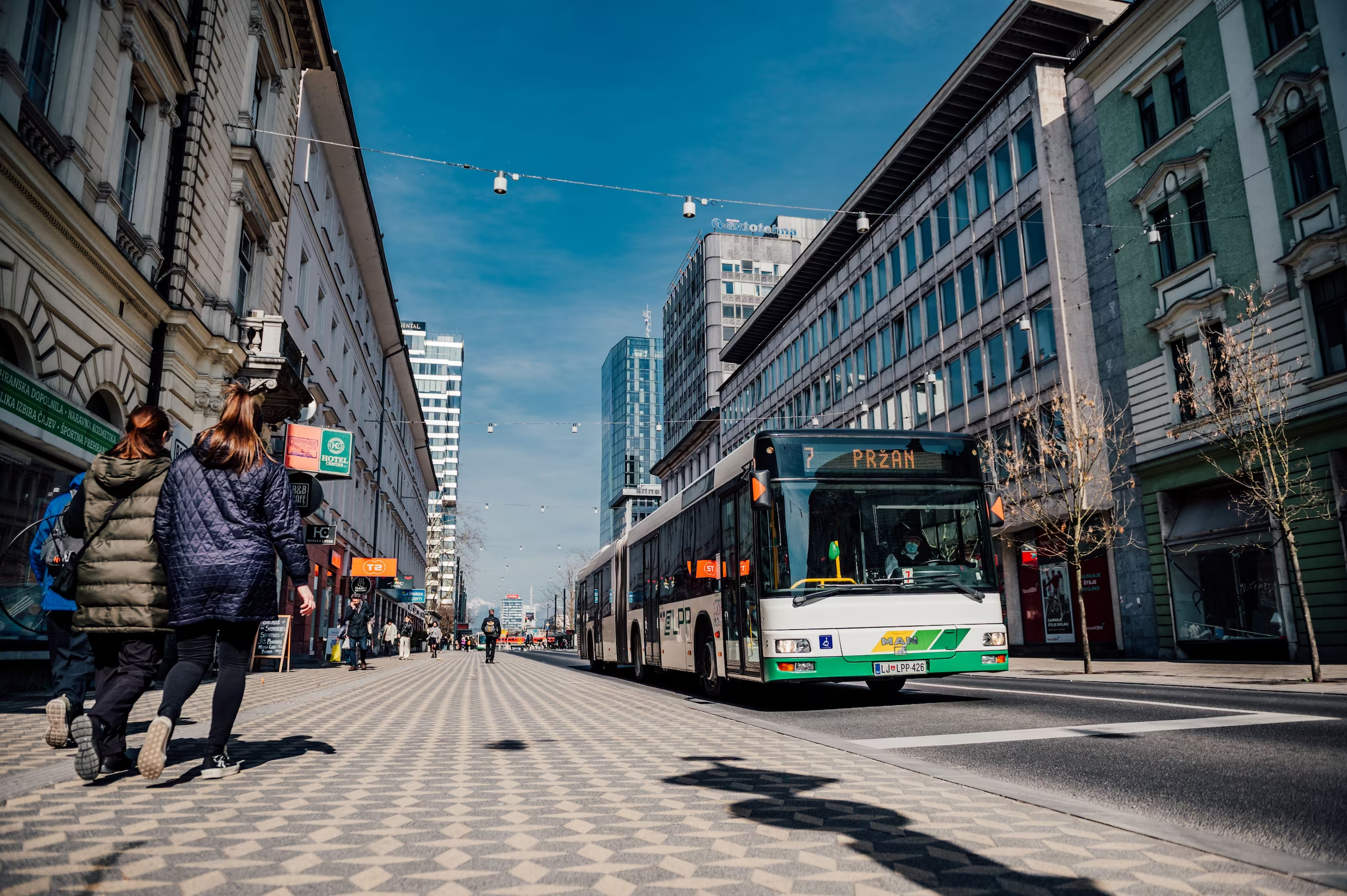
Two things are particularly useful for visitors. First, the nationwide single-day, three-day, and weekly passes, which are valid across the entire network, including Ljubljana's city buses in zones 1 to 3. Second: since 18 September 2026, single IJPP tickets can also be purchased online via dujpp.si, without needing an account or a smart card. You simply receive a PDF with a QR code.
You can also buy a standard single ticket at the ticket office or on the bus. The national tickets are loaded onto an IJPP or Urbana chip card.
What does traveling by train and bus cost?
The amounts below are valid as of the time of verification, November 2026.
- Single IJPP ticket (train and bus): from 1.50 euros for up to 5 kilometers, up to a maximum of 16.50 euros for over 150 kilometers.
- Weekend discount IJPP: 25 percent on single tickets.
- Children: under 6 free, 6 to 15 years half price.
- Day pass for all of Slovenia: 18 euros.
- Three-day pass for all of Slovenia: 22 euros.
- Weekly pass for all of Slovenia: 36 euros.
- Family day pass: 15 euros for up to five people, with at least one child under 15. Valid on trains and regional buses, not on city buses.
- Ljubljana city bus: 1.50 euros per ride in zone 1.
- Urbana card: 2 euros for the card itself.
Doing the maths: the 22-euro three-day pass is rarely more expensive than single tickets once you take two longer journeys over three days, for example, Ljubljana–Bohinj one way, followed by a trip down to the coast a day later. Double-check your specific route in SiMO; for short hops, single tickets work out cheaper.

How do you get from Ljubljana Airport to the city?
By the Arriva regional bus, which runs together with LPP between the airport in Brnik and the Ljubljana bus station, with stops along Dunajska cesta. On weekdays, there are nearly thirty buses, running about every half hour during the day, and less frequently on weekends. A trip costs 4 euros. This is a standard IJPP fare based on distance, with a weekend discount. You pay in cash or with your debit card to the driver, and one checked suitcase is included for free.
If you are landing late or traveling with a lot of luggage, it is better to book a shared shuttle. GoOpti and Nomago group travelers into vans that drop you off at your address. A taxi is the most expensive option.
Are you heading straight to Bled? According to the Bled tourist office, there is also a bus that runs directly from the airport to Bled. Check the departure times, as that route does not run every hour.
If you're spending a few days in the capital, be sure to check out our guide to Ljubljana.
In Ljubljana itself: the Urbana card
LPP city buses use the Urbana card, a yellow chip card costing 2 euros that you can top up at green Urbanomat machines or at the tourist office. A ride costs 1.50 euros, and you can transfer for free within 90 minutes. One Urbana card can be used to pay for multiple people with the driver.
The catch: you can also pay with your bank card, but you'll be charged for each ride separately, forfeiting the free 90-minute transfer. If you take a bus with a transfer twice a day, an Urbana card works out cheaper. If you have a Ljubljana Card, city buses are completely free for its entire validity period.
By the way, you hardly need a bus for the city center itself. The old town is car-free and small enough to explore on foot.
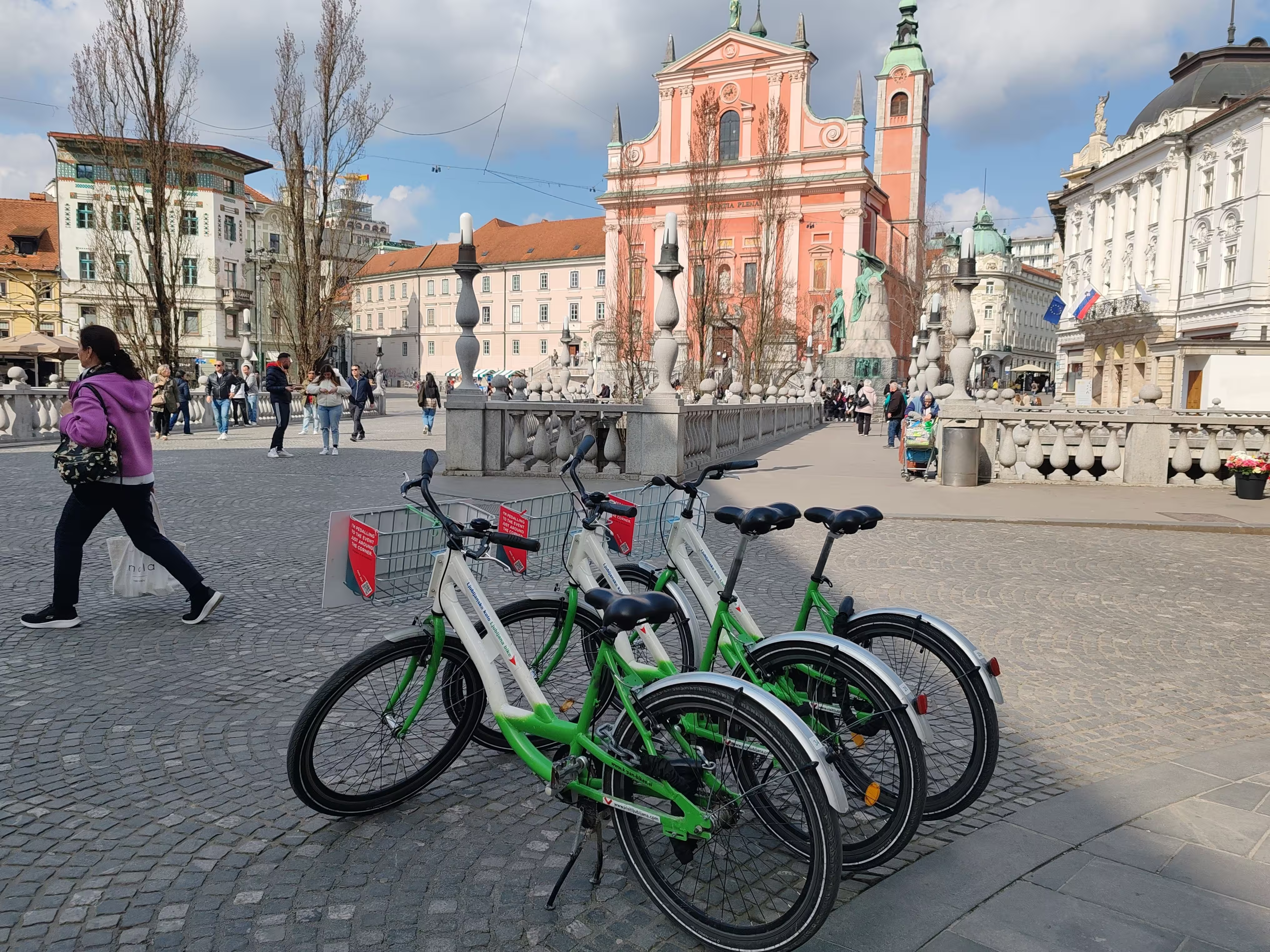
The bicycle is the fastest alternative in Ljubljana. With BicikeLJ, the city's bike-sharing system, the first hour is free. You register online with your email address and credit card and pay 1 euro for a weekly subscription. There are 860 bikes available at 86 stations.
Four routes that work well without a car
These are the connections you can build a trip around.
Ljubljana–Bled–Bohinj
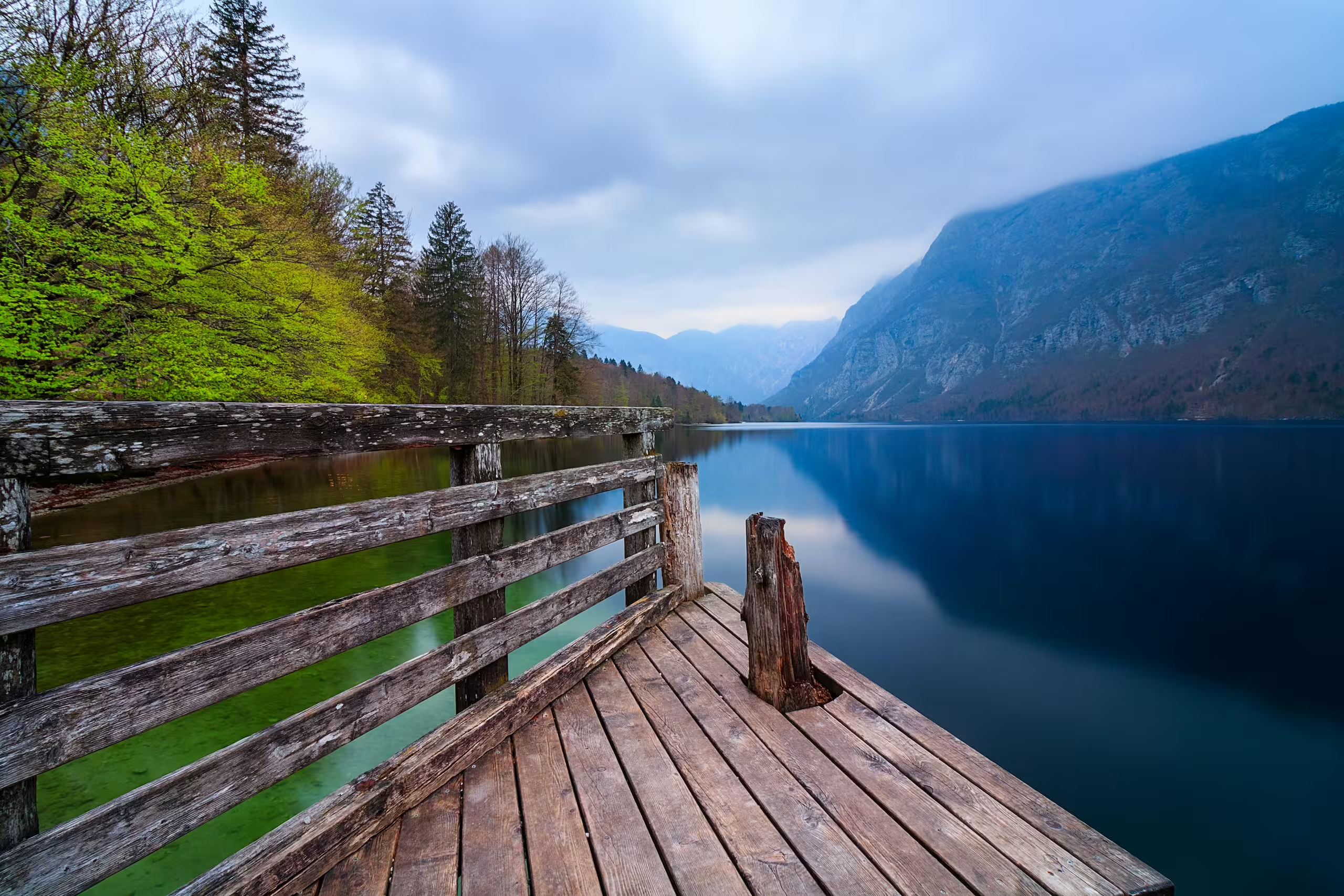
Arriva buses run almost hourly, year-round, from Ljubljana to Bohinj via Bled. Travel times vary by service; you can check the exact duration in SiMO. If you stay at least two nights at a participating accommodation in Bohinj, you'll receive the Julian Alps: Bohinj card, which lets you travel free on Arriva buses within Bohinj and to and from Ljubljana. If you prefer taking the train, the Bohinj Railway offers a scenic detour. You can find places to stay in Bohinj here. Be sure to ask when booking whether your accommodation participates in the Bohinj card scheme.
During the season, extra bus lines run through the Bohinj valley, including to the Savica waterfall. You can use these with a Bohinj day pass or the Julian Alps: Bohinj card; you cannot buy a ticket on the bus itself. The lines and dates change per season, so check promet.bohinj.si shortly before your trip.
Ljubljana–Postojna–coast
The bus to Postojna takes less than an hour and runs every hour. From the train station, it is a 20 to 30-minute walk to the cave park, or you can take the local bus.
Heading to the coast: the Arriva bus runs directly from Ljubljana to Piran and Portorož, or you can take the train to Koper and switch to the bus, which departs right next to the station. In Piran itself, you pay for the local bus with the City Card, the app, or your bank card; cash is not accepted. You can read more about the coast in our guide to Mediterranean Slovenia.
Ljubljana–Maribor–Ptuj
The classic train route to the east. The train to Maribor takes just over two hours, and for Ptuj, check the connection from Maribor using SiMO. This is the route where the train really beats the bus.
Kranjska Gora–Vršič–Bovec (summer only)
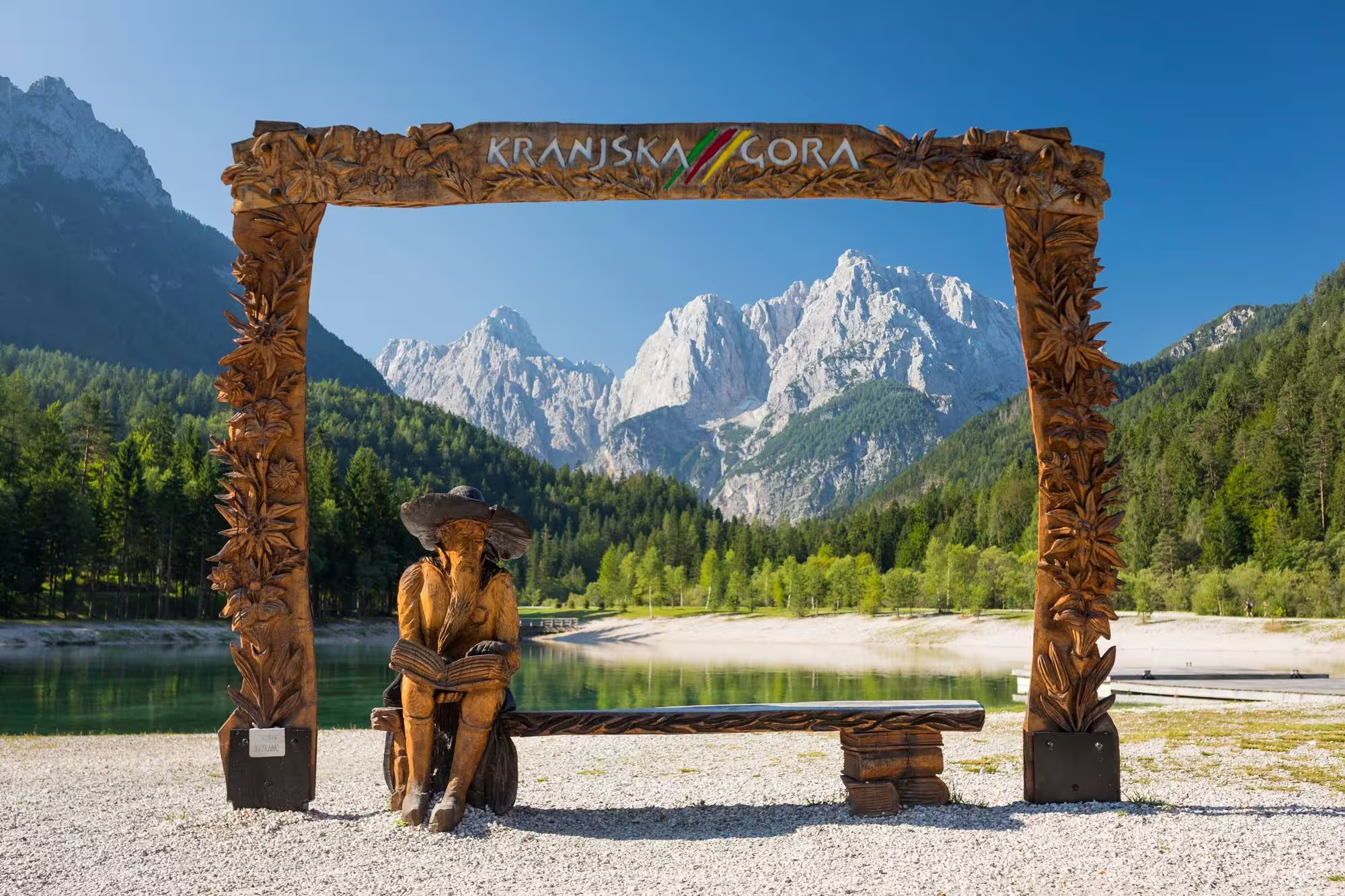
The most scenic bus route in the country crosses the Vršič Pass from the Julian Alps into the Soča Valley. In 2026, this bus ran from 1 June to 30 September, free of charge, roughly once an hour. In the Soča Valley itself, free or low-cost shuttle buses also operate during summer, for instance to the Tolmin Gorges. Out of season, getting to Bovec by bus from Ljubljana is quite a long journey.
What is not on this list has been left off intentionally. For South-East Slovenia, including the Kolpa and Bela krajina regions, a car is much more convenient: the network is sparse and the most beautiful spots are located between the villages.
Sample itinerary: ten days without a car
What has worked for years: three nights per location, with accommodation within walking distance of the train or bus station. That way, you travel for a few hours every few days, and have plenty of time in between.
Days 1 to 3: Ljubljana. Explore the city on foot and by shared bike, along with a bus day trip to the Postojna Cave.
Days 4 to 6: Bohinj. Take the bus via Bled, where you can hop off for an afternoon along the way. If you stay at least two nights at a participating accommodation, the Julian Alps: Bohinj card gives you free travel on Arriva buses within Bohinj and back to Ljubljana. Fancy a train journey? The Bohinj Railway makes for a lovely day trip from here.
Days 7 to 10: The coast. Catch the direct bus to Piran via Ljubljana, or take the train to Koper and switch to the bus from there.
Check your travel connections in SiMO. Outside of peak season, buses run less frequently, and some summer routes do not operate at all.
If you still want a car
Fair is fair: sometimes having a car is simply the better option. That applies to Logarska Dolina and the rest of the Kamnik-Savinja Alps outside the summer season, to the wine regions of Brda and Vipava, where you'll want to hop from winery to winery, to the Karst Plateau with its scattered villages, and to the south-east. It's also true if you're travelling with young children and plenty of luggage, or if you want to set off on a hike from a trailhead that buses don't serve.
A hybrid approach often works best: travel by train and bus to destinations that are easy to reach, and rent a car for a few days for the parts that aren't. Timing matters, too: many summer mountain buses only run from June to September. For more on this, check out our guide on the best time to visit.

Last verified: November 2026 | Last updated: November 2026 | Author: Mijn Slovenië Editorial Team
Sources: potniski.sz.si, RTV Slovenija, lpp.si, dujpp.si, visitljubljana.com, Slovenia Times, bled.si, promet.bohinj.si, gov.si, arriva.si, portoroz.si, soca-valley.com, Mijn Slovenië