Dining in Slovenia: gostilna, restaurants and everything in between
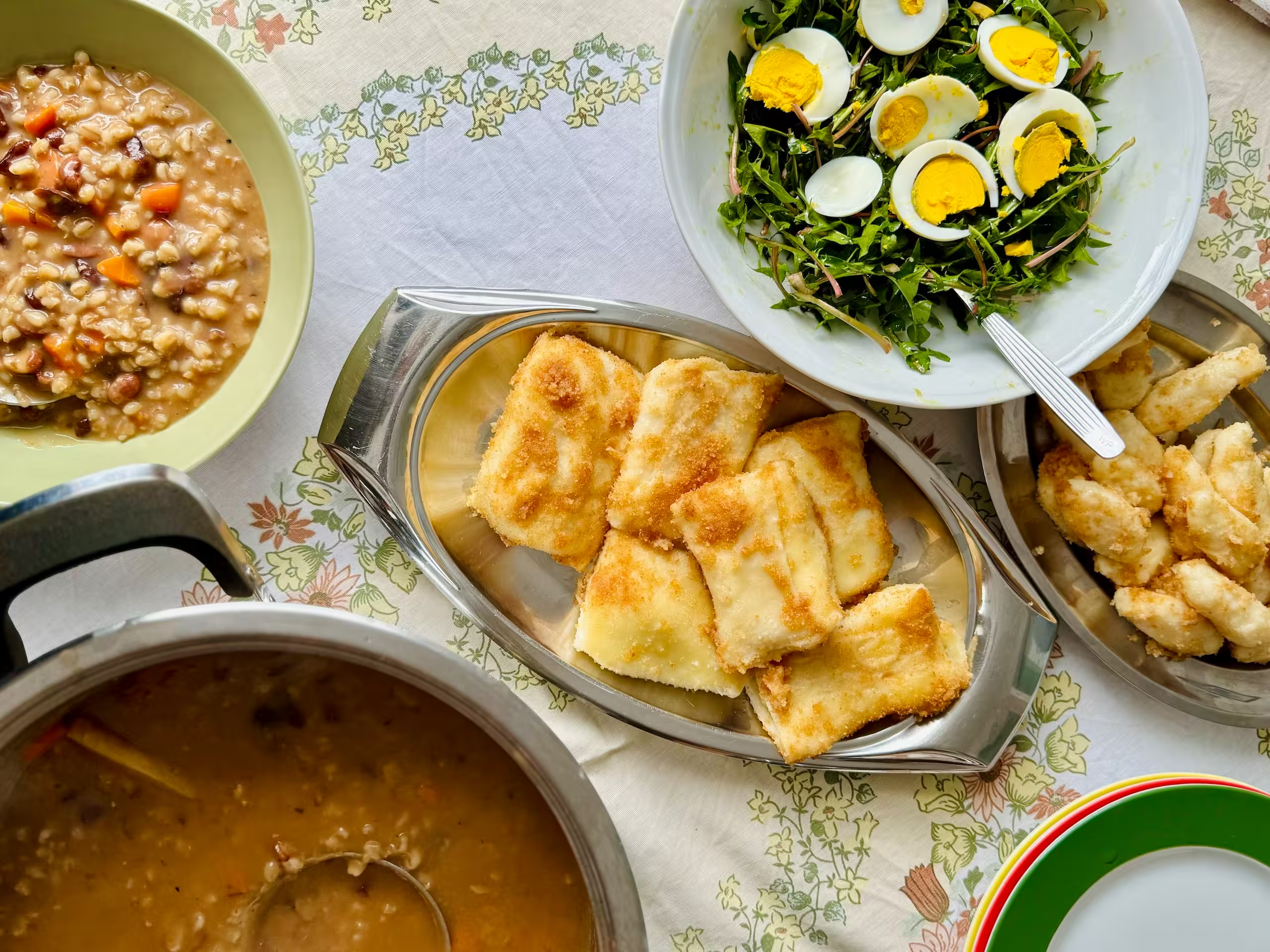
In Slovenia, dining out is more than just having a meal, it’s a social ritual. Cafés and restaurants are full of life, buzzing with conversation, the clinking of glasses, and the aroma of freshly prepared local dishes. Slovenians love eating out, and when people meet, it often happens in a café, preferably with a good glass of wine or a strong espresso.
Dining out in Slovenia is easily described in one sentence: nowhere do the very ordinary and the world's best sit so close together. On one side the gostilna, the beating heart of Slovenian food culture, where a few euros buy you the dish of the day and the owner comes over to ask whether it tastes good. On the other side Hiša Franko in Kobarid, Ana Roš's three-star restaurant, one of the finest tables in Europe. In this guide you'll read how the Slovenian restaurant landscape fits together, what you pay, where the Michelin stars hang and where to eat well region by region. Want to know first what actually ends up on your plate? Then read our blog about The taste of Slovenia, our guide to Slovenian cuisine.
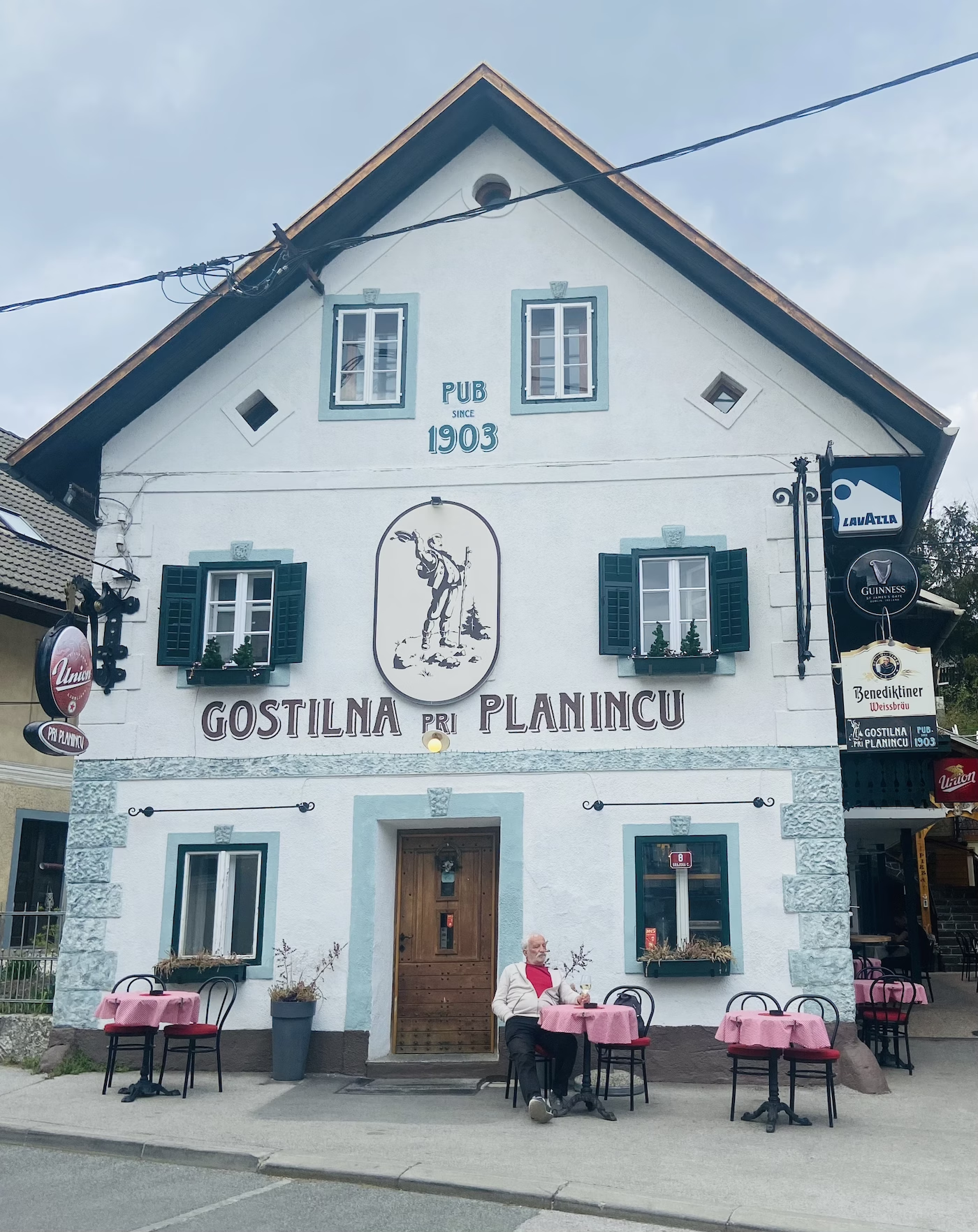
Gostilna, restavracija or gostišče: what's the difference?
A gostilna is a traditional, usually family-run eating house serving local cooking. A restavracija is a more modern restaurant with a more international menu. A gostišče is an inn where, alongside a meal, you can also book a room. The difference is not in quality but in character. Once you know the three words, you read a Slovenian village street like a menu.
- Gostilna: far more than a restaurant, it is the beating heart of Slovenian food culture. You'll find an easy-going atmosphere, traditional dishes and often surprisingly good pizzas. A generous lunch rarely costs more than ten euros, especially between 11.00 and 16.00. For genuinely authentic Slovenian cooking, this is where to go. Booking is seldom needed and children are welcome everywhere.
- Restavracija: a restaurant of the kind you know from home. More urban, more international, with a longer wine list and higher prices. In Ljubljana and on the coast you'll find dozens, witha range of kitchens: Italian, Mediterranean and modern Slovenian.
- Gostišče: an inn or guesthouse with a restaurant. Handy on the road: you eat downstairs and sleep upstairs.The cooking is usually solid and regional, the comfort simple.
- Turistična kmetija: the tourist farm, the odd one out in this list. You eat what the farm itself produces, from recipes that have been passed down for generations. For real farmhouse cooking this is the best choice; do ask ahead, though, because not every farm cooks to the same level.
If you want to be sure you're walking into a good gostilna, look for the Gostilna Slovenija quality mark. It is reserved for gostilnas that serve mainlySlovenian dishes and work with local, seasonal ingredients. You'll recognisethe members by the bronze plaque next to the entrance.
Tip from our local expert: walk in and ask for the house speciality. Almost every gostilna has one dish the family is proud of, and it isn't always on the menu. If that doesn't work, the local tourist office (TIC) is surprisingly useful: ask the staff where they themselves eat and you'll get better addresses than any app.
What does dining out in Slovenia cost?
Dining out in Slovenia is cheaper than in the Netherlands or Belgium: count on €8 to €15 for lunch in a gostilna and €25 to €45 per person for dinner in a good restaurant, without wine. In Slovenia there are still places where you drink a coffee on a terrace for a euro. Not in the centre of Ljubljana or by Lake Bled, where you simply pay €2.50, but certainly in the villages you drive through on the way there.
- Coffee on a terrace: €1 to €2, up to €3 in the tourist centres.
- Dish of the day (dnevna ponudba) in a gostilna: €8 to €15 for two or three courses, on weekdays around lunchtime.
- Dinner in a good restaurant: €25 to €45 per person, without wine.
- Tasting menu in a starred restaurant: €80 to €150. As a three-star, Hiša Franko sits well above that.
- Glass of local wine: €3 to €8.
For comparison: a two-course lunch in the Netherlands or Belgium quickly comes to €25 to €30, in a Slovenian gostilna half that or less. The difference is biggest in the small things: the coffee, the glass of wine, the bowl of soup.
One caveat: the supermarket is no bargain. Groceries cost roughly the same as in the Netherlands and Belgium. The price gap is in eating out, not on the shelf. And keep an eye on the wine when the bill comes: Slovenia makes excellent wines and they are allowed to cost something. The affordable bottles on the list are almost always perfectly good. You'll read more about that in our guide to Slovenia's wine regions.
Michelin restaurants in Slovenia
Slovenia has ten restaurants holding thirteen Michelin stars between them: Hiša Franko has three, Milka two, and eight restaurants have one each. In total, 74 Slovenian restaurants appear in the Michelin Guide.
Hiša Franko in Kobarid is the flagship. Ana Roš cooks there with whatever the Soča valley gives: trout, mountain herbs, cheese from the high pastures. It is one of roughly 150 three-star restaurants in the world. Milka in Kranjska Gora, on the water of Lake Jasna, has two; chef David Žefran serves a precise, alpine cuisine that takes its setting seriously.
The eight one-star restaurants:
- COB in Portorož, chef Filip Matjaž
- Dam in Nova Gorica, chef Uroš Fakuč
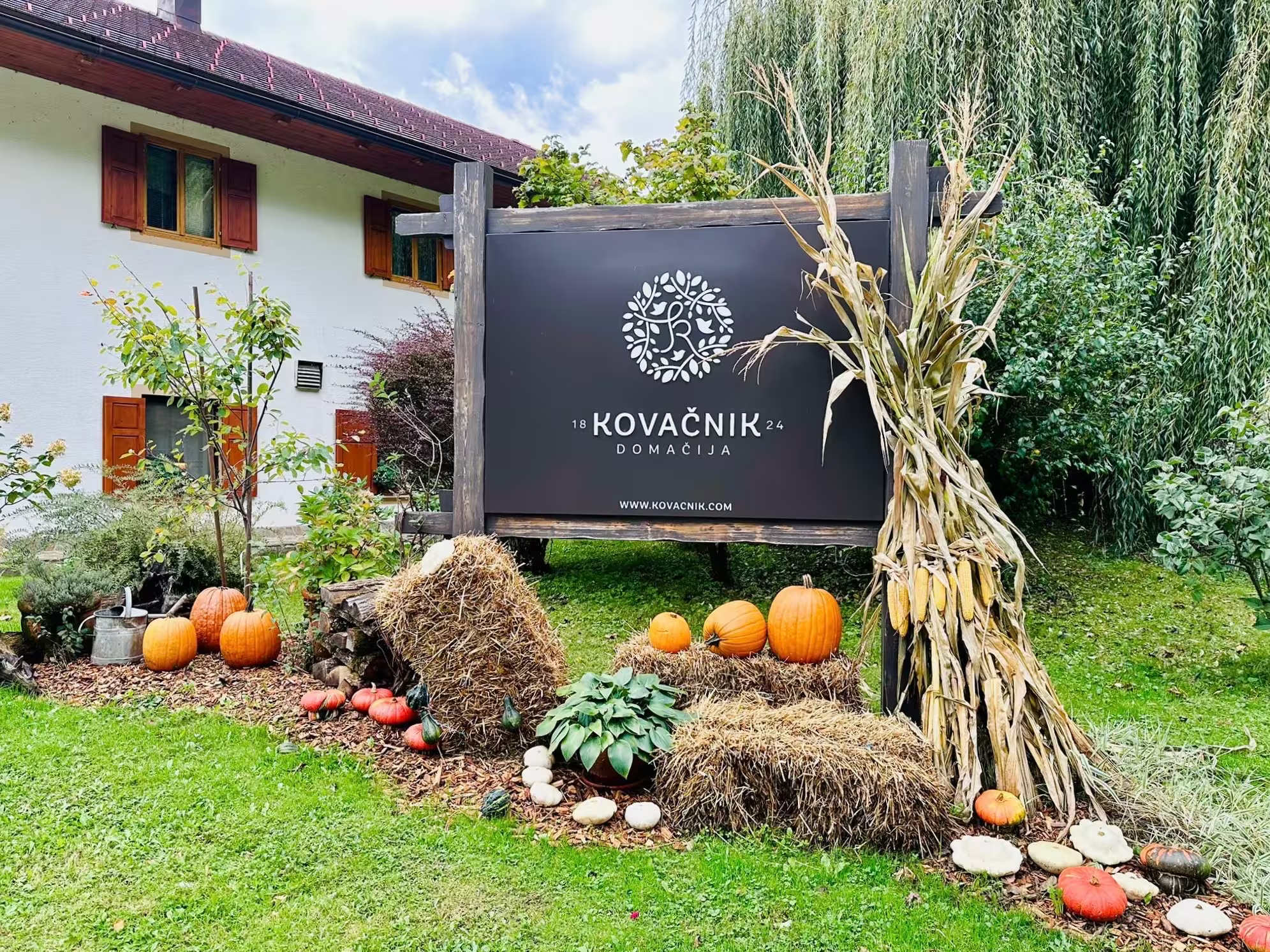
- Gostilna pri Lojzetu in Zemono near Vipava, chef Tomaž Kavčič
- Grič in Šentjošt nad Horjulom, chef Luka Košir
- Hiša Denk in Zgornja Kungota near Maribor, chef Gregor Vračko
- Hiša Linhart in Radovljica, chef Uroš Štefelin
- Pavus in Laško, chef Marko Pavčnik
- Galerija okusov in Petrovče, chef Marko Magajne (new in 2026)
On top of that, Michelin awards Slovenia twelve Bib Gourmands, the label for excellent value for money. The green star for sustainable gastronomy no longer exists: Michelin discontinued the programme worldwide on 1 June 2026. For a country of two million people, that is a striking achievement. When Michelin first came to Slovenia in 2020, six restaurants were given a star; six years later 74 establishments appear in the guide and, on stars per inhabitant, Slovenia keeps pace with the European top. Michelin has been rating Slovenian restaurants since 2020 and refreshes the list every June.
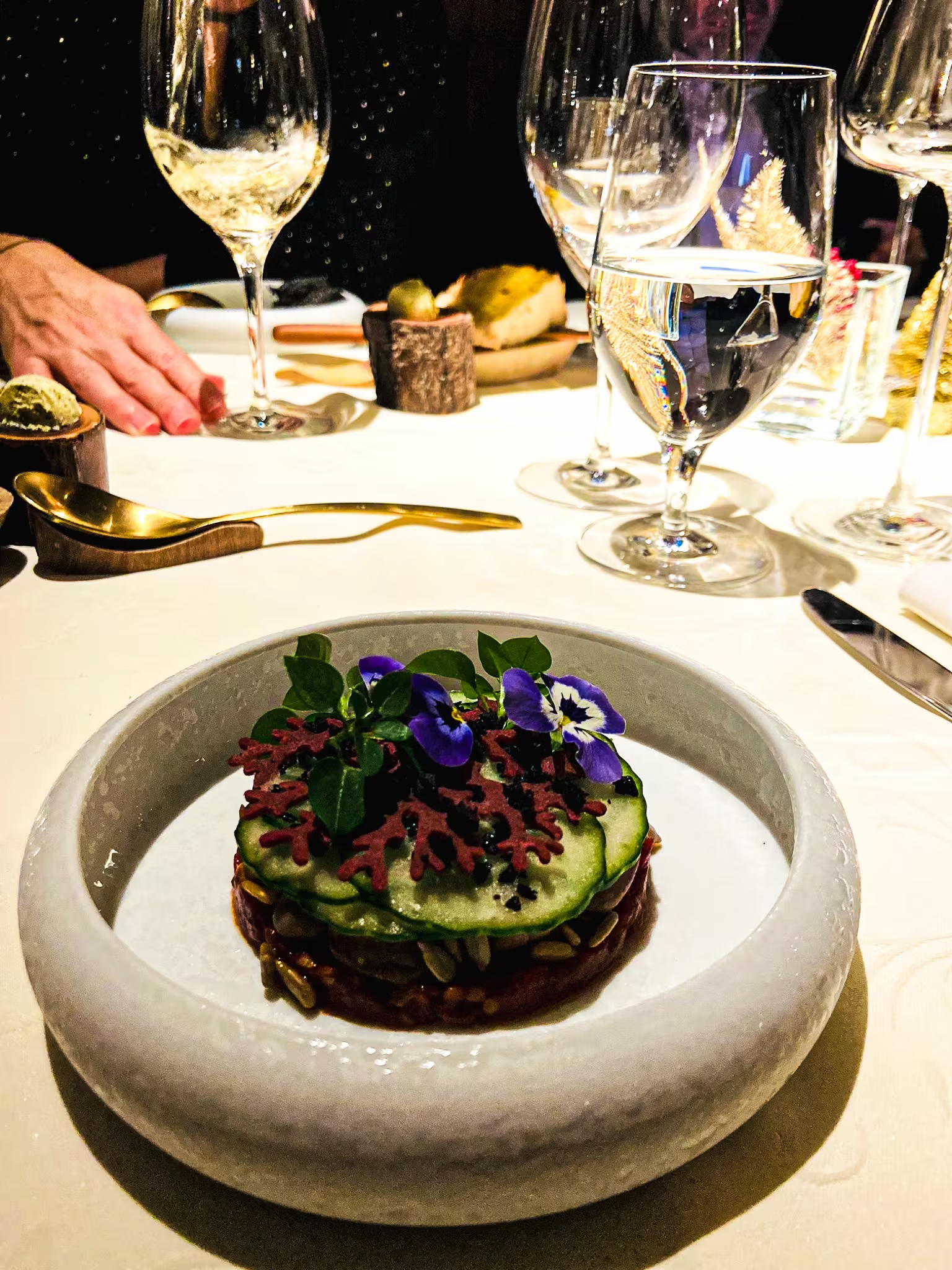
Our advice: book one starred restaurant per trip and eat the rest of the week in gostilnas. It is exactly that contrast that makes Slovenia so worthwhile at the table.
Recommended restaurants by region
Stars are a handy compass, but you don't eat a tasting menu every evening. So here, region by region, two or three addresses we would book, the gostilna just as much as the starred restaurant.
Ljubljana and around
- JB Restaurant (Ljubljana): chef Janez Bratovž's classic, for years the benchmark for refined cooking in the capital and listed in the Michelin Guide. Menus from around €70 per person.
- TaBar (Ljubljana): small Slovenian dishes to share, with a good list full of local wines. In the Michelin Guide since 2025. Reckon on €30 to €50 per person.
- Grič (Šentjošt nad Horjuloum): one Michelin star, half an hour’s drive from Ljubljana. Chef Luka Košir cooks with whatever the woods and his own garden give. Tasting menu around €100.
More on the capital and its surroundings in our regional guide to Central Slovenia.
Julian Alps (Kobarid,Radovljica, Kranjska Gora)
- Hiša Franko (Kobarid): three stars, the best restaurant in the country. Reckon on several hundred euros per person and book months ahead. A once-in-a-lifetime experience.
- Milka (Kranjska Gora): two stars, on Lake Jasna. Alpine cooking at the top level, with rooms for those who would rather not drive after the menu. Tasting menu from around €150.
- Hiša Linhart (Radovljica): one star. Chef Uroš Štefelin translates grandmother's dishes into the present; of all the starred restaurants in the Alps the most accessible on price, with menus around €80.
No star, but a tip for anyone in the Soča valley: Dobra Vila in Bovec, a boutique hotel with a set evening menu and a dining room where time has stood still. While you're somewhere in the valley, do order frika once, the hearty shepherd's cake of cheese and potato you only find here.
Coast and Karst (Piran, Komen)
Along the seafront promenade in Piran you eat perfectly good fish, but the most interesting kitchens of this region sit just out of sight: in Portorož and on the Karst plateau towards Komen.
- COB (Portorož): one star, ten minutes from Piran. Chef Filip Matjaž won the Michelin Young Chef Award in 2025; Mediterranean cooking with plenty of fish and open fire. Menus around €100.
- Špacapanova hiša (Komen): the Karst on a plate. Pršut, teran and the seasonal, sustainable work of the Špacapan family. Reckon on €40 to €60 per person.
- Gostilna Mahorčič (Rodik): a family restaurant with a Bib Gourmand. Chef Ksenija Krajšek Mahorčič cooks seasonal Karst cuisine with respect for the landscape, for €35 to €50 per person.
Eastern Slovenia (Maribor, Murska Sobota)
- Hiša Denk (Zgornja Kungota): one star, among the vineyards above Maribor. Chef Gregor Vračko cooks with character and at a high level, and you can stay the night. Menus around €100.
- Gostilna Rajh (Murska Sobota): Bib Gourmand and the address for the cooking of Prekmurje, with bograč and prekmurska gibanica as fixtures. Mains €15 to €25.
- Pavus (Laško): one star, set in a centuries-old manor house above Laško. Chef Marko Pavčnik reinterprets the Štajerska kitchen with local ingredients. Menus from around €80.

Cafés, beers and burgers
Not every meal in Slovenia is a three-course sitting. For coffee, a beer or a quick burger, the hospitality scene looks a little different from home. Here's what helps.
Cafés in Slovenia: coffee and local beer
In Slovenia, cafés are the place for a good cup of coffee or a drink, but don't expect an extensive menu. The eetcafé we know in the Netherlands, the pub-restaurant, doesn't really exist here; that role belongs to the gostilna. The coffee is usually better than in the Netherlands and the choice of drinks is comparable.
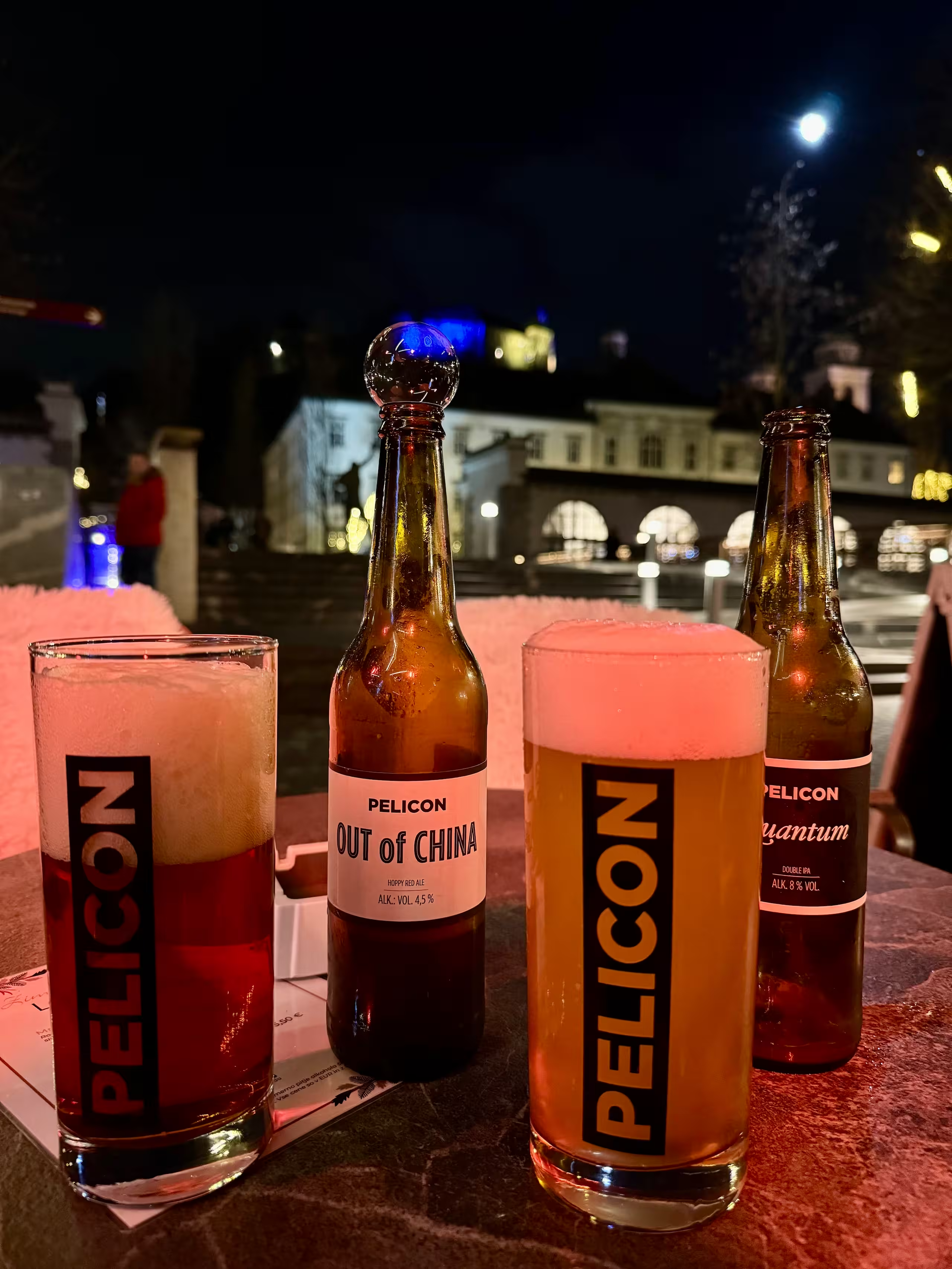
Until a few years ago, a beer lover had to choose between Laško and Union, but that time is over. As elsewhere in Europe, local breweries are on the rise, and in more and more cafés you'll find craft beer from Slovenian soil on tap.
A word of warning if you like a night out: many cafés close early. In city centres most shut around one in the morning, even at the weekend. Only a handful of places stay open later.
Where do you eat the best burgers?
For years the burger scene was easy to survey: alongside the classic McDonald's there was Hot Horse, known for its horse burgers, as the country's specialist burger joint. By now the offering has expanded considerably, especially in Ljubljana, where places like Hood Burger and Lars & Sven compete for the title of best burger in the city.
Many cafés now serve burgers too, as a savoury snack, often with surprising toppings. And in Celje you'll find a striking speciality: the pizza burger, a juicy burger wrapped in a crisp pizza base. Ideal for anyone who can't choose between pizza and burger, and a local creation worth trying at least once.
In Slovenia you drink a coffee for a euro on a terrace and, that same evening, eat at one of the best tables in Europe.
Frequently Asked Questions
- How many Michelin Stars does Slovenia have?
Slovenia has thirteen Michelin stars, spread across ten restaurants. Hiša Franko in Kobarid has three, Milka in Kranjska Gora two, and eight restaurants have one star. - What does dinner cost in Slovenia?
In a good restaurant you pay €25 to €45 per person, without wine. In a gostilna you eat in the evening for €15 to €25. A tasting menu in a starred restaurant starts around €80. - Is there vegetarian food in Slovenia?
Yes, certainly in Ljubljana and the larger towns. Štruklji, soups and pasta dishes are often vegetarian. In the countryside the menu leans more towards meat; mention your dietary needs when you book, and almost every kitchen will cook something separate. - Do you need to book in Slovenia?
At Michelin restaurants, yes, weeks to months ahead. At ordinary restaurants, booking is wise in high season. At a gostilna you usually just walk in, except on Sunday afternoon. - How do you tip in Slovenia?
Five to ten percent is usual in restaurants, but a tip is not compulsory. In a café or gostilna, rounding up is enough. Give the tip in cash where you can, even if you settle the bill by card.
Last verified: July 2026 | Last updated: July 2026 | Author: Editorial Team Mijn Slovenië
Sources: Michelin Guide Slovenia 2026, Slovenian Tourist Board, GOV.si, Gostilna Slovenija, Mijn Slovenië


